Article
Tick-Borne Diseases in Dogs: Understanding Co-infections
Tick-borne diseases (TBDs) in dogs are a significant and growing concern, particularly in tropical countries where environmental conditions favour a high tick population. In India, diseases such as babesiosis, ehrlichiosis, and hepatozoonosis are not only common but endemic, creating a persistent clinical burden for veterinarians1.
The Big Three: Common Tick-Borne Diseases in India
Among canine TBDs, three diseases dominate clinical practice1,2:
- Canine babesiosis, caused by hemoprotozoa of the genus Babesia, typically presents with fever, anemia, lethargy, icterus, and hemoglobinuria.
- Canine monocytic ehrlichiosis, caused by the intracellular rickettsial organism Ehrlichia canis, affects monocytes and is increasingly recognised as an emerging zoonotic concern. Clinically, it is characterised by thrombocytopenia, lymphadenopathy, ocular manifestations, bleeding tendencies, and in severe cases, irreversible bone marrow suppression.
- Canine hepatozoonosis, caused by Hepatozoon canis, is another hemoprotozoan infection presenting with fever, anemia, and lethargy.
These infections often present with overlapping clinical signs, making differentiation based on symptoms alone difficult in routine practice.
One Vector, Multiple Threats
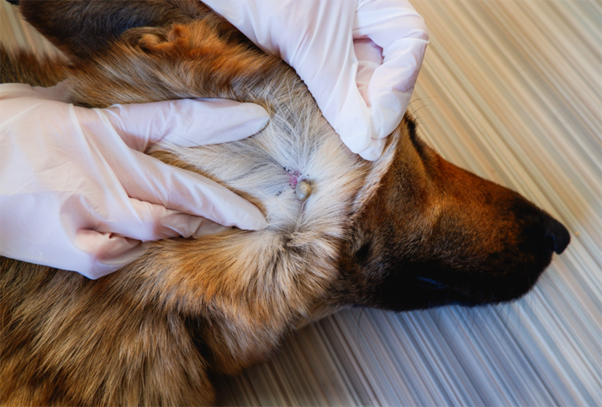
A key factor driving this complexity is the widespread presence of the brown dog tick, Rhipicephalus sanguineus sensu lato. This tick acts as a competent or potential vector for all three major pathogens—Babesia, Ehrlichia, and Hepatozoon—facilitating simultaneous transmission and increasing the likelihood of co-infections in dogs1.
For clinicians, this means that a single tick exposure may result in multiple infections, often altering disease severity, progression, and response to treatment.
The Diagnostic Dilemma
Diagnosing tick-borne diseases, especially co-infections, remains a major clinical challenge.
- Microscopy, while widely used and accessible, remains the cornerstone of diagnosis in many settings. However, its sensitivity is limited, particularly in chronic or carrier states where parasitemia is low or intermittent.
- Serological tests offer high sensitivity but only moderate specificity due to cross-reactivity with other hemoparasites and even normal erythrocytes1.
This creates a diagnostic grey zone where infections may be missed or misinterpreted.
PCR: A Step Forward in Diagnosis
Molecular diagnostics, particularly polymerase chain reaction (PCR), have significantly improved the detection of tick-borne pathogens. Multiplex PCR allows for:
- Simultaneous detection of multiple pathogens
- Higher sensitivity and specificity compared to conventional methods
- Identification of mixed infections in a single test
Studies have demonstrated the effectiveness of multiplex PCR in detecting combinations of Ehrlichia canis, Babesia gibsoni, Babesia vogeli, and Hepatozoon canis in co-infected dogs1.
For practicing veterinarians, this represents a powerful tool; especially, in cases with atypical presentations or poor response to standard therapy.
Why Co-Infections Matter in Practice
Co-infections are not just a diagnostic curiosity—they have real clinical implications:
- More severe or atypical clinical presentations
- Altered hematological and biochemical profiles
- Reduced response to standard, single-pathogen treatment protocols
- Increased risk of chronic or relapsing disease
In endemic regions, assuming a single infection may lead to under-treatment and poorer outcomes.
The Need for Surveillance and Risk Mapping
Despite the high burden of disease, epidemiological data on canine tick-borne co-infections in India remains limited. This is concerning, given1:
- The favourable tropical climate for tick proliferation
- The large population of stray and free-roaming dogs
- The potential for zoonotic transmission
Periodic surveillance of co-infection prevalence and associated risk factors is essential for designing effective control and prevention strategies. Current research efforts, including studies from regions like Andhra Pradesh, are beginning to address this gap by using both microscopy and multiplex PCR to better understand disease patterns and risk factors in tropical settings.
The Takeaway for Practice
In regions where ticks are endemic, veterinarians must shift from a single-disease mindset to a broader, more integrated approach:
- Always consider co-infections, especially in non-responsive cases
- Recognise the limitations of microscopy and serology
- Use PCR-based diagnostics when available for confirmation
- Emphasise tick control and preventive strategies in all patients
Because in tropical practice, tick-borne diseases rarely occur in isolation—and neither should our approach to diagnosing and managing them.
References
- Kopparthi J, Chennuru S, Vukka CR, Kumari KN, Prameela DR. Co-infections of major tick-borne pathogens of dogs in Andhra Pradesh, South India. InVeterinary Research Forum 2023 May 15 (Vol. 14, No. 5, p. 295). https://pmc.ncbi.nlm.nih.gov/articles/PMC10278907/pdf/vrf-14-295.pdf
- De Bonis A, Colombo M, Terragni R, Bacci B, Morelli S, Grillini M, Vignoli M. Potential role of Hepatozoon canis in a fatal systemic disease in a puppy. Pathogens. 2021 Sep 14;10(9):1193. https://www.mdpi.com/2076-0817/10/9/1193
Related Contents
.jpg)
Video
Transjugular Removal of Canine Heartworms: A Clinical and Surgical Overview
Transjugular removal of canine heartworms is a specialized intervention used in selected dogs with s...

Article
Feline Pregnancy Endocrinology: Hormonal Changes and Placental Function
Pregnancy in cats involves a distinctive endocrine pattern in which ovarian and placental hormones w...

Article
Hormonal Control of Pregnancy Termination in Cats
Pregnancy maintenance in cats depends strongly on coordinated hormonal support, particularly progest...

Article
Feline Embryo Implantation and Early Placental Development
Pregnancy establishment in cats involves a sequence of precisely timed events between fertilization,...

Article
Ultrasonographic Monitoring of Pregnancy in Cats: A Gestational Timeline
Ultrasonography provides a practical way to follow the progression of feline pregnancy by identifyin...

Article
Feline Mismating: Pregnancy Diagnosis and Clinical Management
Mismating or unplanned mating is a common clinical problem in sexually mature queen cats because of...

Article
Medical Termination of Pregnancy in Queens: Drugs, Timing and Treatment Protocols
Medical termination of pregnancy (MTP) in queen cats should be approached according to the timing of...

Article
Safety and Aftercare Following Pregnancy Termination in Queen Cats
Pregnancy termination in queen cats requires more than selecting an appropriate abortifacient. Once...