Article
Prevention and One Health Implications of Leptospirosis
Despite advances in diagnosis and treatment, leptospirosis continues to pose a significant threat due to its zoonotic potential and environmental persistence. Prevention strategies must therefore address both individual patient protection and broader public health considerations.
Vaccination: The Primary Preventive Tool
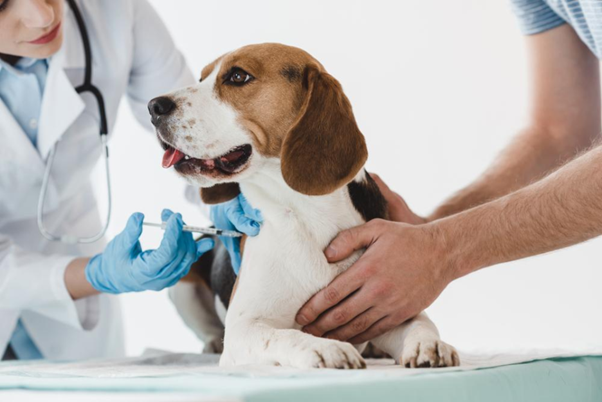
Vaccination remains the most effective method for preventing clinical disease in dogs. Currently available vaccines target multiple serovars, with quadrivalent vaccines providing broader coverage against commonly circulating strains.
Studies have shown that these vaccines offer over 80% protection against clinical disease and renal carrier status1,2. However, immunity is serogroup-specific, meaning protection may not extend to all circulating strains.
Annual vaccination is recommended for all dogs, regardless of lifestyle, as exposure risk cannot be reliably predicted. Puppies should receive an initial series followed by regular boosters.
Limitations of Vaccination
While effective, vaccines do not provide complete protection. Breakthrough infections can occur, particularly in areas where circulating serovars differ from those included in vaccines.
This reinforces the need for clinicians to continue considering leptospirosis in vaccinated dogs presenting with compatible signs.
Environmental and Lifestyle Management
Reducing exposure to leptospires is an essential component of prevention. This includes minimizing contact with standing water, controlling rodent populations, and limiting interaction with wildlife or livestock.
Urban environments are not exempt. Poor sanitation, rodent infestations, and communal dog settings such as kennels or daycare facilities can all increase risk1.
Zoonotic Risk and Veterinary Responsibility
Leptospirosis is a classic One Health disease, affecting both animals and humans. Although transmission from dogs to humans is considered relatively low, it can occur through contact with infected urine, particularly in high-risk situations.
Veterinary professionals play a critical role in minimizing this risk by1:
- Identifying suspected cases early
- Implementing appropriate infection control measures
- Educating pet owners about precautions
Standard hygiene practices, including the use of protective equipment and proper disinfection, are highly effective in reducing transmission risk.
Managing Risk in Clinical and Home Settings
In veterinary clinics, suspected cases should be handled with care, particularly during the first 48 hours of treatment. Minimizing exposure to urine and maintaining strict hygiene protocols significantly reduces risk.
At home, pet owners should be advised to avoid direct contact with urine and maintain cleanliness until antimicrobial therapy has been established. Education is key to preventing unnecessary fear while ensuring appropriate precautions.
The Bigger Picture: One Health Approach
Leptospirosis highlights the interconnectedness of human, animal, and environmental health. Rodents remain the primary reservoir, and environmental factors such as rainfall, flooding, and sanitation play a major role in disease transmission.
A One Health approach, integrating veterinary care, public health awareness, and environmental management, is essential for long-term control.
Clinical Takeaway
Prevention of leptospirosis goes beyond vaccination. It requires a comprehensive strategy that includes immunization, environmental management, and awareness of zoonotic risk.
For veterinarians, the goal is not only to protect individual patients but also to contribute to broader disease control through education and responsible clinical practice.
Reference
- Sykes JE, Francey T, Schuller S, Stoddard RA, Cowgill LD, Moore GE. Updated ACVIM consensus statement on leptospirosis in dogs. Journal of veterinary internal medicine. 2023 Nov;37(6):1966-82. https://onlinelibrary.wiley.com/doi/pdfdirect/10.1111/jvim.16903?utm_source=consensus
- Esteves SB, Santos CM, Salgado FF, Goncales AP, Guilloux AG, Martins CM, Hagiwara MK, Miotto BA. Efficacy of commercially available vaccines against canine leptospirosis: A systematic review and meta-analysis. Vaccine. 2022 Mar 15;40(12):1722-40. https://doi.org/10.1016/j.vaccine.2022.02.021
Related Contents
.jpg)
Video
Transjugular Removal of Canine Heartworms: A Clinical and Surgical Overview
Transjugular removal of canine heartworms is a specialized intervention used in selected dogs with s...

Article
Feline Pregnancy Endocrinology: Hormonal Changes and Placental Function
Pregnancy in cats involves a distinctive endocrine pattern in which ovarian and placental hormones w...

Article
Hormonal Control of Pregnancy Termination in Cats
Pregnancy maintenance in cats depends strongly on coordinated hormonal support, particularly progest...

Article
Feline Embryo Implantation and Early Placental Development
Pregnancy establishment in cats involves a sequence of precisely timed events between fertilization,...

Article
Ultrasonographic Monitoring of Pregnancy in Cats: A Gestational Timeline
Ultrasonography provides a practical way to follow the progression of feline pregnancy by identifyin...

Article
Feline Mismating: Pregnancy Diagnosis and Clinical Management
Mismating or unplanned mating is a common clinical problem in sexually mature queen cats because of...

Article
Medical Termination of Pregnancy in Queens: Drugs, Timing and Treatment Protocols
Medical termination of pregnancy (MTP) in queen cats should be approached according to the timing of...

Article
Safety and Aftercare Following Pregnancy Termination in Queen Cats
Pregnancy termination in queen cats requires more than selecting an appropriate abortifacient. Once...