Article
Vaccination Strategies Against Newcastle Disease – Field Perspectives
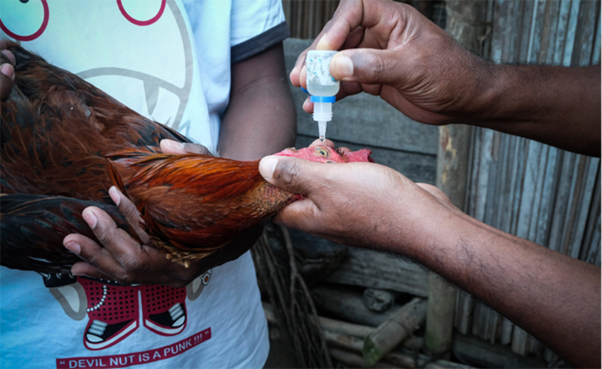
Vaccination remains the cornerstone of Newcastle Disease control in poultry production systems. However, field failures continue to occur, often due to a combination of biological and management-related factors.
Conventional Vaccination Practices
Live attenuated vaccines such as LaSota and B1 strains, along with inactivated vaccines, are widely used across poultry operations. These vaccines have historically provided good protection when properly administered and supported by an effective vaccination schedule2.
Limitations Observed in the Field
Despite vaccination, outbreaks can still occur. One important limitation is that vaccination does not always prevent viral shedding, meaning birds may still become infected and transmit the virus without showing severe clinical signs. In addition, maternal antibody interference in young chicks and errors in vaccine handling or administration can reduce vaccine efficacy¹.
Improving Vaccination Outcomes
Field success depends on multiple factors, including correct timing of vaccination, maintenance of cold chain, and adaptation of vaccination programs to local disease pressure. The review also highlights emerging strategies such as genotype-matched vaccines, which are designed to better align with circulating field strains and improve protection¹.
Field Implications
Veterinarians must view vaccination not as a standalone solution but as part of an integrated disease control strategy involving management, biosecurity, and surveillance.
References
- Bello MB, Yusoff K, Ideris A, Hair-Bejo M, Peeters BP, Omar AR. Diagnostic and vaccination approaches for Newcastle disease virus in poultry: The current and emerging perspectives. BioMed research international. 2018;2018(1):7278459. https://doi.org/10.1155/2018/7278459
- Apada AM, Alifha AR, Rell F, Syahid TP. Administration of Live-Attenuated Newcastle Disease (ND) Vaccines Derived from B1 and LaSota Strain and Their Effect on Broiler Antibody Titers. Jurnal Riset Veteriner Indonesia (Journal of The Indonesian Veterinary Research). 2022 Jan 12. http://journal.unhas.ac.id/index.php/jrvi/article/download/19400/7759
Related Contents
.jpg)
Video
Transjugular Removal of Canine Heartworms: A Clinical and Surgical Overview
Transjugular removal of canine heartworms is a specialized intervention used in selected dogs with s...

Article
Feline Pregnancy Endocrinology: Hormonal Changes and Placental Function
Pregnancy in cats involves a distinctive endocrine pattern in which ovarian and placental hormones w...

Article
Hormonal Control of Pregnancy Termination in Cats
Pregnancy maintenance in cats depends strongly on coordinated hormonal support, particularly progest...

Article
Feline Embryo Implantation and Early Placental Development
Pregnancy establishment in cats involves a sequence of precisely timed events between fertilization,...

Article
Ultrasonographic Monitoring of Pregnancy in Cats: A Gestational Timeline
Ultrasonography provides a practical way to follow the progression of feline pregnancy by identifyin...

Article
Feline Mismating: Pregnancy Diagnosis and Clinical Management
Mismating or unplanned mating is a common clinical problem in sexually mature queen cats because of...

Article
Medical Termination of Pregnancy in Queens: Drugs, Timing and Treatment Protocols
Medical termination of pregnancy (MTP) in queen cats should be approached according to the timing of...

Article
Safety and Aftercare Following Pregnancy Termination in Queen Cats
Pregnancy termination in queen cats requires more than selecting an appropriate abortifacient. Once...