Article
Field Diagnosis of Newcastle Disease in Poultry
Newcastle Disease (ND) is a highly contagious viral infection of poultry that continues to cause severe economic losses worldwide. For field veterinarians, early suspicion and rapid confirmation are critical to limit spread within and between farms.
Clinical Presentation in Field Conditions
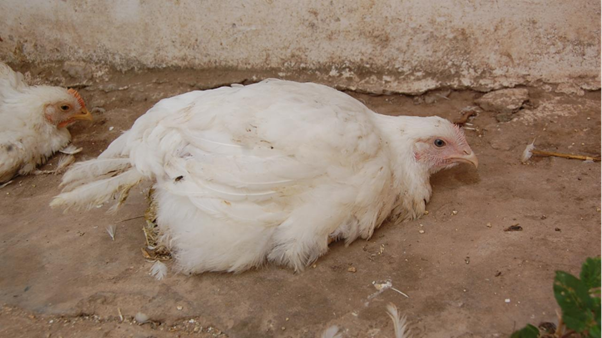
In field outbreaks, birds typically present with respiratory distress such as gasping, coughing, and rales, along with greenish diarrhoea and sudden spikes in mortality. Neurological signs including torticollis, tremors, and incoordination may also be observed in severe infections1,2. However, these signs are not specific and can overlap with other respiratory or systemic diseases, making clinical diagnosis alone unreliable.
Sampling and Laboratory Diagnosis
Accurate diagnosis depends on timely sample collection during the acute phase of infection. Tracheal and cloacal swabs, along with tissues such as trachea, spleen, and brain, are commonly collected for laboratory confirmation. The review highlights that virus isolation remains the gold standard for definitive diagnosis, although it is slow and requires specialized biosafety infrastructure¹.
For practical field use, molecular techniques such as RT-PCR and real-time PCR are now preferred due to their speed and high sensitivity. Serological tests like ELISA and hemagglutination inhibition (HI) are more useful for assessing flock immunity and monitoring exposure rather than confirming acute outbreaks¹.
Field Implications
In practice, early sampling combined with rapid molecular testing significantly improves outbreak response time. This allows veterinarians to implement control measures before the infection spreads widely within the flock.
References
- Bello MB, Yusoff K, Ideris A, Hair-Bejo M, Peeters BP, Omar AR. Diagnostic and vaccination approaches for Newcastle disease virus in poultry: The current and emerging perspectives. BioMed research international. 2018;2018(1):7278459. https://doi.org/10.1155/2018/7278459
- Zhang D, Ding Z, Xu X. Pathologic mechanisms of the Newcastle disease virus. Viruses. 2023 Mar 28;15(4):864. https://www.mdpi.com/1999-4915/15/4/864
Related Contents
.jpg)
Video
Transjugular Removal of Canine Heartworms: A Clinical and Surgical Overview
Transjugular removal of canine heartworms is a specialized intervention used in selected dogs with s...

Article
Feline Pregnancy Endocrinology: Hormonal Changes and Placental Function
Pregnancy in cats involves a distinctive endocrine pattern in which ovarian and placental hormones w...

Article
Hormonal Control of Pregnancy Termination in Cats
Pregnancy maintenance in cats depends strongly on coordinated hormonal support, particularly progest...

Article
Feline Embryo Implantation and Early Placental Development
Pregnancy establishment in cats involves a sequence of precisely timed events between fertilization,...

Article
Ultrasonographic Monitoring of Pregnancy in Cats: A Gestational Timeline
Ultrasonography provides a practical way to follow the progression of feline pregnancy by identifyin...

Article
Feline Mismating: Pregnancy Diagnosis and Clinical Management
Mismating or unplanned mating is a common clinical problem in sexually mature queen cats because of...

Article
Medical Termination of Pregnancy in Queens: Drugs, Timing and Treatment Protocols
Medical termination of pregnancy (MTP) in queen cats should be approached according to the timing of...

Article
Safety and Aftercare Following Pregnancy Termination in Queen Cats
Pregnancy termination in queen cats requires more than selecting an appropriate abortifacient. Once...