Article
Clinical Implications of Lactose Intolerance in Dogs: Diagnosis, Nutrition, and Preventive Strategies
Lactose intolerance in dogs is a commonly encountered yet frequently misunderstood nutritional condition in veterinary practice. While milk is often perceived as a wholesome dietary supplement, inappropriate lactose intake can result in significant gastrointestinal disturbances, particularly in adult dogs with reduced lactase activity. Understanding lactose metabolism, the physiological role of milk and colostrum, and appropriate nutritional management is essential for veterinarians advising breeders, pet owners, and caregivers of neonatal and adult dogs1,2.
Lactose Metabolism and Digestive Physiology
Lactose is the primary carbohydrate present in mammalian milk and plays a crucial role in neonatal energy metabolism and brain development. For effective digestion, lactose must be hydrolyzed by the enzyme lactase into glucose and galactose within the small intestine. Puppies naturally produce sufficient lactase during the suckling period, enabling efficient digestion of maternal milk. However, lactase activity declines significantly after weaning, predisposing many dogs to lactose maldigestion later in life1.
When lactose is not adequately digested, it remains in the intestinal lumen, where it exerts an osmotic effect and undergoes microbial fermentation in the colon. This process results in gas production and gastrointestinal irritation, leading to clinical signs such as diarrhea, bloating, vomiting, and abdominal discomfort2,3. The severity of these signs varies among individuals and breeds, reflecting differences in residual lactase activity1.
Effects of Lactose on Canine Gastrointestinal Function
Studies evaluating lactose supplementation in dogs have shown that fecal pH and ammonia concentrations remain largely unaffected, and microbial populations in the feces do not change significantly4. These findings suggest that lactose does not function as a prebiotic in dogs, unlike in other species such as humans and pigs1. However, lactose supplementation has been shown to influence mineral digestibility, affecting calcium, iron, potassium, manganese, magnesium, phosphorus, and zinc absorption1,4. This highlights the importance of cautious dietary formulation, particularly in growing or nutritionally compromised dogs.
Importance of Colostrum in Early Life
Colostrum intake is vital for neonatal puppies, as they are born with nearly no circulating immunoglobulins due to limited placental transfer1,5. Colostrum provides immunoglobulins, enzymes, growth factors, and bioactive compounds essential for immune protection and gastrointestinal development1,6. The absorption of immunoglobulins is limited to the first 24–48 hours after birth, after which intestinal permeability decreases significantly1.
Passive immunity depends more on the volume and timing of colostrum ingestion than on immunoglobulin concentration alone. Failure of adequate colostrum intake can result in compromised immunity, increasing susceptibility to bacterial and viral infections during early life1.
Canine Milk Composition and Nutritional Considerations
Dog milk differs substantially from bovine milk, containing higher concentrations of fat and protein and lower lactose levels. On average, canine milk contains approximately 7.5% fat, 8.5% protein, and 3.5% lactose, making it well-suited for the rapid growth and high energy demands of puppies. During lactation, milk composition changes, with increasing fat and lactose concentrations and decreasing immunoglobulin levels, reflecting the shifting nutritional requirements of growing puppies1.
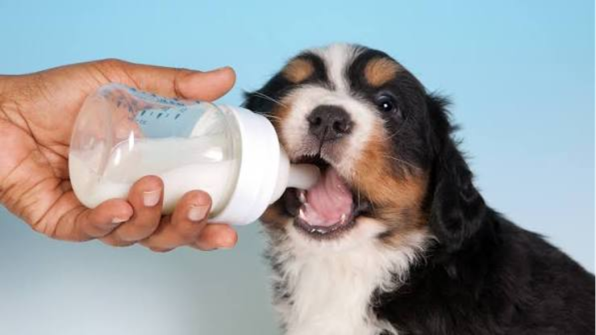
Commercial milk replacers are commonly used in cases of orphaned puppies or maternal illness. However, these replacers may not fully replicate the nutritional composition of canine milk, particularly in protein, fat, calcium, and long-chain fatty acids7. Additionally, some milk replacers contain higher vitamin D levels than natural canine milk, necessitating careful veterinary supervision1.
Management and Prevention of Lactose Intolerance
The primary management strategy for lactose intolerance in dogs is dietary modification. Removal of lactose-containing dairy products and the introduction of lactose-free alternatives effectively reduce gastrointestinal signs while maintaining nutritional adequacy2,3. Lactose-free milk is produced by enzymatically breaking lactose into absorbable monosaccharides, improving digestibility without compromising nutritional value8.
Goat milk, which contains less lactose than cow milk, may be tolerated by some dogs but is not suitable for severely lactose-intolerant individuals2. Homemade milk replacers should be reserved for emergencies only and are not recommended for long-term feeding due to nutritional imbalances and hygiene concerns1.
Conclusion
Lactose intolerance in dogs is a predictable physiological condition associated with declining lactase activity rather than a pathological disorder. Veterinarians play a key role in preventing unnecessary gastrointestinal disturbances through evidence-based nutritional counseling. Understanding milk composition, digestive physiology, and appropriate dietary alternatives is essential for optimizing canine health across all life stages.
References
- Badawi NM, Al-Naseri JSA. Lactose intolerance in dogs: review. International Journal of Veterinary Sciences and Animal Husbandry. 2025;10(6):112–116. doi:10.22271/veterinary.2025.v10.i6b.2318. https://www.doi.org/10.22271/veterinary.2025.v10.i6b.2318
- Wang Y, Lou H, Turpeinen AM, Liu L, Xue F. Effect of lactose-free milk powder on lactose intolerance symptoms and nutritional status of pet dogs. Journal of Applied Animal Nutrition. 2023;11(1):33-38. https://brill.com/view/journals/jaan/11/1/article-p33_5.pdf
- Zhang M, Sun X, Cheng J, Guo M. Analysis and comparison of nutrition profiles of canine milk with bovine and caprine milk. Foods. 2022 Feb 5;11(3):472. https://www.mdpi.com/2304-8158/11/3/472
- Grandi M, Pinna C, Bonaldo A, Stefanelli C, Vecchiato CG, Zaghini G, Biagi G. Effects of dietary supplementation with increasing doses of lactose on faecal bacterial populations and metabolites and apparent total tract digestibility in adult dogs. Italian Journal of Animal Science. 2018 Oct 2;17(4):1021-9. https://www.tandfonline.com/doi/pdf/10.1080/1828051X.2018.1459210
- Chastant S, Mila H. Passive immune transfer in puppies. Animal Reproduction Science. 2019;207:162-170. https://www.sciencedirect.com/science/article/am/pii/S0378432019302659
- Rossi L, Lumbreras AE, Vagni S, Dell’Anno M, Bontempo V. Nutritional and functional properties of colostrum in puppies and kittens. Animals. 2021 Nov 15;11(11):3260. https://www.mdpi.com/2076-2615/11/11/3260
- Li P, Wu G. Characteristics of nutrition and metabolism in dogs and cats. In: Nutrition and Metabolism of Dogs and Cats. Cham: Springer Nature Switzerland; 2024:55- 98. https://link.springer.com/content/pdf/10.1007/978-3-031-54192-6_4.pdf
- Dekker PJ, Koenders D, Bruins MJ. Lactose-free dairy products: market developments, production, nutrition and health benefits. Nutrients. 2019;11(3):551. https://www.mdpi.com/2072-6643/11/3/551
Related Contents
.jpg)
Video
Transjugular Removal of Canine Heartworms: A Clinical and Surgical Overview
Transjugular removal of canine heartworms is a specialized intervention used in selected dogs with s...

Article
Feline Pregnancy Endocrinology: Hormonal Changes and Placental Function
Pregnancy in cats involves a distinctive endocrine pattern in which ovarian and placental hormones w...

Article
Hormonal Control of Pregnancy Termination in Cats
Pregnancy maintenance in cats depends strongly on coordinated hormonal support, particularly progest...

Article
Feline Embryo Implantation and Early Placental Development
Pregnancy establishment in cats involves a sequence of precisely timed events between fertilization,...

Article
Ultrasonographic Monitoring of Pregnancy in Cats: A Gestational Timeline
Ultrasonography provides a practical way to follow the progression of feline pregnancy by identifyin...

Article
Feline Mismating: Pregnancy Diagnosis and Clinical Management
Mismating or unplanned mating is a common clinical problem in sexually mature queen cats because of...

Article
Medical Termination of Pregnancy in Queens: Drugs, Timing and Treatment Protocols
Medical termination of pregnancy (MTP) in queen cats should be approached according to the timing of...

Article
Safety and Aftercare Following Pregnancy Termination in Queen Cats
Pregnancy termination in queen cats requires more than selecting an appropriate abortifacient. Once...