Article
On-Farm and Laboratory Diagnostics for Bovine Mastitis
Mastitis diagnosis in dairy cattle increasingly relies on a combination of rapid cow-side screening tools and laboratory confirmation methods. In field practice, the objective is to integrate multiple diagnostic approaches to ensure timely treatment, improve accuracy, and support rational antimicrobial use.
On-farm culture systems
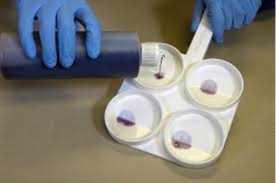
On-farm culture systems use selective media such as Bi-Plate and Tri-Plate formats to classify mastitis pathogens and guide early treatment decisions. These systems demonstrate higher specificity but lower sensitivity, making them more suitable for broad pathogen grouping rather than precise species identification. They are effective for distinguishing major pathogen categories but have limited resolution for closely related organisms1.
Veterinary pearls
- Use for immediate treatment decisions (treat, delay, or withhold antibiotics).
- Do not rely on for chronic or herd-level investigations.
- Always interpret alongside clinical findings.
Electrical conductivity (EC)
Electrical conductivity increases in mastitic milk due to elevated sodium and chloride levels. It is widely used in automated milking systems for real-time udder health monitoring. However, accuracy is affected by milk temperature, infection stage, and somatic cell variation. Thus, EC is more appropriate for herd-level surveillance than definitive diagnosis1,2.
Veterinary pearls
- Use EC trends for early herd-level alerts.
- Avoid interpreting single spikes as definitive mastitis.
- Compare quarter-level changes for better interpretation.
California Mastitis Test (CMT) and Wisconsin Mastitis Test (WMT)
The California Mastitis Test remains a widely used cow-side screening tool for subclinical mastitis. It provides rapid estimation of somatic cell content and is particularly useful in field screening. The Wisconsin Mastitis Test offers a more objective semi-quantitative estimation of SCC and is useful for monitoring udder health trends1.
Veterinary pearls
- Use CMT for routine quarter-level screening.
- Interpret weak positives cautiously in early lactation or stressed cows.
- Use WMT for longitudinal monitoring rather than single diagnosis.
Laboratory microbiological culture
Microbiological culture remains the reference standard for mastitis diagnosis. It is cost-effective and provides organism-level identification but requires 24–48 hours for results. A proportion of clinical mastitis cases may yield no growth due to low pathogen load or prior antimicrobial use3.
Veterinary pearls
- Collect samples before antibiotic therapy.
- Repeat sampling improves diagnostic yield in suspected negative cases.
- Use results for targeted therapy selection.
Somatic cell count (SCC)
SCC is a widely used indicator of udder health at both cow and herd level. It reflects inflammatory status but is influenced by non-infectious factors such as stress, parity, and lactation stage, limiting specificity1.
Veterinary pearls
- Use SCC primarily for herd-level monitoring.
- Always interpret alongside clinical findings.
- Avoid over-reliance for pathogen diagnosis.
PCR and molecular diagnostics
PCR provides high sensitivity and rapid detection of mastitis pathogens, including culture-negative cases. It can detect a significant proportion of infections missed by conventional culture methods. However, it may detect DNA from non-viable organisms, leading to potential false positives1.
Veterinary pearls
- Use PCR for chronic, recurrent, or culture-negative mastitis.
- Do not interpret PCR positivity in isolation.
- Always correlate with SCC and clinical findings.
Conclusion
Mastitis diagnosis is most effective when based on a structured, tiered approach combining cow-side screening tools with laboratory confirmation. On-farm methods such as CMT, EC, and culture provide rapid decision support, while laboratory techniques such as culture and PCR offer definitive pathogen identification. Somatic cell count remains essential for herd monitoring but lacks diagnostic specificity. Integrating these methods improves treatment precision, enhances clinical outcomes, and supports responsible antimicrobial stewardship in dairy herd health management.
References
- Ramuada M, Tyasi TL, Gumede L, Chitura T. A practical guide to diagnosing bovine mastitis: a review. Frontiers in Animal Science. 2024 Dec 16;5:1504873. https://www.frontiersin.org/journals/animal-science/articles/10.3389/fanim.2024.1504873/pdf
- Paudyal, S., Melendez, P., Manriquez, D., Velasquez-Munoz, A., Pena, G., RomanMuniz, I. N., et al. (2020). Use of milk electrical conductivity for the differentiation of mastitis-causing pathogens in Holstein cows. Animal 14, 588–596. https://www.sciencedirect.com/science/article/pii/S1751731119002210
- Malcata FB, Pepler PT, O'reilly EL, Brady N, Eckersall PD, Zadoks RN, Viora L. Point-of-care tests for bovine clinical mastitis: what do we have and what do we need?. Journal of Dairy Research. 2020 Aug;87(S1):60-6. https://doi.org/10.1017/S002202992000062X
Related Contents
.jpg)
Video
Transjugular Removal of Canine Heartworms: A Clinical and Surgical Overview
Transjugular removal of canine heartworms is a specialized intervention used in selected dogs with s...

Article
Feline Pregnancy Endocrinology: Hormonal Changes and Placental Function
Pregnancy in cats involves a distinctive endocrine pattern in which ovarian and placental hormones w...

Article
Hormonal Control of Pregnancy Termination in Cats
Pregnancy maintenance in cats depends strongly on coordinated hormonal support, particularly progest...

Article
Feline Embryo Implantation and Early Placental Development
Pregnancy establishment in cats involves a sequence of precisely timed events between fertilization,...

Article
Ultrasonographic Monitoring of Pregnancy in Cats: A Gestational Timeline
Ultrasonography provides a practical way to follow the progression of feline pregnancy by identifyin...

Article
Feline Mismating: Pregnancy Diagnosis and Clinical Management
Mismating or unplanned mating is a common clinical problem in sexually mature queen cats because of...

Article
Medical Termination of Pregnancy in Queens: Drugs, Timing and Treatment Protocols
Medical termination of pregnancy (MTP) in queen cats should be approached according to the timing of...

Article
Safety and Aftercare Following Pregnancy Termination in Queen Cats
Pregnancy termination in queen cats requires more than selecting an appropriate abortifacient. Once...