Article
Identifying Risk Factors in Canine Heat-Related Illness: A Clinical Perspective
Heat-related illness in dogs is not a uniform condition affecting all patients equally. Instead, it is strongly influenced by a range of intrinsic and extrinsic risk factors. Recognising these factors is essential for veterinarians to identify high-risk patients, tailor preventive advice, and intervene early.
Recent research has significantly advanced our understanding of these risk determinants, providing valuable insights into breed susceptibility, age-related vulnerability, and physiological limitations1.
Breed Predisposition: The Role of Conformation
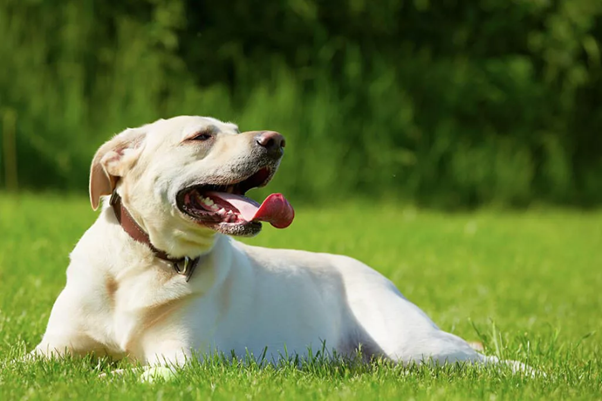
Breed is one of the most well-established risk factors for heat-related illness. Compared to the Labrador Retriever baseline, several breeds have demonstrated increased susceptibility, including1,2:
- Chow Chow
- English Bulldog
- French Bulldog
- Dogue de Bordeaux
- Greyhound
- Pug
- English Springer Spaniel
- Cavalier King Charles Spaniel
- Golden Retriever
Among these, brachycephalic breeds are particularly vulnerable due to anatomical constraints that impair effective heat dissipation. Reduced airway efficiency limits panting, a primary thermoregulatory mechanism in dogs, leading to increased heat retention1,3.
From a clinical standpoint, this necessitates proactive counselling for owners of brachycephalic dogs, especially during warmer months or before exercise.
Age-Related Risk Patterns
Age influences both the type and severity of heat-related illness. Dogs under 2 years of age are at the highest risk of exertional HRI, likely due to increased activity levels and longer exercise durations4.
Conversely, dogs over 12 years show a higher predisposition to environmental HRI, reflecting age-related decline in thermoregulatory efficiency5.
This dual pattern highlights the importance of age-specific advice:
- Younger dogs: monitor exercise intensity and duration
- Older dogs: prioritise environmental control and cooling
Bodyweight and Body Condition
Obesity is a significant and modifiable risk factor. Overweight dogs have a higher likelihood of developing heat-related illness, potentially due to reduced heat dissipation and increased metabolic heat production1,2.
Additionally, dogs weighing over 10 kg show an increased risk compared to smaller dogs. This suggests that both absolute bodyweight and body condition score should be considered during risk assessment1.
Veterinarians should integrate weight management strategies into preventive care, emphasising their role not only in metabolic health but also in thermoregulation.
Underlying Health Conditions
Although not extensively detailed, underlying diseases can further impair thermoregulatory capacity. Conditions affecting cardiovascular, respiratory, or neurological systems may exacerbate heat intolerance.
Clinically, this reinforces the need for individualised risk profiling, particularly in patients with comorbidities.
Practical Risk Assessment in Clinical Settings
Incorporating risk factor evaluation into routine consultations can significantly improve early detection and prevention. A structured approach may include1:
- Breed and skull conformation
- Age category
- Bodyweight and condition score
- Lifestyle and exercise habits
- Environmental exposure
By identifying high-risk patients, veterinarians can provide targeted recommendations, such as adjusting exercise schedules, enhancing cooling strategies, and avoiding high-risk environments.
Client Communication: Translating Risk into Action
Effective communication is key to reducing HRI incidence. Rather than presenting risk factors in isolation, veterinarians should contextualise them within the patient’s daily routine.
For example:
- A young, active brachycephalic dog represents a high-risk profile for exertional HRI
- An elderly, overweight dog in an urban apartment may be more prone to environmental HRI
This personalised approach enhances owner compliance and improves preventive outcomes.
Conclusion
Understanding risk factors in canine heat-related illness allows veterinarians to shift from reactive management to proactive care. Breed, age, bodyweight, and physiological limitations all contribute to disease susceptibility.
By integrating these insights into everyday practice, veterinarians can better protect vulnerable patients and reduce the incidence of this potentially fatal condition (Bradbury et al., 2023).
Reference
1. Bradbury J, Hall E, Carter A, O'Neill DG. Canine heat-related illness–new perspectives from recent research. Companion Animal. 2023 Jul 2;28(7):2-5. https://www.magonlinelibrary.com/doi/pdf/10.12968/coan.2023.0015
2. Hall EJ, Carter AJ, O’Neill DG. Incidence and risk factors for heat-related illness (heatstroke) in UK dogs under primary veterinary care in 2016. Scientific reports. 2020 Jun 18;10(1):9128. https://www.nature.com/articles/s41598-020-66015-8.pdf
3. Davis MS, Cummings SL, Payton ME. Effect of brachycephaly and body condition score on respiratory thermoregulation of healthy dogs. Journal of the American Veterinary Medical Association. 2017 Nov 15;251(10):1160-5. https://www.researchgate.net/profile/Michael-Davis-40/publication/321154822_Effect_of_brachycephaly_and_body_condition_score_on_respiratory_thermoregulation_of_healthy_dogs/links/64626795434e26474feb16f5/Effect-of-brachycephaly-and-body-condition-score-on-respiratory-thermoregulation-of-healthy-dogs.pdf
4. Hall EJ, Carter AJ, O’Neill DG. Dogs don’t die just in hot cars—exertional heat-related illness (Heatstroke) is a greater threat to UK dogs. Animals. 2020 Jul 31;10(8):1324. https://www.mdpi.com/2076-2615/10/8/1324
5. Balmain BN, Sabapathy S, Louis M, Morris NR. Aging and thermoregulatory control: the clinical implications of exercising under heat stress in older individuals. BioMed research international. 2018;2018(1):8306154. https://onlinelibrary.wiley.com/doi/pdf/10.1155/2018/8306154
Related Contents
.jpg)
Video
Transjugular Removal of Canine Heartworms: A Clinical and Surgical Overview
Transjugular removal of canine heartworms is a specialized intervention used in selected dogs with s...

Article
Feline Pregnancy Endocrinology: Hormonal Changes and Placental Function
Pregnancy in cats involves a distinctive endocrine pattern in which ovarian and placental hormones w...

Article
Hormonal Control of Pregnancy Termination in Cats
Pregnancy maintenance in cats depends strongly on coordinated hormonal support, particularly progest...

Article
Feline Embryo Implantation and Early Placental Development
Pregnancy establishment in cats involves a sequence of precisely timed events between fertilization,...

Article
Ultrasonographic Monitoring of Pregnancy in Cats: A Gestational Timeline
Ultrasonography provides a practical way to follow the progression of feline pregnancy by identifyin...

Article
Feline Mismating: Pregnancy Diagnosis and Clinical Management
Mismating or unplanned mating is a common clinical problem in sexually mature queen cats because of...

Article
Medical Termination of Pregnancy in Queens: Drugs, Timing and Treatment Protocols
Medical termination of pregnancy (MTP) in queen cats should be approached according to the timing of...

Article
Safety and Aftercare Following Pregnancy Termination in Queen Cats
Pregnancy termination in queen cats requires more than selecting an appropriate abortifacient. Once...