Article
Role of Molecular Diagnostics in Detecting Mixed Infections in Poultry
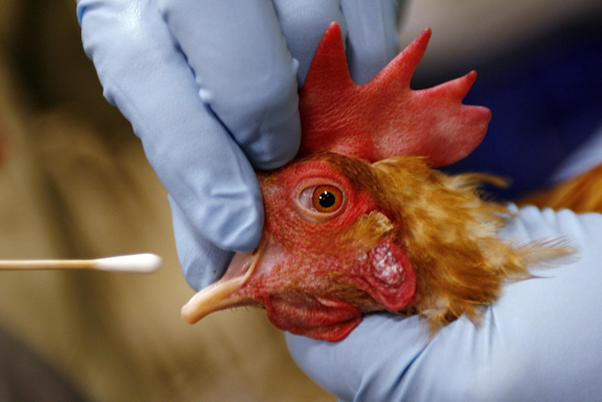
Accurate diagnosis of mixed infections in poultry is often difficult based on clinical signs alone. Advances in molecular diagnostics have significantly improved the ability to detect multiple pathogens simultaneously, providing better clarity in complex disease situations1,2.
Limitations of Conventional Diagnosis
Traditional diagnostic approaches often focus on identifying a single causative agent. However, in cases of mixed infections, this can lead to incomplete diagnosis and inappropriate treatment1.
Clinical signs alone are often insufficient, as multiple pathogens may produce overlapping symptoms.
Role of Multiplex PCR
Multiplex PCR is a valuable diagnostic tool that allows simultaneous detection of multiple pathogens from a single sample. This is particularly useful in respiratory disease complexes involving agents such as Newcastle Disease and infectious bronchitis virus2.
By identifying all major pathogens involved, veterinarians can make more informed treatment and management decisions.
Field Relevance in India
While advanced diagnostic tools may not always be available at the farm level, access to regional laboratories has improved in recent years. Samples can be collected and transported for testing in cases of severe or recurring outbreaks.
This approach is especially useful in large commercial farms where economic losses are significant.
Benefits for Veterinary Practice
Accurate detection of mixed infections helps in reducing unnecessary antibiotic use and supports targeted therapy. It also improves understanding of disease patterns at the farm level, aiding in better prevention strategies.
Conclusion
Molecular diagnostics are becoming an important component of poultry disease management. Their use can enhance diagnostic accuracy and support more effective control of mixed infections in the field.
References
- Liu H, Pan S, Wang C, Yang W, Wei X, He Y, Xu T, Shi K, Si H. Review of respiratory syndromes in poultry: pathogens, prevention, and control measures. Veterinary research. 2025 May 17;56(1):101. https://veterinaryresearch.biomedcentral.com/articles/10.1186/s13567-025-01506-y
- Piri-Gharaghie T, Ghajari G, Lahijani NT, Pecho RD, Hussam F, Castillo-Acobo RY, Aghassizadeh-Sherbaf M. Simultaneous and rapid detection of avian respiratory diseases of small poultry using multiplex reverse transcription-Polymerase Chain Reaction assay. Poultry Science. 2023 Aug 1;102(8):102852. https://www.sciencedirect.com/science/article/pii/S0032579123003711
Related Contents
.jpg)
Video
Transjugular Removal of Canine Heartworms: A Clinical and Surgical Overview
Transjugular removal of canine heartworms is a specialized intervention used in selected dogs with s...

Article
Feline Pregnancy Endocrinology: Hormonal Changes and Placental Function
Pregnancy in cats involves a distinctive endocrine pattern in which ovarian and placental hormones w...

Article
Hormonal Control of Pregnancy Termination in Cats
Pregnancy maintenance in cats depends strongly on coordinated hormonal support, particularly progest...

Article
Feline Embryo Implantation and Early Placental Development
Pregnancy establishment in cats involves a sequence of precisely timed events between fertilization,...

Article
Ultrasonographic Monitoring of Pregnancy in Cats: A Gestational Timeline
Ultrasonography provides a practical way to follow the progression of feline pregnancy by identifyin...

Article
Feline Mismating: Pregnancy Diagnosis and Clinical Management
Mismating or unplanned mating is a common clinical problem in sexually mature queen cats because of...

Article
Medical Termination of Pregnancy in Queens: Drugs, Timing and Treatment Protocols
Medical termination of pregnancy (MTP) in queen cats should be approached according to the timing of...

Article
Safety and Aftercare Following Pregnancy Termination in Queen Cats
Pregnancy termination in queen cats requires more than selecting an appropriate abortifacient. Once...