Article
Microsporum Canis Dermatophytosis in Shelter Cats: Evaluating Systemic and Topical Treatment Strategies
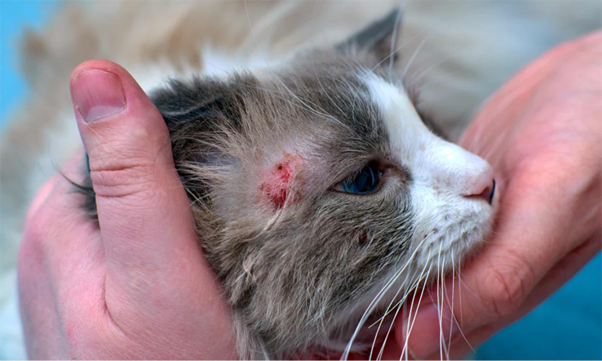
Microsporum canis is recognized as the most common cause of dermatophytosis in cats. Although typically a mild and superficial infection, it is of particular concern in animal shelters due to its prevalence, zoonotic potential, risk of outbreaks, and the associated cost and duration of treatment1,2,3.
Clinical Significance in Shelter Settings
Dermatophytosis in shelters predominantly affects kittens, often necessitating isolation, confinement, and repeated treatments during critical stages of social development3.
Treatment protocols in such environments aim to achieve rapid and complete cure while minimizing environmental contamination and reducing transmission risk2. To meet these objectives, a combination of systemic and topical antifungal therapy is generally recommended.
Systemic Antifungal Therapy
Systemic antifungal agents such as itraconazole and terbinafine are considered among the safest and most effective treatment options3,4.
Itraconazole is currently the only oral antifungal approved by the United States Food and Drug Administration for use in cats with M. canis dermatophytosis4. Systemic therapy primarily targets fungal organisms within the skin and hair follicles.
Role of Topical Therapy
Topical antifungal therapy serves as an important adjunct by eliminating infective spores on the hair coat, thereby reducing environmental contamination and limiting transmission3.
Traditional protocols recommend twice-weekly application of lime sulfur (LS) or enilconazole, both of which demonstrate residual antifungal activity on the hair coat3. This residual effect is considered beneficial for facilitating rapid cure and preventing reinfection or false-positive culture results.
However, practical limitations exist. Enilconazole availability is restricted in certain regions, and lime sulfur is associated with unpleasant odor, potential equipment corrosion, and coat discoloration.
Alternative Topical Therapies
Alternative topical agents such as miconazole-chlorhexidine (MC) and hydrogen peroxide (HP)-based products have been explored.
MC has demonstrated sporicidal activity in vitro and has been associated with improved outcomes when used alongside systemic therapy compared to systemic treatment alone. However, comparative studies suggest slower cure rates and reduced efficacy relative to LS in cats receiving oral itraconazole3.
HP-based products have shown sporicidal effects in vitro and as environmental disinfectants, but there is limited in vivo evidence supporting their therapeutic effectiveness. Concerns remain regarding the absence of residual antifungal activity and lack of established equivalence to conventional treatments5,6.
Comparative Clinical Evidence
A randomized, semi-blinded prospective clinical trial evaluated MC and HP shampoos in comparison to LS in shelter cats receiving oral itraconazole.
The findings indicated that both MC and HP treatments were associated with significantly longer times to cure and higher rates of treatment failure before 7 weeks compared to LS. Non-inferiority analysis did not confirm equivalence to LS, although definitive inferiority could not be established due to overlapping confidence intervals3.
Reported cure times for LS and MC were consistent with previous studies, supporting the reliability of the findings3. Notably, this study represents one of the first in vivo evaluations of HP-based shampoos in this context.
Factors Influencing Treatment Outcomes
Age appeared to influence treatment response, with older cats demonstrating shorter times to cure, possibly due to improved immune competence or differences in drug accumulation within the stratum corneum3.
Other factors such as co-housing, intake type, and season did not significantly impact outcomes in this analysis.
Practical Considerations
Alternative topical treatments required longer application times and increased handling, which may contribute to stress in cats and increased workload for caregivers.
Despite commonly reported concerns, lime sulfur was not perceived as more difficult or aversive compared to alternative treatments in this study. Additionally, it remains a cost-effective option where available.
Clinical Outcomes
All cats included in the study ultimately achieved positive adoption outcomes. Following appropriate treatment adjustments, including rescue therapy where necessary, cure times were shorter than those reported for systemic therapy alone or spontaneous resolution.
Conclusion
While alternative topical therapies such as MC and HP shampoos may offer certain practical advantages, current evidence suggests that lime sulfur remains a reliable and effective component of combination therapy for M. canis dermatophytosis in shelter cats.
Careful selection of treatment protocols, considering efficacy, duration, and practical feasibility, is essential in managing dermatophytosis in high-risk environments such as animal shelters.
Reference
- Bajwa J. Feline dermatophytosis: Clinical features and diagnostic testing. The Canadian Veterinary Journal. 2020 Nov;61(11):1217. https://pmc.ncbi.nlm.nih.gov/articles/PMC7560770/pdf/cvj_11_1217.pdf
- Nardoni S, Costanzo AG, Mugnaini L, Pisseri F, Rocchigiani G, Papini R, Mancianti F. Open-field study comparing an essential oil-based shampoo with miconazole/chlorhexidine for haircoat disinfection in cats with spontaneous microsporiasis. Journal of feline medicine and surgery. 2017 Jun;19(6):697-701. https://scholar.google.com/scholar?output=instlink&q=info:EwoK6jH5hVgJ:scholar.google.com/&hl=en&as_sdt=0,5&scillfp=4976965903811656554&oi=lle
- DeTar L, Janke KJ, Jacobson L. Randomized, non-inferiority clinical trial of three topical dermatophytosis treatments in shelter cats. Journal of Feline Medicine and Surgery. 2025 Sep;27(9):1098612X251360611. https://scholar.google.com/scholar?output=instlink&q=info:7NCGWBWtNt0J:scholar.google.com/&hl=en&as_sdt=0,5&as_ylo=2022&scillfp=9231759692003867354&oi=lle
- Puls C, Johnson A, Young K, Hare J, Rosenkrans K, Young L, Moriello K. Efficacy of itraconazole oral solution using an alternating-week pulse therapy regimen for treatment of cats with experimental Microsporum canis infection. Journal of feline medicine and surgery. 2018 Oct;20(10):869-74. https://scholar.google.com/scholar?output=instlink&q=info:72MB3sRc11YJ:scholar.google.com/&hl=en&as_sdt=0,5&scillfp=5041678327511004861&oi=lle
- Moriello KA. In vitro efficacy of shampoos containing miconazole, ketoconazole, climbazole or accelerated hydrogen peroxide against Microsporum canis and Trichophyton species. Journal of feline medicine and surgery. 2017 Apr;19(4):370-4. https://scholar.google.com/scholar?output=instlink&q=info:UNiKpEMrhpQJ:scholar.google.com/&hl=en&as_sdt=0,5&scillfp=8685927749300146313&oi=lle
- Moriello KA. Kennel Disinfectants for Microsporum canis and Trichophyton sp. Veterinary Medicine International. 2015;2015(1):853937. https://scholar.google.com/scholar?output=instlink&q=info:V_hFwtxbOpcJ:scholar.google.com/&hl=en&as_sdt=0,5&scillfp=17192691942895706605&oi=lle
Related Contents
.jpg)
Video
Transjugular Removal of Canine Heartworms: A Clinical and Surgical Overview
Transjugular removal of canine heartworms is a specialized intervention used in selected dogs with s...

Article
Feline Pregnancy Endocrinology: Hormonal Changes and Placental Function
Pregnancy in cats involves a distinctive endocrine pattern in which ovarian and placental hormones w...

Article
Hormonal Control of Pregnancy Termination in Cats
Pregnancy maintenance in cats depends strongly on coordinated hormonal support, particularly progest...

Article
Feline Embryo Implantation and Early Placental Development
Pregnancy establishment in cats involves a sequence of precisely timed events between fertilization,...

Article
Ultrasonographic Monitoring of Pregnancy in Cats: A Gestational Timeline
Ultrasonography provides a practical way to follow the progression of feline pregnancy by identifyin...

Article
Feline Mismating: Pregnancy Diagnosis and Clinical Management
Mismating or unplanned mating is a common clinical problem in sexually mature queen cats because of...

Article
Medical Termination of Pregnancy in Queens: Drugs, Timing and Treatment Protocols
Medical termination of pregnancy (MTP) in queen cats should be approached according to the timing of...

Article
Safety and Aftercare Following Pregnancy Termination in Queen Cats
Pregnancy termination in queen cats requires more than selecting an appropriate abortifacient. Once...