Article
Innovations in Mastitis Control: Alternatives to Antibiotics in Dairy Practice
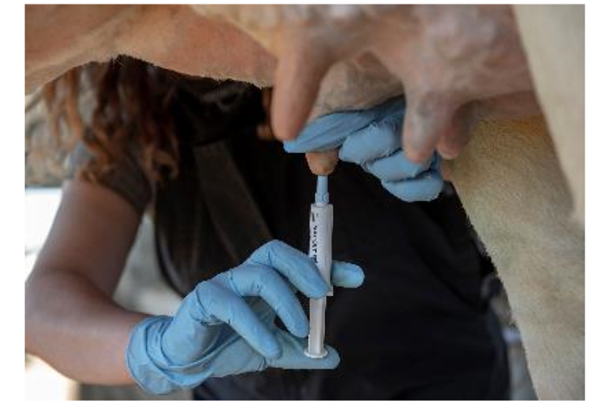
Bovine mastitis continues to challenge dairy production systems worldwide, not only due to its clinical and subclinical forms but also because of the increasing limitations of conventional antibiotic therapy. With rising antimicrobial resistance and regulatory pressure on antibiotic use in food animals, there is a strong shift toward innovative, non-antibiotic strategies for prevention and treatment1.
Limitations of Conventional Therapy
Although antibiotics remain the cornerstone of mastitis treatment, their effectiveness is increasingly compromised by resistant pathogens and biofilm-forming bacteria. Chronic and recurrent infections caused by Staphylococcus aureus and Streptococcus spp. often show poor therapeutic response, leading to prolonged shedding and higher culling rates1,2.
Additionally, routine and sometimes indiscriminate antibiotic use has contributed to global antimicrobial resistance concerns, prompting veterinary and public health organizations to advocate for reduced and more rational use.
Phage Therapy: Targeted Bacterial Control
Bacteriophage therapy has emerged as a promising alternative, offering high specificity against mastitis-causing bacteria without disturbing beneficial microbiota. Studies have demonstrated successful lysis of multidrug-resistant Escherichia coli, Staphylococcus aureus, and Klebsiella pneumoniae strains in experimental mastitis models3,4.
Phage cocktails and genetically characterized lytic phages further enhance therapeutic efficacy and reduce the risk of resistance development. Despite promising results, challenges such as regulatory approval, stability, and in-vivo delivery remain important considerations1.
Antimicrobial Peptides and Bioengineered Molecules
Antimicrobial peptides (AMPs) represent another evolving strategy for mastitis control. Naturally occurring peptides such as nisin, defensins, and frog-derived peptides exhibit strong antibacterial activity against Gram-positive mastitis pathogens. Engineered peptides and nanotechnology-based delivery systems further improve stability and intracellular targeting efficiency1,5.
However, resistance mechanisms and protease degradation remain challenges, necessitating continued peptide optimization.
Probiotics and Immunomodulation
Probiotic approaches using Lactobacillus and Bacillus species are being explored to restore udder microbial balance and enhance innate immunity. These beneficial microbes can inhibit pathogen adhesion, modulate inflammatory responses, and improve udder health when used as teat dips or oral supplements1.
Emerging Technologies: Nanomedicine, Phototherapy, and Regenerative Approaches
Nanotechnology-based drug delivery systems such as liposomes, nanogels, and silver nanoparticles have shown improved antimicrobial efficiency and targeted delivery. Photodynamic therapy (PDT) is another novel approach that uses light-activated compounds to destroy pathogens in situ, offering a non-invasive treatment option for subclinical and clinical mastitis1.
Regenerative medicine using mesenchymal stem cells has also demonstrated immunomodulatory and antibacterial effects, opening new avenues for tissue repair and infection control.¹⁴¹–¹⁴³
Conclusion
The future of mastitis management lies in integrated, multi-modal strategies combining targeted antimicrobials, biological therapies, and advanced technologies. While antibiotics will remain necessary in specific clinical scenarios, their role is gradually shifting toward more judicious, evidence-based use. The expanding portfolio of alternatives—including phages, peptides, probiotics, phytochemicals, and nanotechnology—offers promising tools for sustainable mastitis control in modern dairy systems.
References
- Li X, Xu C, Liang B, Kastelic JP, Han B, Tong X, Gao J. Alternatives to antibiotics for treatment of mastitis in dairy cows. Frontiers in veterinary science. 2023 Jun 19;10:1160350. https://doi.org/10.3389/fvets.2023.1160350
- Cheng J, Qu W, Barkema HW, Nobrega DB, Gao J, Liu G, et al. Antimicrobial resistance profiles of 5 common bovine mastitis pathogens in large Chinese dairy herds. J Dairy Sci. (2019) 102:2416–26. https://www.sciencedirect.com/science/article/pii/S002203021930030X
- Guo M, Gao Y, Xue Y, Liu Y, Zeng X, Cheng Y, Ma J, Wang H, Sun J, Wang Z, Yan Y. Bacteriophage cocktails protect dairy cows against mastitis caused by drug resistant Escherichia coli infection. Frontiers in cellular and infection microbiology. 2021 Jun 17;11:690377. https://www.frontiersin.org/journals/cellular-and-infection-microbiology/articles/10.3389/fcimb.2021.690377/pdf
- Iwano H, Inoue Y, Takasago T, Kobayashi H, Furusawa T, Taniguchi K, Fujiki J, Yokota H, Usui M, Tanji Y, Hagiwara K. Bacteriophage ΦSA012 has a broad host range against Staphylococcus aureus and effective lytic capacity in a mouse mastitis model. Biology. 2018 Jan 9;7(1):8. https://www.mdpi.com/2079-7737/7/1/8
- Gurao A, Kashyap SK, Singh R. β-defensins: An innate defense for bovine mastitis. Veterinary world. 2017 Aug 26;10(8):990. https://pmc.ncbi.nlm.nih.gov/articles/PMC5591491/pdf/VetWorld-10-990.pdf
Related Contents
.jpg)
Video
Transjugular Removal of Canine Heartworms: A Clinical and Surgical Overview
Transjugular removal of canine heartworms is a specialized intervention used in selected dogs with s...

Article
Feline Pregnancy Endocrinology: Hormonal Changes and Placental Function
Pregnancy in cats involves a distinctive endocrine pattern in which ovarian and placental hormones w...

Article
Hormonal Control of Pregnancy Termination in Cats
Pregnancy maintenance in cats depends strongly on coordinated hormonal support, particularly progest...

Article
Feline Embryo Implantation and Early Placental Development
Pregnancy establishment in cats involves a sequence of precisely timed events between fertilization,...

Article
Ultrasonographic Monitoring of Pregnancy in Cats: A Gestational Timeline
Ultrasonography provides a practical way to follow the progression of feline pregnancy by identifyin...

Article
Feline Mismating: Pregnancy Diagnosis and Clinical Management
Mismating or unplanned mating is a common clinical problem in sexually mature queen cats because of...

Article
Medical Termination of Pregnancy in Queens: Drugs, Timing and Treatment Protocols
Medical termination of pregnancy (MTP) in queen cats should be approached according to the timing of...

Article
Safety and Aftercare Following Pregnancy Termination in Queen Cats
Pregnancy termination in queen cats requires more than selecting an appropriate abortifacient. Once...