Article
Farm-Level Risk Factors Driving Bovine Brucellosis: Insights for Prevention and Biosecurity in Dairy Herds
Despite ongoing vaccination programs, bovine brucellosis continues to persist in organized dairy systems, particularly in endemic regions like Karnataka. While the pathogen is well understood, its sustained transmission is largely driven by farm-level practices and management gaps. Identifying and mitigating these risk factors is crucial for veterinarians aiming to implement effective control strategies.
Understanding the Farm Ecosystem in Disease Spread
Brucellosis is not merely an animal-level disease; it is deeply influenced by environmental, managerial, and biosecurity factors. Intensive and semi-intensive dairy systems, common in India, often create ideal conditions for disease persistence and transmission.
In a study of 24 organized dairy farms, multiple farm-level variables were evaluated, revealing that management practices play a decisive role in disease dynamics1.
Hygiene and Housing: The Hidden Determinants
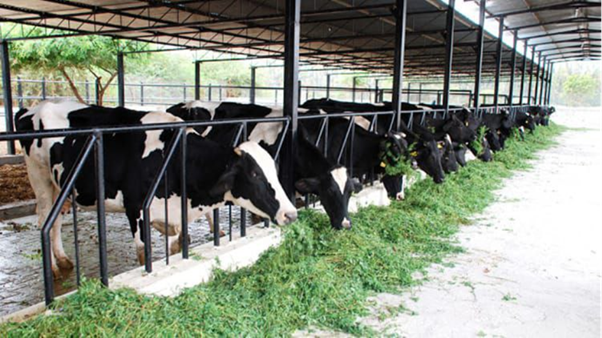
Good hygiene emerged as a critical protective factor, while poor sanitation significantly increased infection risk1,2. One of the most overlooked yet impactful findings was related to flooring:
- Farms with stone flooring showed significantly higher seropositivity (p < 0.01)
The uneven, porous surface of stone floors makes thorough cleaning difficult, allowing infectious materials to persist in the environment. In contrast, smoother cement floors are easier to disinfect and maintain.
Veterinarians advising new dairy setups should strongly recommend infrastructure that supports hygiene.
Manure and Waste Management Practices
In many farms, dung is stored in pits near the shed before being used as fertilizer or for biogas production. However, when infected uterine discharges mix with dung:
- Pathogens can survive for extended periods
- Soil, water, and feed contamination becomes likely
Improper waste handling thus becomes a continuous source of infection within the farm ecosystem1.
Aborted Material: The Primary Infection Source
Aborted fetuses, placentas, and uterine discharges are the most potent sources of Brucella transmission. When these materials are:
- Disposed of in open fields
- Thrown into water bodies
They significantly increase environmental contamination and disease spread1.
Strict protocols for safe disposal, such as deep burial or incineration, must be emphasized in veterinary advisory practices.
Animal Movement and Purchase Practices
Unregulated animal movement is a major driver of brucellosis introduction into herds. Key risk factors include:
- Purchase of animals from unknown sources
- Frequent herd replacement
- Lack of quarantine measures
Introducing even a single infected animal can seed infection across the herd1.
Veterinarians should advocate for pre-purchase testing and mandatory quarantine periods.
Role of Dogs and Biosecurity Gaps
An often-underestimated factor is the presence of dogs on farms. In the study:
- 60.39% of farms had dogs
Dogs may consume or carry infected aborted materials, becoming secondary vectors. Infected dogs can then transmit B. abortus back to cattle1.
Additionally, poor biosecurity practices such as:
- Unrestricted visitor access
- Presence of stray animals
further amplify transmission risks1.
Milking Practices and Equipment Use
Interestingly, the type of milking (manual vs machine) was not directly associated with infection risk. However:
- Hand milking was identified as a significant risk factor in multivariable analysis
Machine milking can be safer if proper hygiene is maintained, especially when milking infected and healthy animals separately1.
Veterinary Services and Awareness Gaps
Access to veterinary care significantly influences disease control. Farms lacking regular veterinary support showed higher seropositivity rates3.
Moreover, farmer awareness remains critically low:
- Less than 5% are aware of zoonotic transmission4
This gap highlights the need for continuous education and extension services.
Key Risk Factors Identified
The study identified several statistically significant (p < 0.01) risk factors1:
- Animals with 3–5 calvings
- History of abortion, repeat breeding, retained placenta
- Purchase of animals from other farms
- Presence of dogs
- Improper disposal of aborted materials
- Hand milking practices
- Poor manure management
- Inadequate veterinary services
These factors collectively sustain disease transmission in dairy systems.
Control Strategies: Practical Field Recommendations
To reduce brucellosis burden, veterinarians should focus on:
- Biosecurity: Restrict animal movement, control visitors, manage stray animals
- Hygiene: Improve flooring, regular disinfection, clean calving areas
- Waste Management: Safe disposal of aborted materials and manure
- Surveillance: Routine herd screening using reliable diagnostics
- Vaccination: Continued use of S19 vaccine in young stock
- Education: Farmer training on zoonotic risks and preventive practices
The Bigger Picture: Economic and Public Health Impact
Brucellosis ranks among the top economically impactful diseases in India, alongside foot-and-mouth disease. Its indirect losses, infertility, reduced milk yield, and zoonotic transmission are often underestimated.
Achieving a brucellosis-free status requires sustained efforts over several years, integrating vaccination, hygiene, and surveillance.
Conclusion
Farm-level practices are the cornerstone of brucellosis control. While vaccination provides a foundation, it is the day-to-day management decisions that determine disease persistence or elimination. Veterinarians play a pivotal role in bridging knowledge gaps, implementing biosecurity, and guiding farmers toward sustainable dairy practices. Strengthening awareness and improving farm hygiene can significantly reduce the burden of this enduring zoonotic disease.
Reference
- Shome R, Natesan K, Kalleshamurthy T, Yadav C, Sahay S, Skariah S, Mohandoss N, Kumar OR, Shome BR, Rahman H. Management of bovine brucellosis in organized dairy herds through the identification of risk factors: A cross-sectional study from Karnataka, India. Veterinary World. 2023 May 30;16(5):1122. https://pmc.ncbi.nlm.nih.gov/articles/PMC10420698/pdf/Vetworld-16-1122.pdf
- Bashitu L, Afera B, Tuli G, Aklilu F. Sero-prevalence study of bovine brucellosis and its associated risk factors in Debrebirhan and Ambo towns. J Adv Dairy Res. 2015 Feb 22;3(131):2. https://www.academia.edu/download/123097072/2329-888x.100013120250603-1-3sajv8.pdf
- Ebrahim WO, Elfadil AA, Elgadal AA. Seroprevalence and risk factors of anti-brucella antibodies in cattle in Khartoum State, the Sudan. Journal of Advanced Veterinary and Animal Research. 2016 Jul 25;3(2):134-44. https://banglajol.info/index.php/JAVAR/article/download/28864/19263
- Rajkumar K, Bhattacharya A, David S, Balaji SH, Hariharan R, Jayakumar M, Balaji N. Socio-demographic study on extent of knowledge, awareness, attitude, and risks of zoonotic diseases among livestock owners in Puducherry region. Veterinary world. 2016 Sep 26;9(9):1018. https://pmc.ncbi.nlm.nih.gov/articles/PMC5057023/pdf/VetWorld-9-1018.pdf
Related Contents
.jpg)
Video
Transjugular Removal of Canine Heartworms: A Clinical and Surgical Overview
Transjugular removal of canine heartworms is a specialized intervention used in selected dogs with s...

Article
Feline Pregnancy Endocrinology: Hormonal Changes and Placental Function
Pregnancy in cats involves a distinctive endocrine pattern in which ovarian and placental hormones w...

Article
Hormonal Control of Pregnancy Termination in Cats
Pregnancy maintenance in cats depends strongly on coordinated hormonal support, particularly progest...

Article
Feline Embryo Implantation and Early Placental Development
Pregnancy establishment in cats involves a sequence of precisely timed events between fertilization,...

Article
Ultrasonographic Monitoring of Pregnancy in Cats: A Gestational Timeline
Ultrasonography provides a practical way to follow the progression of feline pregnancy by identifyin...

Article
Feline Mismating: Pregnancy Diagnosis and Clinical Management
Mismating or unplanned mating is a common clinical problem in sexually mature queen cats because of...

Article
Medical Termination of Pregnancy in Queens: Drugs, Timing and Treatment Protocols
Medical termination of pregnancy (MTP) in queen cats should be approached according to the timing of...

Article
Safety and Aftercare Following Pregnancy Termination in Queen Cats
Pregnancy termination in queen cats requires more than selecting an appropriate abortifacient. Once...