Article
Genetic Regulation of Fatty Liver Disease in Dairy Cows
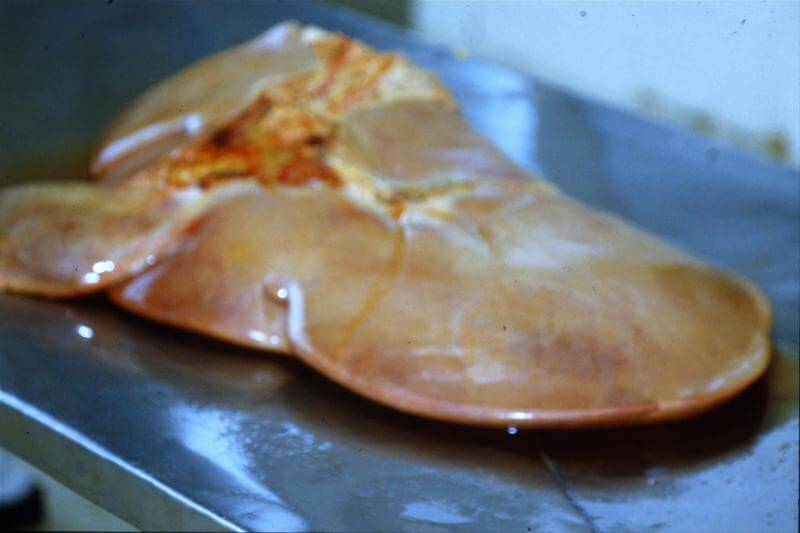
Fatty liver syndrome is one of the most prevalent metabolic disorders affecting high-producing dairy cows during the periparturient period and continues to pose a major challenge to the sustainability of the global dairy industry. The disease primarily develops as a consequence of negative nutrient balance following calving, particularly in cows with high milk yield, excessive body fat reserves, or reduced feed intake around parturition1,2. Despite decades of advancements in dairy nutrition and herd management, the prevalence of fatty liver disease has remained largely unchanged over the past 20 years, emphasizing the need for deeper mechanistic understanding and novel intervention strategies3.
High-yielding dairy cows producing 30 kg of milk per day or more, and especially those exceeding 35 kg/day, are at substantially increased risk of developing moderate to severe fatty liver disease within the first two weeks after calving3. Field investigations conducted over the last three years revealed that 48.85% of dairy cows within two weeks postpartum were diagnosed with mild or severe fatty liver disease among 710 randomly selected Holstein cows from four commercial farms1,2. These findings are consistent with broader epidemiological data estimating that 40–60% of high-producing dairy cows develop fatty liver disease shortly after parturition3.
Pathophysiological Basis of Fatty Liver Disease in Dairy Cows
The primary etiology of fatty liver disease in periparturient dairy cows is negative nutrient balance, leading to excessive mobilization of body fat reserves1. Following calving, feed intake typically declines while milk production increases, resulting in an energy deficit that promotes adipose tissue lipolysis1. This process leads to elevated circulating levels of free fatty acids (FFA), which are transported to the liver.
The liver serves as the central organ for carbohydrate, lipids, and protein metabolism in mammals. In early lactation, excessive FFA influx exceeds hepatic oxidative capacity, resulting in re-esterification of FFA into triglycerides (TAG). Due to limited ability to export TAG as very low-density lipoproteins (VLDL), dairy cows are particularly susceptible to hepatic lipid accumulation. This excessive TAG deposition ultimately leads to hepatic steatosis and impaired liver function3.
Dairy Cow Fatty Liver as a Model of NAFLD
Fatty liver disease in dairy cows closely resembles non-alcoholic fatty liver disease (NAFLD) in humans, sharing key features such as insulin resistance, dysregulated lipid metabolism, oxidative stress, and hepatic inflammation1,4. Consequently, periparturient dairy cows represent a valuable natural model for studying the pathogenesis of NAFLD.
The widely accepted “two-hit” theory explains disease progression3. The first hit involves insulin resistance, which enhances adipose tissue lipolysis, increases circulating FFA, and promotes hepatic TAG synthesis. The second hit is characterized by oxidative stress and inflammation, driven by reactive oxygen species, inflammatory cytokines, endotoxins, and mitochondrial dysfunction, leading to steatohepatitis and fibrosis3.
Additional mechanisms, including a proposed “third hit” involving hepatocyte death and endoplasmic reticulum (ER) stress, further exacerbate disease progression by promoting lipid synthesis and impairing cellular homeostasis3.
PPARγ as a Crucial Genetic Regulator of Fatty Liver Disease
Among the numerous molecular factors implicated in NAFLD, peroxisome proliferator-activated receptor gamma (PPARγ) plays a central regulatory role in lipid metabolism, insulin resistance, inflammation, and gluconeogenesis3. PPARγ is a nuclear hormone receptor predominantly expressed in adipose and immune tissues, with relatively low expression in the liver under physiological conditions3,5,6,7. However, hepatic PPARγ expression is markedly increased during fatty liver development, promoting lipid uptake and storage3.
Experimental studies demonstrate that activation of PPARγ enhances hepatic lipid accumulation, whereas liver-specific deletion of PPARγ reduces hepatic steatosis, albeit sometimes at the expense of worsened insulin resistance and hyperglycemia3. One of the key downstream targets of PPARγ is CD36, a fatty acid transporter that facilitates hepatic FFA uptake and contributes to excessive TAG deposition3.
Beyond direct regulation of lipid transport, PPARγ indirectly influences fatty liver development by modulating:
- Inflammation and oxidative stress, through suppression of pro-inflammatory cytokines and inhibition of NF-κB signaling pathways3,8,9
- Insulin resistance, by increasing adiponectin production, enhancing insulin signaling, and reducing inflammatory mediators that impair insulin sensitivity3
- Gluconeogenesis, by regulating key hepatic enzymes such as phosphoenolpyruvate carboxykinase and glucose-6-phosphatase, thereby linking fatty liver disease with diabetes and metabolic syndrome3
Conclusions and Future Perspectives
Fatty liver syndrome in dairy cows represents a major metabolic disorder with profound implications for animal health, productivity, and dairy farm sustainability. Despite extensive research, effective targeted therapies remain limited, highlighting the need for a deeper understanding of the molecular mechanisms underlying disease development.
Emerging evidence suggests that dietary antioxidants and bioactive compounds may help mitigate hepatic lipid accumulation, although their mechanisms of action require further clarification. Importantly, identification of crucial genetic regulators such as PPARγ offers promising opportunities for the development of novel therapeutic strategies and genetic selection of fatty liver–resistant dairy cattle, ultimately supporting sustainable dairy production.
A comprehensive understanding of the molecular pathogenesis of fatty liver disease, particularly the regulatory role of PPARγ, will be essential for improving prevention, treatment, and long-term metabolic resilience in modern dairy herds.
References
- Shi, K.R.; Niu, F.; Zhang, Q.; Ning, C.; Yue, S.J.; Hu, C.Z.; Xu, Z.J.; Wang, S.X.; Li, R.R.; Hou, Q.L.; et al. Identification of whole-genome significant single nucleotide polymorphisms in candidate genes associated with serum biochemical traits in Chinese Holstein cattle. Fornt. Genet. 2020, 11, 163. https://www.frontiersin.org/journals/genetics/articles/10.3389/fgene.2020.00163/pdf
- Yan, Z.G.; Wang, Z.H.; Zhang, Q.; Yue, S.J.; Yin, B.; Jiang, Y.L.; Shi, K.R. Identification of whole-genome significant single nucleotide polymorphisms in candidate genes associated with body conformation traits in Chinese Holstein cattle. Anim Genet. 2020, 51, 141–152. https://pmc.ncbi.nlm.nih.gov/articles/PMC7003999/pdf/AGE-51-141.pdf
- Shi K, Li R, Xu Z, Zhang Q. Identification of crucial genetic factors, such as PPARγ, that regulate the pathogenesis of fatty liver disease in dairy cows is imperative for the sustainable development of dairy industry. Animals. 2020 Apr 7;10(4):639. https://www.mdpi.com/2076-2615/10/4/639
- Nasr, P.; Ignatova, S.; Kechagias, S.; Ekstedt, M. Natural history of nonalcoholic fatty liver diasease: A prospective follow-up study with serial biopsies. Hepatol. Res. 2018, 2, 199–210. https://aasldpubs.onlinelibrary.wiley.com/doi/pdf/10.1002/hep4.1134
- Zhu Y, Kan L, Qi C, Kanwar YS, Yeldandi AV, Rao MS, Reddy JK. Isolation and characterization of peroxisome proliferator-activated receptor (PPAR) interacting protein (PRIP) as a coactivator for PPAR. Journal of Biological Chemistry. 2000 May 5;275(18):13510-6. https://www.sciencedirect.com/science/article/pii/S0021925819807160
- Mano, H.; Kimura, C.; Fujisawa, Y.; Kameda, T.; Watanabe-Mano, M.; Kaneko, H.; Kumegawa, M. Cloning and function of rabbit peroxisome proliferator-activated receptor delta/beta in mature osteoclasts. J. Biol. Chem. 2020, 275, 8126–8132. https://www.jbc.org/article/S0021-9258(18)30322-3/pdf
- Fu C, Liu L, Li F. Acetate alters the process of lipid metabolism in rabbits. Animal. 2018 Sep;12(9):1895-902. https://www.sciencedirect.com/science/article/pii/S1751731117003275
- Dong X, Zhai R, Liu Z, Lin X, Wang Z, Hu Z. The effect of intravenous infusions of glutamine on duodenal cell autophagy and apoptosis in early-weaned calves. Animals. 2019 Jul 1;9(7):404. https://www.mdpi.com/2076-2615/9/7/404
- Zhai, R.N.; Dong, X.S.; Feng, L.; Li, S.L.; Hu, Z.Y. The effect of heat stress on autophagy and apotosis of rumen, abomasum, duodenum, liver and kidney cells in calves. Animals 2019, 9, 85. https://www.mdpi.com/2076-2615/9/10/854
Related Contents
.jpg)
Video
Transjugular Removal of Canine Heartworms: A Clinical and Surgical Overview
Transjugular removal of canine heartworms is a specialized intervention used in selected dogs with s...

Article
Feline Pregnancy Endocrinology: Hormonal Changes and Placental Function
Pregnancy in cats involves a distinctive endocrine pattern in which ovarian and placental hormones w...

Article
Hormonal Control of Pregnancy Termination in Cats
Pregnancy maintenance in cats depends strongly on coordinated hormonal support, particularly progest...

Article
Feline Embryo Implantation and Early Placental Development
Pregnancy establishment in cats involves a sequence of precisely timed events between fertilization,...

Article
Ultrasonographic Monitoring of Pregnancy in Cats: A Gestational Timeline
Ultrasonography provides a practical way to follow the progression of feline pregnancy by identifyin...

Article
Feline Mismating: Pregnancy Diagnosis and Clinical Management
Mismating or unplanned mating is a common clinical problem in sexually mature queen cats because of...

Article
Medical Termination of Pregnancy in Queens: Drugs, Timing and Treatment Protocols
Medical termination of pregnancy (MTP) in queen cats should be approached according to the timing of...
Article
Safety and Aftercare Following Pregnancy Termination in Queen Cats
Pregnancy termination in queen cats requires more than selecting an appropriate abortifacient. Once...