Article
Interpreting Diagnostic Findings in Demodicosis
Accurate interpretation of diagnostic findings in demodicosis requires not only identification of Demodex mites but also a clear understanding of sampling technique, mite burden, and clinical correlation. Inappropriate interpretation may lead to misdiagnosis or suboptimal management.
Interpreting Deep Skin Scrapings
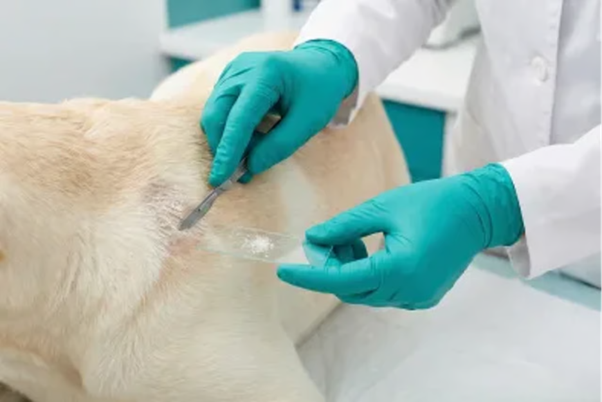
Deep skin scrapings are considered the diagnostic tool of choice in most patients with suspected demodicosis. Interpretation, however, depends heavily on proper technique.
Adequate sampling is typically indicated by:
- Scraping until capillary bleeding occurs
- Collection of reddish to brownish debris, suggesting follicular content
- Sampling from primary lesions such as papules and pustules
Importantly, squeezing the skin during scraping increases mite recovery and should be routinely performed1. Sampling from ulcerated areas is generally not recommended, as mites are less likely to be found in such lesions.
What Constitutes a Positive Result?
As Demodex mites may be part of the normal microfauna:
- Identification of a single mite on multiple scrapings may represent an incidental finding
- Detection of more than one mite is strongly suggestive of clinical demodicosis
If only one mite is identified in an animal with compatible clinical signs, additional scrapings are recommended to confirm the diagnosis.
Importance of Mite Life Stages
Recording the presence of different life stages is important:
- Eggs
- Larvae
- Nymphs
- Adults
The presence of multiple developmental stages indicates active proliferation and supports a diagnosis of clinically relevant infestation.
Quantification and Serial Monitoring
Mite numbers should be:
- Recorded systematically
- Compared from the same anatomical sites at each visit
Serial evaluation allows objective monitoring of treatment response. A reduction in mite numbers over time may suggest therapeutic efficacy, whereas persistent or increasing numbers may warrant reassessment1.
Specimens should ideally be examined promptly, as mite deterioration over time may make identification of stages more difficult.
Interpretation of Alternative Diagnostic Methods
Trichograms
Trichograms may serve as an alternative diagnostic tool, particularly in areas difficult to scrape1,2.
- A large number of hairs (approximately 50–100) should be plucked
- Positive findings are clinically significant
- Negative trichograms should be followed by deep skin scrapings
Tape Strips
Tape strip testing has been described as a diagnostic method; however, reported sensitivity varies across studies1. Findings should be interpreted cautiously and in conjunction with other diagnostic methods.
Skin Biopsy
Skin biopsy may be required in:
- Chronic or atypical cases
- Cases with negative scrapings but strong clinical suspicion
This may be particularly relevant in certain anatomical locations such as the paws or in specific breeds1.
Exudate and Cytology
Examination of exudate from pustules or draining tracts may reveal mites in some cases. Cytological evaluation may also occasionally demonstrate mites, although sensitivity is limited1.
Correlation with Clinical Findings
Diagnostic findings should always be interpreted alongside clinical presentation:
- Increased mite numbers with compatible lesions support diagnosis
- Low mite numbers without clinical signs may not indicate disease
Pruritus, when present, is often associated with secondary bacterial infection rather than mite infestation alone3.
Common Pitfalls
- Inadequate scraping technique leading to false-negative results
- Sampling from non-representative or ulcerated lesions
- Failure to repeat testing when suspicion remains high
- Over-interpretation of incidental mite detection
Clinical Relevance
Careful, technique-aware interpretation supports:
- Accurate diagnosis
- Objective monitoring of therapy
- Appropriate clinical decision-making
A structured diagnostic and interpretative approach may improve outcomes and reduce the risk of recurrence.
References
- Mueller RS, Rosenkrantz W, Bensignor E, Karaś‐Tęcza J, Paterson T, Shipstone MA. Diagnosis and treatment of demodicosis in dogs and cats: Clinical consensus guidelines of the World Association for Veterinary Dermatology. Veterinary dermatology. 2020 Feb;31(1):4-e2. https://ebvminpractice.org/wp-content/uploads/2025/09/veterinary-dermatology-2020-mueller-diagnosis-and-treatment-of-demodicosis-in-dogs-and-cats.pdf
- Thomson P, Carreño N, Núñez A. Main mites associated with dermatopathies present in dogs and other members of the Canidae family. Open Veterinary Journal. 2023 Apr 18;13(2):131-42. https://www.ajol.info/index.php/ovj/article/view/246015/232736
- Garcovich S, Maurelli M, Gisondi P, Peris K, Yosipovitch G, Girolomoni G. Pruritus as a distinctive feature of type 2 inflammation. Vaccines. 2021 Mar 23;9(3):303. https://www.mdpi.com/2076-393X/9/3/303
Related Contents
.jpg)
Video
Transjugular Removal of Canine Heartworms: A Clinical and Surgical Overview
Transjugular removal of canine heartworms is a specialized intervention used in selected dogs with s...

Article
Feline Pregnancy Endocrinology: Hormonal Changes and Placental Function
Pregnancy in cats involves a distinctive endocrine pattern in which ovarian and placental hormones w...

Article
Hormonal Control of Pregnancy Termination in Cats
Pregnancy maintenance in cats depends strongly on coordinated hormonal support, particularly progest...

Article
Feline Embryo Implantation and Early Placental Development
Pregnancy establishment in cats involves a sequence of precisely timed events between fertilization,...

Article
Ultrasonographic Monitoring of Pregnancy in Cats: A Gestational Timeline
Ultrasonography provides a practical way to follow the progression of feline pregnancy by identifyin...

Article
Feline Mismating: Pregnancy Diagnosis and Clinical Management
Mismating or unplanned mating is a common clinical problem in sexually mature queen cats because of...

Article
Medical Termination of Pregnancy in Queens: Drugs, Timing and Treatment Protocols
Medical termination of pregnancy (MTP) in queen cats should be approached according to the timing of...

Article
Safety and Aftercare Following Pregnancy Termination in Queen Cats
Pregnancy termination in queen cats requires more than selecting an appropriate abortifacient. Once...