Article
Blood Transfusion in Canine Practice: Protocols, Precautions, and Clinical Outcomes
Blood transfusion has evolved into a cornerstone of emergency and critical care in veterinary medicine. While it is often viewed as a last-resort intervention, its timely and appropriate use can dramatically alter the course of disease, particularly in cases of severe anemia and hemolytic disorders.
Historical Perspective and Clinical Relevance
The concept of blood transfusion dates back to 1665, when Richard Lower performed the first successful transfusion between dogs. Since then, advancements in technology and understanding have transformed transfusion into a routine, yet highly specialized, clinical procedure1.
Today, transfusion therapy is widely used to manage acute blood loss, coagulopathies, thrombocytopenia, and severe anemia2. However, its success depends heavily on adherence to proper protocols and vigilant monitoring.
Selecting and Screening the Donor
The first step in transfusion is identifying a suitable donor. Ideally, the donor should be clinically healthy, of adequate body weight, and free from infectious diseases. Hematological evaluation must confirm normal parameters, ensuring that the donor itself is not compromised1.
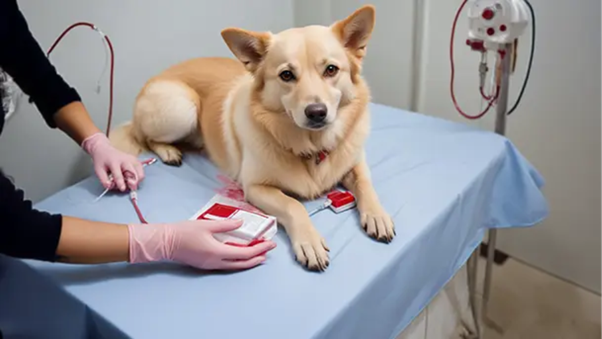
In the described case, a healthy donor dog of similar breed and appropriate weight was selected, and thorough screening confirmed its suitability.
Blood Collection and Handling1
Blood is typically collected using CPDA (Citrate Phosphate Dextrose Adenine) bags, which preserve cellular integrity. The jugular vein is the preferred site, and aseptic technique is essential to prevent contamination.
Approximately 10–15 ml/kg of blood can be safely collected from the donor. Gentle mixing during collection prevents clot formation, and the entire process should be completed efficiently to maintain blood quality.
Cross-Matching: Ensuring Compatibility
Cross-matching is a critical step to prevent transfusion reactions. Both major and minor cross-matching tests are performed to assess compatibility between donor and recipient blood1.
Agglutination or hemolysis indicates incompatibility, while a lack of reaction confirms suitability. Skipping this step significantly increases the risk of life-threatening complications.
Administration Protocol
Before initiating transfusion, premedication with corticosteroids and antihistamines is often administered to minimize allergic reactions. Blood is then delivered intravenously using a filtered administration set to prevent microthrombi entry.
The rate of transfusion is carefully controlled. Initially, a slow rate of 0.25 ml/kg is maintained for the first 15 minutes to monitor for adverse reactions. If tolerated, the rate is gradually increased to 2–10 ml/kg/hour1.
Completing transfusion within four hours is recommended to reduce bacterial contamination risk.
Monitoring During Transfusion
Continuous monitoring is essential. Vital parameters such as temperature, heart rate, respiration rate, and oxygen saturation should be assessed at regular intervals.
The first 20 minutes are particularly critical, as most acute reactions occur during this period. Signs such as vomiting, dyspnea, tachycardia, or urticaria warrant immediate cessation of transfusion1.
Adverse Reactions and Risk Management
Blood transfusion is inherently risky due to the introduction of foreign biological material. Reactions may include allergic responses, hemolysis, anaphylaxis, and circulatory overload1.
Interestingly, dogs generally tolerate transfusions better than cats, which are more prone to fatal reactions. Nevertheless, preparedness to manage complications is essential in all cases.
Clinical Outcomes and Efficacy
When performed correctly, transfusion leads to rapid clinical improvement. Hemoglobin levels, PCV, and oxygen saturation typically increase significantly post-transfusion3.
It is estimated that administering 20 ml/kg of whole blood can raise PCV by approximately 10%1. This improvement restores oxygen delivery and stabilizes the patient, allowing time for targeted therapy.
Conclusion
Blood transfusion is a powerful therapeutic tool that requires precision, vigilance, and clinical judgment. From donor selection to post-transfusion monitoring, each step plays a crucial role in ensuring success.
For practicing veterinarians, mastering transfusion protocols is essential, not only to save lives but also to minimize risks and improve overall treatment outcomes.
Reference
- Kumar T, Arya K, Dhillon P, Bhagwan J, Sharma M, Kumari D, Agnihotri D, Jain VK. Successful Management of Jaundice in a Dog using Therapeutic Blood Transfusion. Int. J. Curr. Microbiol. App. Sci. 2020;9(7):600-8. https://www.academia.edu/download/99516169/Tarun_20Kumar__20et_20al.pdf
- Davidow B. Transfusion medicine in small animals. Veterinary Clinics: Small Animal Practice. 2013 Jul 1;43(4):735-56. https://www.vetsmall.theclinics.com/article/S0195-5616(13)00059-4/pdf
- Kisielewicz C, Self I, Bell R. Assessment of clinical and laboratory variables as a guide to packed red blood cell transfusion of euvolemic anemic dogs. Journal of veterinary internal medicine. 2014 Mar;28(2):576-82. https://onlinelibrary.wiley.com/doi/pdf/10.1111/jvim.12280
Related Contents
.jpg)
Video
Transjugular Removal of Canine Heartworms: A Clinical and Surgical Overview
Transjugular removal of canine heartworms is a specialized intervention used in selected dogs with s...

Article
Feline Pregnancy Endocrinology: Hormonal Changes and Placental Function
Pregnancy in cats involves a distinctive endocrine pattern in which ovarian and placental hormones w...

Article
Hormonal Control of Pregnancy Termination in Cats
Pregnancy maintenance in cats depends strongly on coordinated hormonal support, particularly progest...

Article
Feline Embryo Implantation and Early Placental Development
Pregnancy establishment in cats involves a sequence of precisely timed events between fertilization,...

Article
Ultrasonographic Monitoring of Pregnancy in Cats: A Gestational Timeline
Ultrasonography provides a practical way to follow the progression of feline pregnancy by identifyin...

Article
Feline Mismating: Pregnancy Diagnosis and Clinical Management
Mismating or unplanned mating is a common clinical problem in sexually mature queen cats because of...

Article
Medical Termination of Pregnancy in Queens: Drugs, Timing and Treatment Protocols
Medical termination of pregnancy (MTP) in queen cats should be approached according to the timing of...

Article
Safety and Aftercare Following Pregnancy Termination in Queen Cats
Pregnancy termination in queen cats requires more than selecting an appropriate abortifacient. Once...