Article
Pathogen Shedding Dynamics in Mastitis: Clinical Implications for Dairy Practice
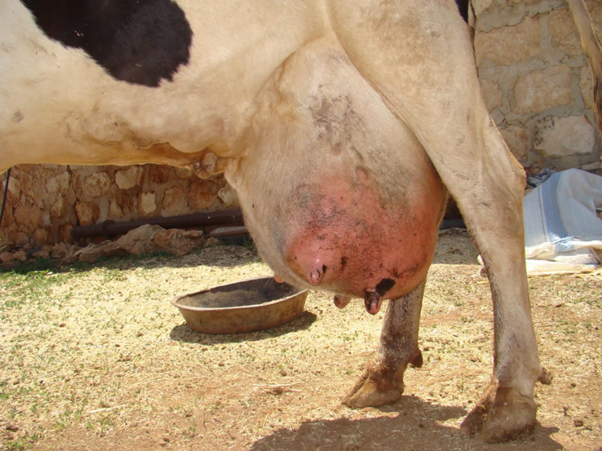
Intramammary infections (IMI) are a major cause of economic loss in dairy herds due to reduced milk yield, treatment costs, and culling¹. For veterinarians, bacterial shedding intensity is a clinically useful parameter influencing transmission risk, diagnostic sensitivity, and treatment outcomes. Integrating shedding dynamics into mastitis control can significantly improve herd-level outcomes.
Pathogen-Specific Shedding Patterns
Mastitis pathogens exhibit distinct shedding behaviors. Staphylococcus aureus typically establishes persistent infections with relatively lower bacterial shedding, contributing to subclinical disease and diagnostic challenges³. In contrast, environmental pathogens such as Streptococcus uberis often demonstrate higher shedding intensities and variable strain-specific pathogenicity, increasing the risk of transmission within the herd³.
Non-aureus staphylococci (NAS), increasingly recognized in mastitis epidemiology, show variable shedding patterns depending on species and may represent either true infection or contamination². This variability complicates interpretation of culture results in field conditions.
Somatic Cell Count and Infection Risk
Somatic cell count (SCC) remains a practical proxy for udder health. Elevated SCC is associated with increased bacterial shedding and indicates cows that may act as reservoirs of infection¹⁰. Monitoring SCC trends at both individual and herd levels is essential for early detection and targeted intervention.
Host-Related Influences
Host immunity plays a central role in determining infection dynamics. Pathogen-specific immune responses influence both bacterial clearance and shedding intensity⁴. Cows with compromised immune function—due to metabolic stress or negative energy balance—are more likely to experience persistent infections and higher bacterial loads³.
Emerging evidence suggests that prior exposure to pathogens may enhance local immune responses, potentially reducing shedding intensity in subsequent infections⁴.
Impact of Heat Stress
Heat stress is a critical but often underestimated factor in mastitis dynamics. Increased temperature-humidity index (THI) is associated with higher SCC, reduced milk yield, and impaired immune function⁹. Heat stress alters mammary gland physiology and can exacerbate existing infections, potentially increasing pathogen shedding⁵.
Additionally, stress-induced immunomodulation may reduce the cow’s ability to control intramammary infections, further contributing to disease persistence and spread.
Implications for Practice
Understanding shedding intensity has direct clinical relevance. Cows with higher bacterial loads pose a greater transmission risk and may respond less favorably to treatment. Recurrent mastitis cases should be evaluated carefully to differentiate between persistent infections and new infections, as this influences management decisions⁷.
Conclusion
Bacterial shedding intensity is a practical indicator of infection severity and transmission potential. Combining SCC monitoring, pathogen identification, and stress mitigation—especially heat stress—can enhance mastitis control and improve overall herd productivity.
References
- Heikkilä AM, Liski E, Pyörälä S, Taponen S. Pathogen-specific production losses in bovine mastitis. J Dairy Sci. 2018;101:9493–9504. https://doi.org/10.3168/jds.2018-14824
- Hamel J, Zhang Y, Wente N, Krömker V. Non-S. aureus staphylococci (NAS) in milk samples: Infection or contamination? Vet Microbiol. 2020;242:108594. https://doi.org/10.1016/j.vetmic.2020.108594
- Keane OM. Symposium review: Intramammary infections—Major pathogens and strain-associated complexity. J Dairy Sci. 2019;102:4713–4726. https://doi.org/10.3168/jds.2018-15326
- Petzl W, Zerbe H, Günther J, Seyfert HM, Hussen J, Schuberth HJ. Pathogen-specific responses in the bovine udder: Models and immunoprophylactic concepts. Res Vet Sci. 2018;116:55–61. https://doi.org/10.1016/j.rvsc.2017.12.012
- Tao S, Orellana RM, Weng X, Marins TN, Dahl GE, Bernard JK. The influences of heat stress on bovine mammary gland function. J Dairy Sci. 2018;101:5642–5654. https://doi.org/10.3168/jds.2017-13727
- Wald R, Hess C, Urbantke V, Wittek T, Baumgartner M. Characterization of Staphylococcus species isolated from bovine quarter milk samples. Animals (Basel). 2019;9:200. https://doi.org/10.3390/ani9050200
- Wente N, Grieger AS, Klocke D, Paduch JH, Zhang Y, Leimbach S, et al. Recurrent mastitis—Persistent or new infections? Vet Microbiol. 2020;244:108682. https://doi.org/10.1016/j.vetmic.2020.108682
- Herry V, Gitton C, Tabouret G, Répérant M, Forge L, Tasca C, et al. Local immunization impacts the response of dairy cows to Escherichia coli mastitis. Sci Rep. 2017;7:3441. https://doi.org/10.1038/s41598-017-03724-7
- Nasr MAF, El-Tarabany MS. Impact of THI on somatic cell count, milk yield and composition of Holstein cows. J Therm Biol. 2017;64:73–77. https://doi.org/10.1016/j.jtherbio.2017.01.004
- Ruegg PL. A 100-Year Review: Mastitis detection, management, and prevention. J Dairy Sci. 2017;100:10381–10397. https://doi.org/10.3168/jds.2017-13023
Related Contents
.jpg)
Video
Transjugular Removal of Canine Heartworms: A Clinical and Surgical Overview
Transjugular removal of canine heartworms is a specialized intervention used in selected dogs with s...

Article
Feline Pregnancy Endocrinology: Hormonal Changes and Placental Function
Pregnancy in cats involves a distinctive endocrine pattern in which ovarian and placental hormones w...

Article
Hormonal Control of Pregnancy Termination in Cats
Pregnancy maintenance in cats depends strongly on coordinated hormonal support, particularly progest...

Article
Feline Embryo Implantation and Early Placental Development
Pregnancy establishment in cats involves a sequence of precisely timed events between fertilization,...

Article
Ultrasonographic Monitoring of Pregnancy in Cats: A Gestational Timeline
Ultrasonography provides a practical way to follow the progression of feline pregnancy by identifyin...

Article
Feline Mismating: Pregnancy Diagnosis and Clinical Management
Mismating or unplanned mating is a common clinical problem in sexually mature queen cats because of...

Article
Medical Termination of Pregnancy in Queens: Drugs, Timing and Treatment Protocols
Medical termination of pregnancy (MTP) in queen cats should be approached according to the timing of...

Article
Safety and Aftercare Following Pregnancy Termination in Queen Cats
Pregnancy termination in queen cats requires more than selecting an appropriate abortifacient. Once...