Article
Canine Atopic Dermatitis: Prevalence, Impact, and Immunopathological Insights
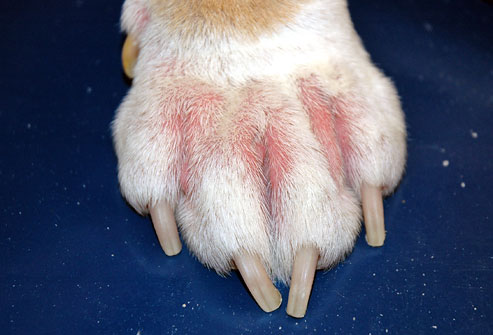
Canine atopic dermatitis (CAD) is a multifactorial, pruritic condition influenced by both genetic predisposition and environmental exposure. It is characterized by epidermal barrier dysfunction and an aberrant immune response1.
Reported prevalence ranges between 3–15%; however, these estimates should be interpreted cautiously due to limitations in epidemiological accuracy. The American College of Veterinary Dermatology (ACVD) task force has highlighted that the true incidence and prevalence of CAD remain unclear1.
Environmental influences play a meaningful role. Dogs living predominantly indoors have been associated with a higher frequency of CAD. In contrast, exposure to rural environments, cohabitation with other animals, and regular outdoor activity in natural settings may be associated with reduced risk. Early-life environmental factors, including housing conditions and timing of adoption, may also influence susceptibility1,2.
Signalment and Risk Factors
Clinical signs of CAD most commonly begin between 4 months and 3 years of age, although variation across breeds is recognized.
Sex predisposition remains inconclusive. While some datasets report higher proportions in females, others suggest increased risk in males, particularly neutered males. Overall, most studies do not demonstrate a consistent sex predilection1,3.
Breed-associated risk is frequently reported, with breeds such as Golden Retrievers, Labrador Retrievers, West Highland White Terriers, German Shepherds, and French Bulldogs appearing more predisposed4. However, breed prevalence may reflect regional popularity as well as genetic susceptibility.
Notably, nutritional and early-life factors may also play a role. One study reported a negative correlation between feeding a non-commercial homemade diet to the nursing dam and the development of CAD in offspring1.
Challenges in Estimating True Prevalence
Accurate estimation of CAD prevalence remains difficult due to multiple confounding factors. These include variability in diagnostic criteria, differences in clinical recognition, and the influence of environmental exposures.
Mild or atypical presentations may be managed symptomatically without a definitive diagnosis. Additionally, conditions such as chronic otitis may not always be attributed to underlying CAD, contributing to potential underreporting1.
Impact on Quality of Life
CAD is associated with a substantial impact on both canine welfare and owner quality of life5.
Validated questionnaires have demonstrated that many owners perceive a negative effect on their daily lives, including disruptions in sleep, leisure activities, and emotional wellbeing1. Financial considerations and the burden of long-term management may further contribute to this impact.
Affected dogs may experience reduced engagement in normal activities such as playing, walking, and sleeping, reflecting compromised quality of life1.
Behavioral Considerations
Chronic pruritus associated with CAD may influence canine behavior. Studies have reported increases in fear, anxiety, aggression, and reduced trainability in affected dogs, although findings are not entirely consistent across all research1,6.
It has been proposed that these behavioral changes may be linked to stress associated with persistent itching2. Behavioral concerns are clinically relevant, as they may influence the human–animal bond and overall management outcomes1.
Immunopathology: A Complex Interaction
CAD is now understood as a complex disorder involving more than a simple IgE-mediated hypersensitivity response7. It reflects an interplay between skin barrier dysfunction, immune dysregulation, and neuroimmune pathways.
Disruption of the epidermal barrier facilitates allergen penetration and microbial colonization, contributing to inflammation. Keratinocytes release signaling molecules such as IL-25, IL-33, and thymic stromal lymphopoietin (TSLP), which initiate and amplify Th2-driven immune responses1.
This cascade leads to the production of cytokines including IL-4, IL-5, IL-13, and IL-31, reinforcing inflammation and pruritus through a self-perpetuating itch–scratch cycle1. The Janus kinase/signal transducer and activator of transcription (JAK/STAT) pathway plays a central role in this process and has emerged as a key therapeutic target1,8.
Alterations in skin microbiota, including colonization with Staphylococcus pseudintermedius may further exacerbate disease severity9. While antimicrobial therapies may be beneficial in selected cases, their use should be judicious due to concerns regarding antimicrobial resistance1.
Conclusion
Canine atopic dermatitis represents a complex and evolving dermatological condition with multifactorial origins and variable clinical expression. While available studies provide useful insights into prevalence and risk factors, true population-level data remain limited due to diagnostic variability and environmental influences. The disease extends beyond dermatological manifestations, significantly impacting both canine wellbeing and owner quality of life through chronic pruritus, behavioral changes, and long-term management requirements. Advancements in understanding the immunopathology of CAD, particularly the role of Th2-mediated inflammation, epidermal barrier dysfunction, and neuroimmune pathways, have helped refine therapeutic targets. However, given the heterogeneity of the disease, a comprehensive and individualized approach to diagnosis and management remains essential, alongside the need for more robust epidemiological and impact-focused research.
References
- Drechsler Y, Dong C, Clark DE, Kaur G. Canine atopic dermatitis: prevalence, impact, and management strategies. Veterinary Medicine: Research and Reports. 2024 Dec 31:15-29. https://www.tandfonline.com/doi/pdf/10.2147/vmrr.s412570
- Harvey ND, Shaw SC, Craigon PJ, Blott SC, England GC. Environmental risk factors for canine atopic dermatitis: a retrospective large‐scale study in Labrador and golden retrievers. Veterinary dermatology. 2019 Oct;30(5):396-e119. https://www.academia.edu/download/94966156/Harvey_et_al_2019_-_Vet_Derm_-_Risk_factors_for_cAD.pdf
- Couceiro GA, Ribeiro SM, Monteiro MM, Meneses AM, Sousa SK, Coutinho LN. Prevalence of canine atopic dermatitis at the Veterinary Hospital of the “Universidade Federal Rural da Amazônia” in Belém/Pará, Brazil. Pesquisa Veterinária Brasileira. 2021;41:e06778. https://www.scielo.br/j/pvb/a/RrBXz65fQgPqNNZSbWPLZWt/?lang=en&format=html
- Anturaniemi J, Uusitalo L, Hielm-Björkman A. Environmental and phenotype-related risk factors for owner-reported allergic/atopic skin symptoms and for canine atopic dermatitis verified by veterinarian in a Finnish dog population. PLoS One. 2017 Jun 1;12(6):e0178771. https://journals.plos.org/plosone/article/file?id=10.1371/journal.pone.0178771&type=printable
- Fernandes B, Alves S, Schmidt V, Bizarro AF, Pinto M, Pereira H, Marto J, Lourenço AM. Primary prevention of canine atopic dermatitis: breaking the cycle—a narrative review. Veterinary sciences. 2023 Nov 16;10(11):659. https://www.mdpi.com/2306-7381/10/11/659
- McAuliffe LR, Koch CS, Serpell J, Campbell KL. Associations between atopic dermatitis and anxiety, aggression, and fear-based behaviors in dogs. Journal of the American Animal Hospital Association. 2022 Jul 1;58(4):161-7. https://www.researchgate.net/profile/Colleen-Koch-4/publication/361822487
- Marsella R, De Benedetto A. Atopic dermatitis in animals and people: an update and comparative review. Veterinary sciences. 2017 Jul 26;4(3):37. https://www.mdpi.com/2306-7381/4/3/37
- Li D, Han Y, Zhou J, Yang H, Chen J, Tey HL, Tan TT. Mast cell–neuron axis as a core mechanism in chronic pruritus of atopic dermatitis: from mechanistic insights to therapeutic targets. Frontiers in Immunology. 2025 Oct 29;16:1645095. https://www.frontiersin.org/journals/immunology/articles/10.3389/fimmu.2025.1645095/pdf
- Lagoa T, Martins L, Queiroga MC. Microbiota Modulation as an Approach to Prevent the Use of Antimicrobials Associated with Canine Atopic Dermatitis. Biomedicines. 2025 Sep 27;13(10):2372. https://www.mdpi.com/2227-9059/13/10/2372
Related Contents
.jpg)
Video
Transjugular Removal of Canine Heartworms: A Clinical and Surgical Overview
Transjugular removal of canine heartworms is a specialized intervention used in selected dogs with s...

Article
Feline Pregnancy Endocrinology: Hormonal Changes and Placental Function
Pregnancy in cats involves a distinctive endocrine pattern in which ovarian and placental hormones w...

Article
Hormonal Control of Pregnancy Termination in Cats
Pregnancy maintenance in cats depends strongly on coordinated hormonal support, particularly progest...

Article
Feline Embryo Implantation and Early Placental Development
Pregnancy establishment in cats involves a sequence of precisely timed events between fertilization,...

Article
Ultrasonographic Monitoring of Pregnancy in Cats: A Gestational Timeline
Ultrasonography provides a practical way to follow the progression of feline pregnancy by identifyin...

Article
Feline Mismating: Pregnancy Diagnosis and Clinical Management
Mismating or unplanned mating is a common clinical problem in sexually mature queen cats because of...

Article
Medical Termination of Pregnancy in Queens: Drugs, Timing and Treatment Protocols
Medical termination of pregnancy (MTP) in queen cats should be approached according to the timing of...

Article
Safety and Aftercare Following Pregnancy Termination in Queen Cats
Pregnancy termination in queen cats requires more than selecting an appropriate abortifacient. Once...