Article
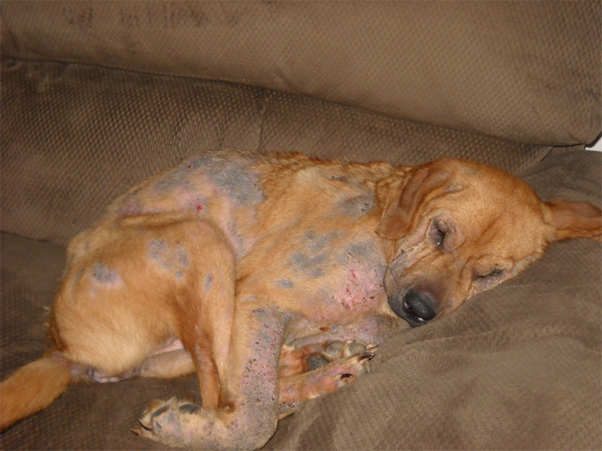
Understanding Demodicosis in Dogs and Cats: Pathogenesis and Predisposing Factors
Demodicosis is a parasitic skin disease of dogs and cats associated with the proliferation of Demodex mites, which are considered part of the normal cutaneous fauna in many animals1. Under normal conditions, these mites inhabit hair follicles and sebaceous glands without inducing clinical disease. However, an imbalance between the host and the mite population may result in clinically apparent dermatological lesions.
Pathogenesis
The pathogenesis of demodicosis is closely linked to defects in cell-mediated immunity, which may allow uncontrolled mite multiplication1. This immune dysfunction may be transient, particularly in younger animals, or more persistent in cases associated with systemic disease.
Juvenile-onset demodicosis is often associated with an immature immune system, whereas adult-onset disease may be linked to underlying disorders or immunosuppression2. However, not all cases have an identifiable cause, and clinical presentation may vary.
Demodex Species
Different Demodex species are implicated in dogs and cats1:
- Demodex canis is most commonly identified in dogs
- In cats, Demodex cati and Demodex gatoi are recognized
D. canis and D. cati are typically considered commensal organisms, whereas D. gatoi may be associated with contagious transmission in some feline populations.
Predisposing Factors1
Several factors may increase susceptibility to clinical disease:
Age
Juvenile animals are more frequently affected, possibly due to developing immune competence. Adult-onset cases may warrant further investigation.
Genetic Susceptibility
Certain dog breeds appear predisposed, suggesting a hereditary component. A genetic influence on immune response has been proposed, and breeding from affected animals is generally discouraged.
Underlying Disease
Adult-onset demodicosis may be associated with:
- Endocrine disorders
- Chronic systemic illness
- Neoplasia
A comprehensive clinical evaluation may be considered in such case.
Immunosuppressive Therapy
Administration of glucocorticoids or other immunosuppressive agents may contribute to mite proliferation and disease expression.
General Health and Stress
Nutritional status, concurrent infections, and environmental stressors may influence disease development, although their exact contribution may vary.
Clinical Relevance
Understanding the underlying pathogenesis and predisposing factors is important for guiding diagnostic workup and treatment planning. Identification and, where possible, management of contributing factors may improve therapeutic outcomes and reduce recurrence risk.
References
- Mueller RS, Rosenkrantz W, Bensignor E, Karaś‐Tęcza J, Paterson T, Shipstone MA. Diagnosis and treatment of demodicosis in dogs and cats: Clinical consensus guidelines of the World Association for Veterinary Dermatology. Veterinary dermatology. 2020 Feb;31(1):4-e2. https://ebvminpractice.org/wp-content/uploads/2025/09/veterinary-dermatology-2020-mueller-diagnosis-and-treatment-of-demodicosis-in-dogs-and-cats.pdf
- Souza CP, Schissler JR, Contreras ET, Dow SW, Hopkins LS, Coy JW, Rosychuk RA, Hawley JR, Lappin MR. Evaluation of immunological parameters in pit bull terrier‐type dogs with juvenile onset generalized demodicosis and age‐matched healthy pit bull terrier‐type dogs. Veterinary dermatology. 2018 Dec;29(6):482-e162. https://www.researchgate.net/profile/Clarissa-Souza-2/publication/327205423_Evaluation_of_immunological_parameters_in_pit_bull_terrier-type_dogs_with_juvenile_onset_generalized_demodicosis_and_age-matched_healthy_pit_bull_terrier-type_dogs/links/5b860f65299bf1d5a72eae6c/Evaluation-of-immunological-parameters-in-pit-bull-terrier-type-dogs-with-juvenile-onset-generalized-demodicosis-and-age-matched-healthy-pit-bull-terrier-type-dogs.pdf
Related Contents
.jpg)
Video
Transjugular Removal of Canine Heartworms: A Clinical and Surgical Overview
Transjugular removal of canine heartworms is a specialized intervention used in selected dogs with s...

Article
Feline Pregnancy Endocrinology: Hormonal Changes and Placental Function
Pregnancy in cats involves a distinctive endocrine pattern in which ovarian and placental hormones w...

Article
Hormonal Control of Pregnancy Termination in Cats
Pregnancy maintenance in cats depends strongly on coordinated hormonal support, particularly progest...

Article
Feline Embryo Implantation and Early Placental Development
Pregnancy establishment in cats involves a sequence of precisely timed events between fertilization,...

Article
Ultrasonographic Monitoring of Pregnancy in Cats: A Gestational Timeline
Ultrasonography provides a practical way to follow the progression of feline pregnancy by identifyin...

Article
Feline Mismating: Pregnancy Diagnosis and Clinical Management
Mismating or unplanned mating is a common clinical problem in sexually mature queen cats because of...

Article
Medical Termination of Pregnancy in Queens: Drugs, Timing and Treatment Protocols
Medical termination of pregnancy (MTP) in queen cats should be approached according to the timing of...

Article
Safety and Aftercare Following Pregnancy Termination in Queen Cats
Pregnancy termination in queen cats requires more than selecting an appropriate abortifacient. Once...