Article
Managing Foal Weaning Stress: Evidence-Based Timing, Methods, and On-farm Decision Making
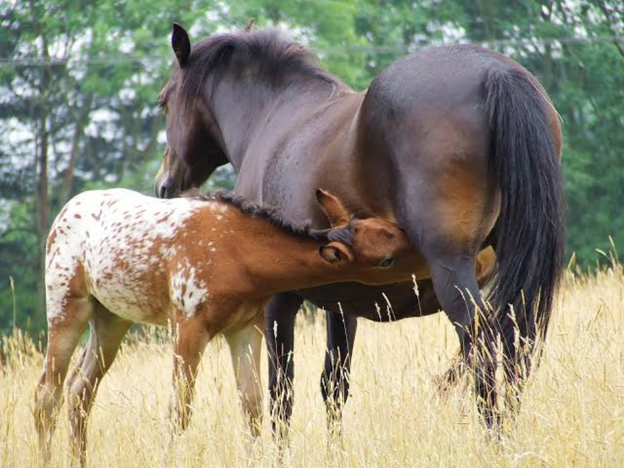
Weaning is not a single event but a complex management decision that directly influences a foal’s physiological stability, behavioral development, and post-weaning growth trajectory. Multiple weaning systems have evolved over time, with selection largely dictated by farm infrastructure, manpower, mare health, and the number of foals being managed concurrently1. While abrupt and complete separation remains common, research increasingly highlights how weaning age and method interact with stress physiology and long-term performance.
This article focuses on how different weaning timelines affect foal welfare, examines behavioral and hormonal stress responses, and translates research findings into practical strategies veterinarians and farm managers can apply in real-world settings.
Understanding Weaning as a Stressor
Traditional weaning typically involves sudden, total separation of mare and foal, often combined with relocation, dietary changes, and routine health procedures. These concurrent stressors can overwhelm a foal’s adaptive capacity, triggering behavioral disturbances and activation of the hypothalamic–pituitary–adrenal (HPA) axis. Cortisol release, although adaptive in short bursts, may impair immune competence and growth when persistently elevated2.
Because of this, the timing of weaning has become as important as the method used.
Early-Life Weaning Decisions: Neonatal Separation
Neonatal weaning, though rare, is clinically justified under specific circumstances. Long-distance transport of mares to breeding facilities can expose neonates to thermal stress, dehydration, and injury, making early separation a protective option in some systems3. Additionally, mares experiencing udder trauma or postpartum pain may display aggressive nursing avoidance, necessitating immediate foal removal.
Behavioral rejection by the mare, particularly common in primiparous mares, remains the most frequently reported cause of neonatal weaning. Mare mortality during or shortly after foaling also makes artificial rearing unavoidable4.
Interestingly, foals weaned during the earliest days of life appear to show less acute behavioral stress than those weaned later. However, neonatal weaning presents major nutritional and developmental challenges. Bucket-feeding milk replacer requires time-intensive training, and concerns remain regarding social development in the absence of maternal behavioral cues. Critics also question the impact of neonatal weaning on early growth performance4.
Clinical implication: Neonatal weaning demands intensive nutritional planning and continuous monitoring to prevent growth retardation and abnormal behavioral development.
Weaning at Two Months: Balancing Physiology and Behavior
At approximately two to three months of age, the mare–foal bond may naturally begin to weaken, prompting interest in earlier weaning schedules4. At this stage, foal assessment becomes critical. Foals demonstrating robust growth and good health may tolerate separation, whereas lighter or slower-growing individuals benefit from extended maternal support.
Supporters of two-month weaning suggest benefits such as reduced metabolic demand on the mare and a lower risk of injury during separation due to smaller foal size. However, controlled studies validating these claims are lacking. The success of early weaning at this age is heavily dependent on nutritionally adequate creep feeding4.
Behavioral considerations are particularly important. Studies suggest that dominance patterns observed in adult horses may be influenced by early social dynamics, with foals born to dominant mares often becoming dominant themselves. Since temperament and aggressiveness are learned behaviors, early weaning may limit the transmission of undesirable behavioral traits. Conversely, foals born to calm, well-mannered mares may benefit from prolonged maternal association4.
Clinical implication: Two-month weaning should be selectively applied and never attempted without a structured creep-feeding and monitoring program.
Conventional Weaning at Four to Six Months: Benefits and Risks
Abrupt weaning at four to six months remains the most widely used approach in commercial equine operations. Many managers believe prolonged nursing depletes mare energy reserves and negatively affects body condition, particularly in thin mares5.
From a nutritional standpoint, mare’s milk no longer satisfies the foal’s total energy requirements by four months of age, making dietary independence essential. When this method is used, all elective procedures such as vaccination and castration must be completed well before weaning to avoid cumulative stress4.
Foal adaptation during this phase can be quantified using behavior scoring systems incorporating cortisol levels, ACTH responsiveness, feeding activity, movement, and vocalization. Scores range from one to ten, with higher values reflecting better adaptation. Notably, foals weaned individually achieved significantly higher behavior scores than those weaned in pairs, indicating improved adjustment to separation2.
Clinical implication: Four-to-six-month weaning is effective when foals are nutritionally prepared and stressors are appropriately staggered.
Gradual Weaning: Modifying Stress Through Management
Recent research has shifted focus toward progressive and partial separation techniques aimed at reducing the cumulative stress associated with traditional weaning4. These methods limit sensory contact between mare and foal while maintaining environmental familiarity.
Behavioral Indicators of Stress
McCall and colleagues evaluated foals raised on pasture under five different weaning systems, using vocalization frequency, activity level, and feeding behavior as stress markers. All foals were dewormed and vaccinated before weaning and received creep feed containing 16% crude protein4.
Foals subjected to complete isolation without creep feed exhibited the highest levels of behavioral distress. In contrast, partially separated foals showed reduced vocalization and activity, particularly when creep feed was introduced before weaning. Creep-fed, partially separated foals were behaviorally indistinguishable from unweaned controls4.
Physiological Stress Responses
Physiological stress was measured through basal cortisol concentrations and adrenal responsiveness to ACTH. Foals undergoing abrupt, total separation displayed significantly elevated cortisol levels and heightened adrenal sensitivity. Conversely, partially separated foals showed no significant cortisol increase, regardless of creep feeding, paralleling the responses seen in unweaned foals6.
Clinical implication: Gradual weaning combined with creep feeding minimizes both behavioral and endocrine stress responses.
Translating Research into Practical Weaning Management
Because farm conditions vary widely, no single weaning method can be universally prescribed. However, consistent evidence supports creep feeding combined with gradual or partial separation as the least stressful approach for foals4.
Weaning management should be divided into three operational phases:
- Pre-weaning: birth to separation initiation
- Weaning: the 2–3 day separation window
- Post-weaning: the following 1–2 weeks
Preventive Health Planning
Foals should receive their first deworming at eight weeks and begin vaccination protocols at three months, following veterinary guidance. Completing these procedures before weaning supports immune resilience during stress exposure4.
Nutritional Preparation Through Creep Feeding
Introducing creep feed well before weaning prevents digestive upset and supports growth. Foals older than four months require additional dietary energy beyond mare’s milk. A balanced 16–18% crude protein concentrate is recommended, with intake approximating one pound per month of age per day prior to weaning4.
Facility Safety and Environmental Control
Weaning environments must be free of structural hazards, sharp edges, unstable fencing, and slippery flooring. Clean, dust-free conditions with protection from adverse weather are essential to prevent injury and respiratory compromise4.
Early Handling and Training
Handling foals while the mare–foal bond remains intact facilitates halter training and improves trainability. Younger foals learn more efficiently, and many operations incorporate imprinting techniques to enhance handling outcomes4.
Conclusion
Weaning represents a pivotal biological and managerial transition with long-term implications for equine growth and performance. Excessive stress during this period can reduce growth efficiency and increase susceptibility to disease, placing weanlings at a competitive disadvantage later in life.
Through strategic planning, appropriate nutrition, preventive healthcare, and thoughtful selection of weaning methods, the weaning process can be transformed from a high-risk event into a controlled developmental milestone. When managed correctly, foals emerge from weaning healthier, calmer, and better prepared for future training and performance.
References
- Henry S, Sigurjónsdóttir H, Klapper A, Joubert J, Montier G, Hausberger M. Domestic foal weaning: need for re-thinking breeding practices?. Animals. 2020 Feb 23;10(2):361. https://www.mdpi.com/2076-2615/10/2/361
- Van Kerschaver C, Turpin D, Michiels J, Pluske J. Reducing weaning stress in piglets by pre-weaning socialization and gradual separation from the sow: a review. Animals. 2023 May 15;13(10):1644. https://www.mdpi.com/2076-2615/13/10/1644
- Canisso IF, Podico G, Ellerbrock RE. Diagnosis and treatment of mastitis in mares. Equine Veterinary Education. 2021 Jun;33(6):320-6. https://www.abvp.com/wp-content/uploads/2021/11/EQUINE-NOVDiagnosis-and-Treatment-of-Mastitis-in-Mares-EVE.pdf
- Khalid U, Rehman HU, Abbas S, Ullah MS, Idrees H. Optimizing Foal Care: Best Practices and Management Strategies. Optimizing Foal Care: Best Practices and Management Strategies. https://biologicaltimes.com/wp-content/uploads/journal/published_paper/volume-2/issue-11/BT_2023_800792.pdf
- Tang C, Cai M, Wang L, Guo Y, Li N, Feng Y, Xiao L. Genetic diversity within dominant Enterocytozoon bieneusi genotypes in pre-weaned calves. Parasites & Vectors. 2018 Mar 12;11(1):170. https://link.springer.com/content/pdf/10.1186/s13071-018-2768-x.pdf
- Arnaud EA, Gardiner GE, Lawlor PG. Selected nutrition and management strategies in suckling pigs to improve post-weaning outcomes. Animals. 2023 Jun 15;13(12):1998. https://www.mdpi.com/2076-2615/13/12/1998
Related Contents
.jpg)
Video
Transjugular Removal of Canine Heartworms: A Clinical and Surgical Overview
Transjugular removal of canine heartworms is a specialized intervention used in selected dogs with s...

Article
Feline Pregnancy Endocrinology: Hormonal Changes and Placental Function
Pregnancy in cats involves a distinctive endocrine pattern in which ovarian and placental hormones w...

Article
Hormonal Control of Pregnancy Termination in Cats
Pregnancy maintenance in cats depends strongly on coordinated hormonal support, particularly progest...

Article
Feline Embryo Implantation and Early Placental Development
Pregnancy establishment in cats involves a sequence of precisely timed events between fertilization,...

Article
Ultrasonographic Monitoring of Pregnancy in Cats: A Gestational Timeline
Ultrasonography provides a practical way to follow the progression of feline pregnancy by identifyin...

Article
Feline Mismating: Pregnancy Diagnosis and Clinical Management
Mismating or unplanned mating is a common clinical problem in sexually mature queen cats because of...

Article
Medical Termination of Pregnancy in Queens: Drugs, Timing and Treatment Protocols
Medical termination of pregnancy (MTP) in queen cats should be approached according to the timing of...

Article
Safety and Aftercare Following Pregnancy Termination in Queen Cats
Pregnancy termination in queen cats requires more than selecting an appropriate abortifacient. Once...