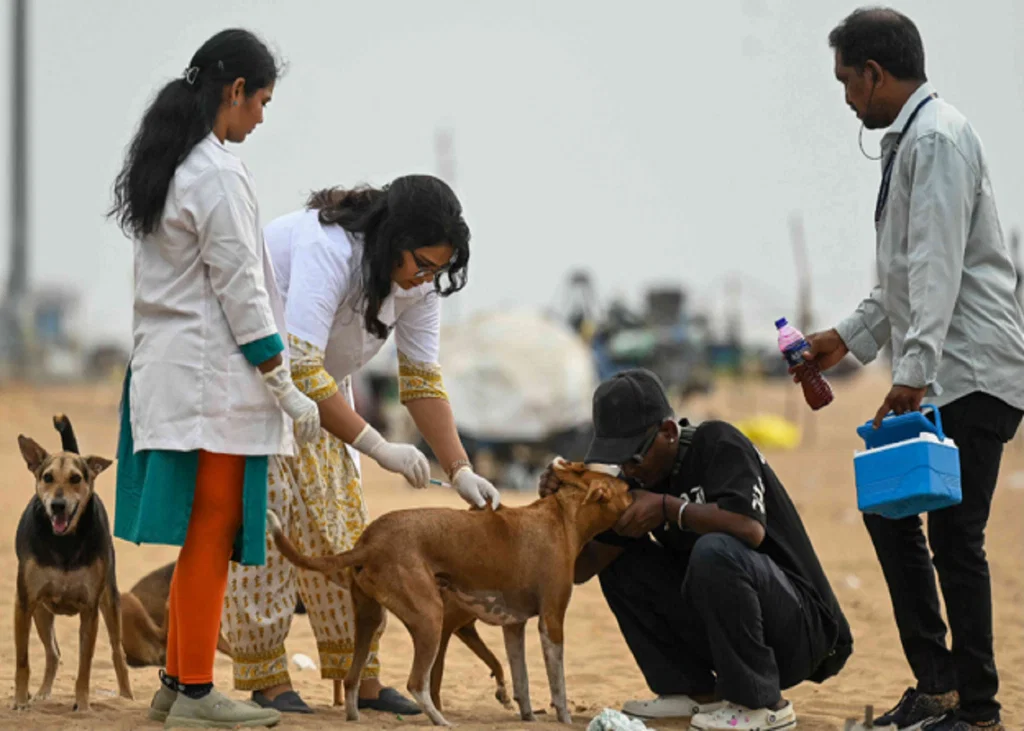
Article
Rabies Vaccination of Free-Roaming and Community Dogs: Guidelines for Mass Vaccination
Mass dog vaccination (MDV) is a key intervention under India's National Action Plan for Dog-Mediated Rabies Elimination from India by 2030 (NAPRE). The national strategy emphasises sustained mass dog vaccination, supported by public-health interventions and a One Health approach, to progressively eliminate dog-mediated rabies.[1]
The NCDC Manual of Zoonotic Diseases of Public Health Importance, 2025 specifically identifies estimation of the canine population, identification of rabies-risk zones and strategic mass dog vaccination as components of the animal-health response. It recommends achieving anti-rabies vaccination in at least 70% of the dog population annually for three consecutive years and maintaining 70% vaccination coverage in a defined geographical area.[2]
For effective population-level control, vaccination programmes should therefore include free-roaming and community dogs, rather than focusing only on owned dogs.
1. Target vaccination coverage
Recommendation
MDV programmes should aim to achieve at least 70% vaccination coverage of the dog population annually for three consecutive years in the defined geographical area and maintain this level thereafter.[2]
This target is consistent with international rabies-control guidance. WHO recommends vaccination coverage of more than 70% of the dog population to prevent transmission, while WOAH recommends prioritising vaccination of free-roaming dogs as part of dog-mediated rabies control.[3]˒[4]
Coverage should be calculated against the estimated dog population, rather than reported solely as the number of vaccine doses administered.
2. Population estimation and microplanning
Before initiating an MDV campaign, veterinary and programme teams should:
- Estimate the dog population within the target area;
- Identify rabies-risk zones and areas with previous vaccination gaps;
- Map areas with high concentrations of free-roaming dogs;
- Estimate vaccine, personnel and logistics requirements;
- Define vaccination routes and operational areas;
- Establish systems for recording vaccinated dogs; and
- Plan mechanisms for identifying and vaccinating dogs missed during the initial campaign.
Accurate population estimation is important because vaccination coverage cannot be reliably determined without an appropriate denominator.[2]
3. Inclusion of free-roaming and community dogs
Recommendation
MDV programmes should specifically include free-roaming dogs, including community dogs that may not have an identifiable owner.
WHO recommends achieving at least 70% vaccination coverage among free-roaming dogs in a defined area, with campaigns repeated annually.[5] WOAH similarly recommends giving priority to vaccination of free-roaming dogs, including puppies, because of their importance in interrupting the transmission cycle.[4]
Campaign design should therefore account for operational challenges such as:
- Difficulty locating dogs;
- Movement of dogs between areas;
- Difficulty safely restraining dogs;
- Unvaccinated dogs entering previously vaccinated areas; and
- Inability to identify vaccinated animals consistently.
4. Vaccination of puppies
Recommendation
Puppies encountered during an MDV campaign should be considered for vaccination according to the licensed vaccine product information and applicable programme protocol.
WOAH specifically recommends that free-roaming dogs, including puppies, receive priority during dog-mediated rabies vaccination programmes.[4] WHO also identifies vaccination of dogs, including puppies, as an important component of mass dog vaccination.[6]
The vaccination schedule should not be generalised across all products. The veterinarian should follow the age indication, dose, route, booster requirements and other instructions specified for the vaccine being used.
5. Vaccine selection and administration
For mass canine vaccination programmes, an appropriate quality-assured, licensed veterinary rabies vaccine should be used according to the product label and applicable regulatory requirements.
WHO recommends inactivated rabies vaccines for mass canine vaccination and states that parenteral vaccination should remain the primary method for accessible dogs. Oral rabies vaccination may have a complementary role where free-roaming dogs cannot be adequately reached by conventional vaccination.[3]
Vaccination teams should maintain appropriate vaccine storage and handling conditions throughout the campaign.
6. Identification of vaccinated dogs
Recommendation
Vaccinated dogs should be identified and, where feasible, registered to facilitate programme monitoring and prevent unnecessary repeat vaccination during the same campaign.[4]
Identification can also support:
- Verification of vaccination status;
- Follow-up of dogs missed during the campaign;
- Monitoring of geographical coverage;
- Subsequent campaign planning; and
- Post-vaccination surveys.
The identification method should be practical, humane and consistently applied across the campaign.
7. Campaign frequency
A single MDV campaign should not be considered sufficient to establish sustained population-level protection.
WHO recommends recurrent mass dog vaccination campaigns, generally on an annual basis, particularly where dog population turnover is high.[3]˒[5] WOAH similarly recommends recurrent vaccination campaigns, usually annually, with more frequent campaigns considered in particularly high-risk settings.[4]
Repeated campaigns are important in areas with:
- High puppy recruitment;
- Substantial dog population turnover;
- Movement of dogs between locations;
- Low coverage in previous campaigns; or
- Continuing transmission of rabies.
8. Monitoring vaccination coverage
Programme performance should be assessed using both population-level and geographical indicators.
At minimum, monitoring should include:
|
Indicator |
Purpose |
|
Estimated dog population |
Establishes the denominator |
|
Number of dogs vaccinated |
Measures programme output |
|
Vaccination coverage (%) |
Measures population reach |
|
Free-roaming dog coverage |
Assesses reach among an important target population |
|
Geographical coverage |
Identifies underserved areas |
|
Number of dogs missed |
Identifies vaccination gaps |
|
Identification of vaccinated dogs |
Supports field verification |
|
Coverage in successive campaigns |
Assesses sustainability |
WOAH recommends monitoring vaccination coverage at the smallest practical administrative level and maintaining identification and registration of vaccinated dogs.[4]
The NCDC 2025 manual also places emphasis on estimating the canine population and maintaining 70% vaccination coverage within a defined geographical area.[2]
9. Addressing vaccination gaps
Where vaccination coverage remains below the programme target, additional vaccination should be undertaken in areas with identified gaps.
Priority should be considered for:
- Areas with high dog density;
- Areas reporting animal rabies;
- Areas with low previous vaccination coverage;
- Areas with substantial free-roaming dog populations;
- Areas with poor access to veterinary services; and
- Geographical pockets where dogs were missed during the campaign.
The programme objective should not simply be to maximise the number of vaccine doses administered. The priority is to achieve adequate population and geographical coverage.
10. Integration with dog population management
Rabies vaccination should be implemented as part of an integrated dog-mediated rabies-control programme.
WOAH recommends that vaccination strategies take into account simultaneous dog population management programmes.[4] India's NAPRE similarly places rabies elimination within a broader, multisectoral framework involving veterinary services, public-health authorities and local governance.[1]
However, dog population management should complement rather than replace mass vaccination, because vaccination remains the principal intervention for rapidly reducing the risk of dog-mediated rabies transmission.
11. One Health coordination
Dog-mediated rabies elimination requires coordination between veterinary, public-health and local-government systems.
NAPRE adopts a One Health approach and provides a national framework for coordinated action among stakeholders[1].
Veterinary teams involved in MDV should contribute to:
- Mass vaccination;
- Animal rabies surveillance;
- Reporting and investigation of suspected rabies cases;
- Identification of high-risk areas;
- Monitoring vaccination coverage;
- Sharing relevant epidemiological information; and
- Coordination with public-health and local-government authorities.
WOAH also recommends timely coordination between Veterinary Authorities, public-health authorities and other competent authorities for rabies control[4].
12. Practical implementation checklist
Before and during an MDV campaign, veterinary programme teams should verify:
Planning
- Canine population estimated
- Target geographical area defined
- High-risk areas identified
- Vaccine and logistics requirements calculated
- Vaccination routes and teams planned
Vaccination
- Appropriate licensed veterinary rabies vaccine available
- Vaccine handled according to product requirements
- Free-roaming/community dogs included
- Puppies encountered during campaigns assessed for vaccination
- Vaccinated dogs identified where feasible
Monitoring
- Number vaccinated recorded
- Estimated population denominator documented
- Coverage calculated
- Missed areas/dogs identified
- Additional vaccination planned where required
- Coverage reviewed at appropriate geographical levels
Key Takeaway
Effective mass dog vaccination in India requires more than administering vaccine doses. Programmes should aim for ≥70% coverage of the dog population, prioritise free-roaming and community dogs, use reliable population estimates, identify vaccinated animals, conduct recurrent campaigns and monitor coverage geographically. These measures should be integrated with surveillance, dog population management and One Health coordination to support India's goal of eliminating dog-mediated rabies by 2030.
References:
- National Centre for Disease Control. National Action Plan for Dog Mediated Rabies Elimination from India by 2030 (NAPRE). New Delhi: Ministry of Health and Family Welfare, Government of India; 2023. https://www.rabiesfreeindia.mohfw.gov.in/About-NAPRE
- National Centre for Disease Control. Manual of Zoonotic Diseases of Public Health Importance. 2025. New Delhi: Ministry of Health and Family Welfare, Government of India; 2025. https://ncdc.mohfw.gov.in/uploads/resource/1769335263_ZDPHI_Manual_2025_V2_06.11.2025.pdf
- World Health Organization. Veterinary vaccines: Rabies [Internet]. Geneva: WHO; [cited 2026 Sep 10]. https://www.who.int/teams/control-of-neglected-tropical-diseases/rabies/vaccinations-and-immunization/veterinary-vaccines
- World Organisation for Animal Health. Infection with rabies virus: Chapter 8.15. Terrestrial Animal Health Code [Internet]. Paris: WOAH; 2024 [cited 2026 Sep 10]. https://www.woah.org/fileadmin/Home/eng/Health_standards/tahc/2024/en_chapitre_rabies.htm
- World Health Organization Regional Office for South-East Asia. High level meeting discusses elimination of dog-mediated rabies [Internet]. New Delhi: WHO SEARO; 2018 [cited 2026 Sep 10]. https://www.who.int/southeastasia/activities/high-level-meeting-discusses-elimination-of-dog-mediated-rabies
- World Health Organization. Rabies [Internet]. Geneva: WHO; [cited 2026 Sep 10]. https://www.who.int/news-room/fact-sheets/detail/rabies
Related Contents
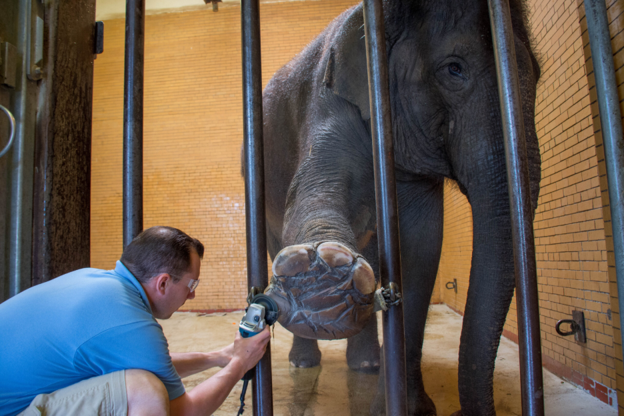
Article
Elephant Foot Health: Detecting Problems Before Lameness
Foot problems in elephants do not necessarily begin with obvious lameness. By the time an elephant i...
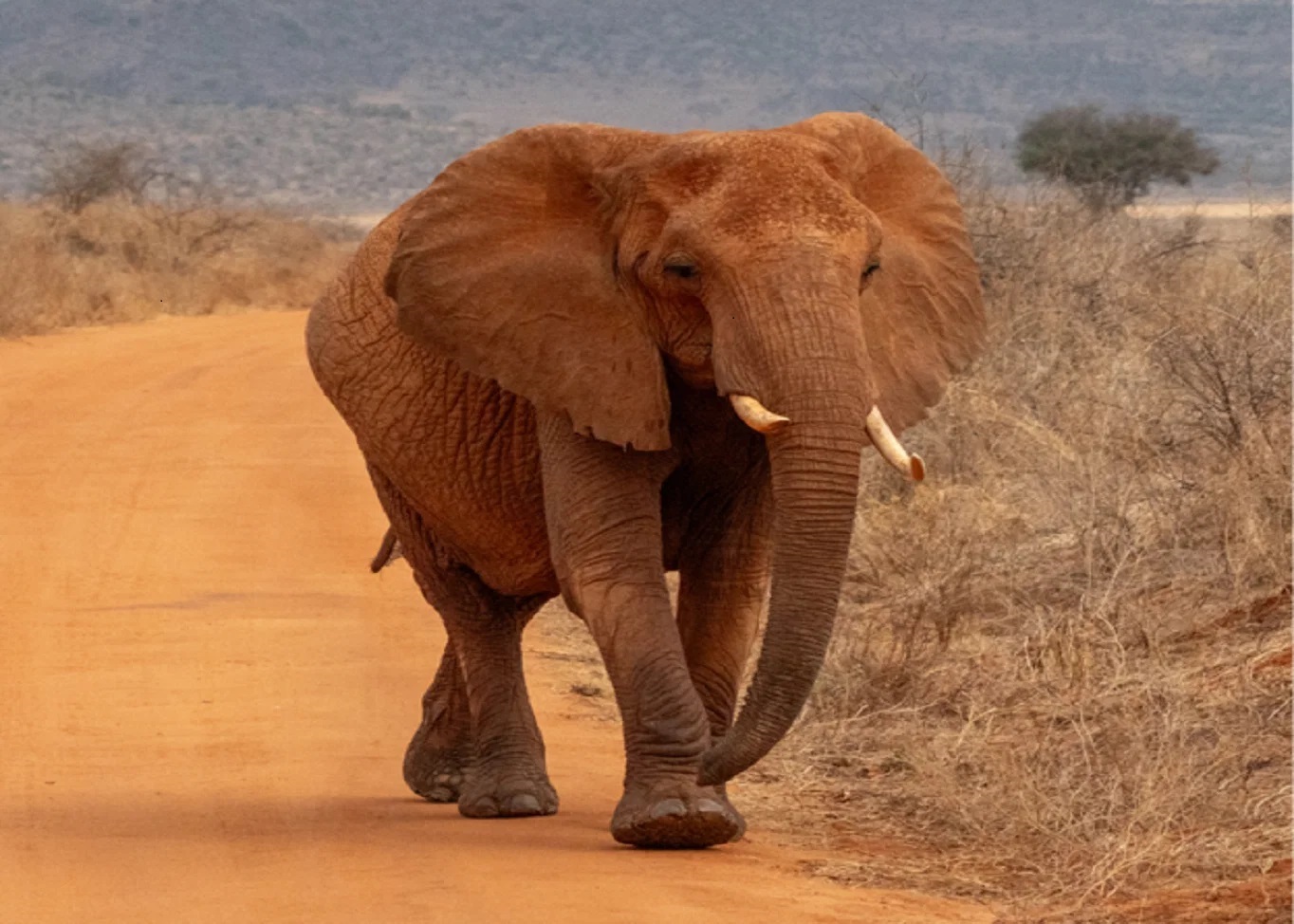
Article
When an Elephant’s Behaviour Changes: Recognising Clinically Relevant Patterns
A change in an elephant’s behaviour can be easy to dismiss as temperament. It can also...
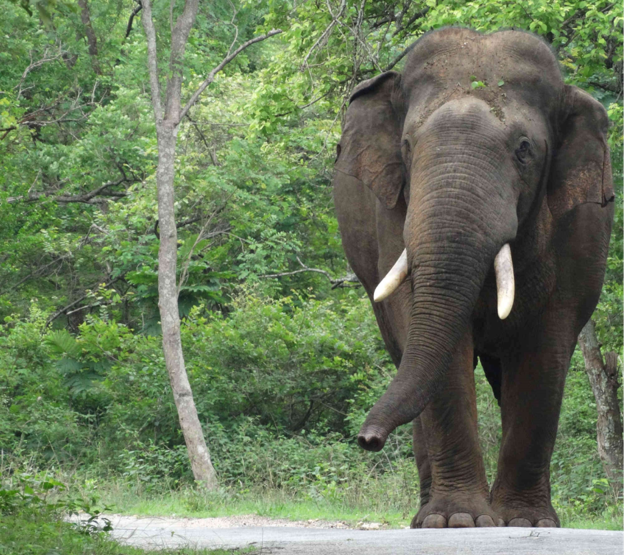
Article
Is It Normal for This Elephant? Building an Individual Health Baseline
For a long-lived animal, a single health assessment provides only a snapshot. A more useful c...
Article
Body Condition in Asian Elephants: When Does Change Become Clinically Relevant?
Body condition is often recorded during routine elephant health assessments. Its clinical value, how...
Article
EEHV in Asian Elephant Calves: Recognising the Early Clinical Picture
Elephant endotheliotropic herpesvirus (EEHV) is an important cause of fatal haemorrhagic disease in...
Article
Gastrointestinal Parasites in Asian Elephants: Interpreting Faecal Findings
A positive faecal examination confirms the detection of parasite stages in the sample. It does not,...
Article
Tuberculosis in Asian Elephants: Interpreting Screening Results in Context
Tuberculosis surveillance in elephants presents a fundamental diagnostic challenge: a test result is...
Article
Pregnancy Monitoring in Asian Elephants: Interpreting Ultrasound and Hormonal Findings
Confirming pregnancy is only the beginning of reproductive monitoring in an elephant. With a...