Article
EEHV in Asian Elephant Calves: Recognising the Early Clinical Picture
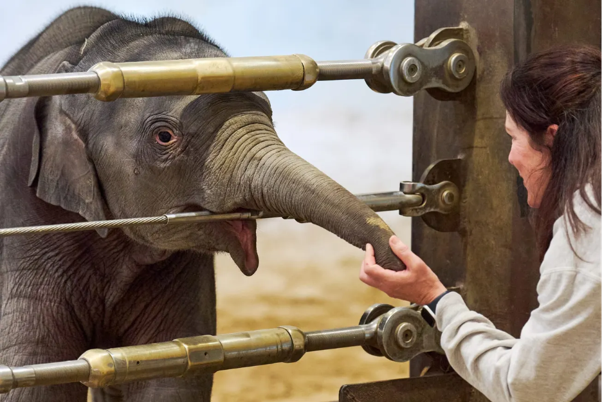
Elephant endotheliotropic herpesvirus (EEHV) is an important cause of fatal haemorrhagic disease in young Asian elephants.
The clinical challenge is not simply identifying the virus. It is recognising a potentially evolving case early enough to investigate the calf while the clinical picture is still developing.
Recognise the pattern, not a single sign
EEHV-associated disease should be considered when a young Asian elephant develops an acute combination of systemic abnormalities such as lethargy, fever, diarrhoea or haemorrhagic diarrhoea, facial or temporal-gland swelling, oedema or changes affecting the tongue[1].
Haematological changes can provide additional support. Reported clinical cases have included thrombocytopenia and abnormalities in leukocyte and erythrocyte parameters, particularly as disease progresses[1].
None of these findings is specific for EEHV.
Their value lies in the combination, timing and progression of findings.
A calf that develops acute systemic illness together with compatible haematological changes should therefore prompt consideration of EEHV alongside other appropriate differential diagnoses, rather than waiting for a more characteristic presentation to develop[1],[2].
A positive PCR does not equal haemorrhagic disease
Molecular testing is important, but the result needs clinical context.
EEHV DNA can be detected in elephants that are clinically healthy. A 2024 surveillance study in captive Asian elephants in Peninsular Malaysia detected EEHV DNA in 12 of 33 animals, including EEHV1A, EEHV4 and EEHV5, despite the animals appearing healthy at the time of sampling[2].
EEHV1A has also been detected in both clinically affected calves and apparently healthy adult Asian elephants in Assam[3].
This has an important diagnostic implication:
PCR confirms detection of viral DNA; it does not, by itself, establish EEHV-associated haemorrhagic disease.
Where available, interpretation should therefore consider the clinical presentation, quantitative viral findings, haematological changes and results of repeat testing rather than relying on a single positive molecular result.
Serial assessment can add diagnostic value
The first result may not provide the complete picture.
When EEHV is clinically suspected, documenting the calf’s clinical status and laboratory findings over time can help distinguish an isolated molecular detection from a developing clinical episode.
This is particularly relevant because EEHV infection can occur without overt disease. The 2024 Malaysian surveillance findings demonstrate why a positive result in a clinically normal elephant should not automatically be equated with haemorrhagic disease[2].
Serial assessment should therefore be used to answer a more useful question:
Is the elephant remaining clinically stable, or is viral detection occurring alongside a developing clinical syndrome?
Antiviral treatment requires careful interpretation of the evidence
Antiviral therapy has been reported in surviving Asian elephant calves, but the available evidence remains largely based on individual cases and retrospective clinical experience.
A published case report described successful treatment of an EEHV-infected Asian elephant calf with oral acyclovir[4]. Such reports are clinically relevant, particularly given the severity of the disease, but they do not establish a universally effective treatment regimen.
More recent experimental work has examined Asian elephant interferons and their anti-herpesviral activity, providing additional information about the elephant antiviral response[5]. These findings contribute to understanding EEHV pathogenesis and host defence, but they should not be interpreted as evidence for an established clinical interferon treatment protocol.
Treatment decisions should therefore be based on the available clinical and diagnostic evidence, local veterinary expertise and the individual case rather than extrapolating from a single successful report.
Surveillance should support early recognition
Surveillance has a role beyond identifying whether EEHV is present within a facility.
Where practical, maintaining records of previous clinical observations, laboratory results and molecular findings can help clinicians recognise changes in individual calves and understand the EEHV status of the wider elephant group.
The objective is not to treat every PCR-positive elephant.
It is to identify when viral detection is accompanied by clinical or haematological changes that require urgent investigation.
This distinction is particularly important when managing apparently healthy elephants that have previously tested positive for EEHV.
Clinical takeaway
EEHV assessment should integrate the clinical picture, haematology, molecular testing and serial observations.
A positive PCR result indicates detection of EEHV DNA; it does not, on its own, establish haemorrhagic disease or determine prognosis.
For a clinically deteriorating calf, however, compatible signs together with supportive laboratory findings should prompt rapid diagnostic investigation and close clinical monitoring, because delaying assessment until the disease becomes overt may limit the opportunity for intervention.
References:
- Yun Y, Sripiboon S, Pringproa K, et al. Clinical characteristics of elephant endotheliotropic herpesvirus (EEHV) cases in Asian elephants (Elephas maximus) in Thailand during 2006-2019. Vet Q. 2021;41(1):268-279. https://doi.org/10.1080/01652176.2021.1980633
- Gani M, Karuppannan KV, Mohd Firdaus AA, Mohammed AA. Detection of subclinical EEHV infection in captive Asian elephants (Elephas maximus) in Peninsular Malaysia through a molecular approach. https://doi.org/10.12982/VIS.2024.075
- Mahato G, Sarma KK, Pathak DC, et al. Endotheliotropic herpesvirus infection in Asian elephants (Elephas maximus) of Assam, India. Vet World. 2019;12(11):1790-1796. https://doi.org/10.14202/vetworld.2019.1790-1796
- Khammesri S, Mathura Y, Boonprasert K, et al. Successful treatment of elephant endotheliotropic herpesvirus infection in an Asian elephant (Elephas maximus) calf by oral acyclovir medication: Case report. J Vet Med Sci. 2021;83(1):125-129. https://doi.org/10.1292/jvms.20-0375
- Haycock J, Maehr T, Dastjerdi A, Steinbach F. Asian elephant interferons alpha and beta and their anti-herpes viral activity. Frontiers in Immunology. 2025 Mar 25;16:1533038. https://doi.org/10.3389/fimmu.2025.1533038
Related Contents
Article
Elephant Foot Health: Detecting Problems Before Lameness
Foot problems in elephants do not necessarily begin with obvious lameness. By the time an elephant i...
Article
When an Elephant’s Behaviour Changes: Recognising Clinically Relevant Patterns
A change in an elephant’s behaviour can be easy to dismiss as temperament. It can also...
Article
Is It Normal for This Elephant? Building an Individual Health Baseline
For a long-lived animal, a single health assessment provides only a snapshot. A more useful c...
Article
Body Condition in Asian Elephants: When Does Change Become Clinically Relevant?
Body condition is often recorded during routine elephant health assessments. Its clinical value, how...
Article
Gastrointestinal Parasites in Asian Elephants: Interpreting Faecal Findings
A positive faecal examination confirms the detection of parasite stages in the sample. It does not,...
Article
Tuberculosis in Asian Elephants: Interpreting Screening Results in Context
Tuberculosis surveillance in elephants presents a fundamental diagnostic challenge: a test result is...
Article
Pregnancy Monitoring in Asian Elephants: Interpreting Ultrasound and Hormonal Findings
Confirming pregnancy is only the beginning of reproductive monitoring in an elephant. With a...
Article
When an Elephant Stops Eating: Interpreting Changes in Appetite and Feeding Behaviour
A reduction in food intake can be one of the earliest observable changes in an elephant that is beco...