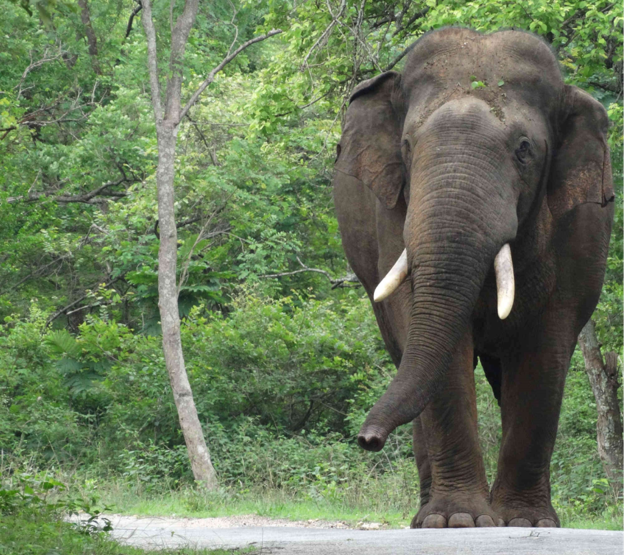
Article
Is It Normal for This Elephant? Building an Individual Health Baseline
For a long-lived animal, a single health assessment provides only a snapshot.
A more useful clinical question is:
What does this elephant normally look like when it is clinically stable?
That is the purpose of an individual health baseline.
Build the baseline when the elephant is stable
Population reference intervals remain essential for interpreting clinical pathology. A 2025 study established updated haematology, serum biochemistry and blood-gas reference intervals specifically for Indian elephants under human care, using samples from 92 elephants and standardised analytical approaches[1].
These intervals provide an important population-level framework, but they do not describe what is normal for every individual.
That distinction matters in a long-lived animal that may be examined repeatedly over many years.
An elephant’s own previous results can provide an additional point of comparison: is the current finding not only outside the population interval, but also different from this elephant’s established pattern?
Build a record that can actually be compared
A practical individual health baseline can include:
- Complete blood count;
- Serum biochemistry;
- Body condition;
- Gait and locomotion;
- Foot condition;
- Appetite and faecal pattern;
- Reproductive status where relevant;
- Significant medications;
- Previous clinically important disease;
- Major dietary or management changes.
Not every parameter needs to be measured at every visit.
The objective is to establish consistent, clinically relevant measurements that can be compared over time.
Longitudinal research in 225 individually identified Asian elephants demonstrated the value of repeated health measurements across seasons, with individual age, reproductive history and veterinary records maintained alongside the clinical observations[2].
For routine practice, the same principle can be applied at the individual level: the usefulness of a record increases when observations are collected consistently enough to reveal change.
Body condition needs context too
Body condition is particularly useful because it can be monitored repeatedly without requiring laboratory testing.
Research on free-ranging Asian elephants in southern India found seasonal changes in body condition and examined body condition in relation to faecal glucocorticoid metabolites. The study also followed a subset of individually identified adult females repeatedly over seven years[3].
This is important when interpreting body condition in clinical practice.
A lower score does not automatically indicate disease, just as a higher score does not automatically indicate good health. Age, sex, season, nutritional availability and activity can influence the measurement.
The useful question is therefore:
Has this elephant changed from its established pattern, and does the change fit the clinical context?
Record management changes alongside clinical findings
An elephant’s physiological profile does not exist independently of its management.
Changes in activity, feeding, housing, workload or social conditions may alter measurements that are subsequently interpreted as clinical findings. Research in captive Asian elephants has demonstrated relationships between management conditions, body condition, physical activity and physiological stress measures[4].
These findings should not be converted into Indian clinical reference standards, particularly because management systems and study populations differ.
Their practical value is in prompting a simple addition to the clinical record:
What changed in the elephant’s management before the physiological change was detected?
A change in diet, activity, workload or housing may provide important context when interpreting a change in body condition or laboratory findings.
Trends can be more informative than isolated results
A single abnormal result may be transient.
Repeated observations can help determine whether a finding is stable, resolving or progressively changing.
For example, an isolated biochemical abnormality may warrant repeat assessment, while a consistent change across several examinations—particularly when accompanied by altered appetite, body condition, activity or other clinical findings—may justify a broader investigation.
The baseline therefore becomes more than a historical record.
It becomes a reference point for detecting clinically meaningful change.
Know when the baseline needs updating
An individual baseline should not become a fixed target.
Ageing, reproductive status, disease, medication, diet, activity and major management changes can alter an elephant’s physiological state. Following a significant transition, previous values may therefore need to be interpreted differently, and a new stable period may provide a more appropriate baseline for subsequent monitoring.
The objective is not to keep every measurement unchanged.
It is to recognise meaningful deviation and interpret it in context.
Clinical takeaway
An individual health baseline should complement—not replace—population reference intervals.
A strong longitudinal health record allows the clinician to ask two questions: “Is this within the expected range?” and “Is this unusual for this elephant?”
For a long-lived species, that second question can add important clinical context to routine health monitoring.
Reference:
- Muliya SK, Bindhani UT, Kawlni L, et al. Reference intervals for hematology, serum biochemistry and blood gas parameters in Indian elephants (Elephas maximus indicus) under human care. Front Vet Sci. 2025;12:1602296. Published 2025 Jul 14. https://doi.org/10.3389/fvets.2025.1602296
- Franco Dos Santos DJ, Berger V, Cristofari R, et al. Seasonal variation of health in Asian elephants. Conserv Physiol. 2020;8(1):coaa119. Published 2020 Dec 29. https://doi.org/10.1093/conphys/coaa119
- Pokharel SS, Seshagiri PB, Sukumar R. Assessment of season-dependent body condition scores in relation to faecal glucocorticoid metabolites in free-ranging Asian elephants. Conserv Physiol. 2017;5(1):cox039. Published 2017 Jun 27. https://doi.org/10.1093/conphys/cox039
- Kumar V, Pradheeps M, Kokkiligadda A, Niyogi R, Umapathy G. Non-Invasive Assessment of Physiological Stress in Captive Asian Elephants. Animals (Basel). 2019;9(8):553. Published 2019 Aug 14. https://doi.org/10.3390/ani9080553
Related Contents
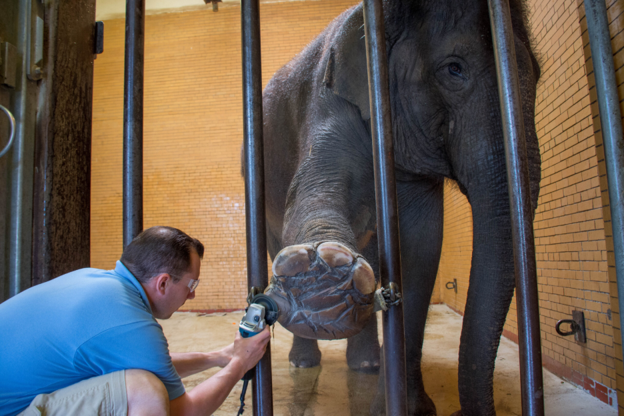
Article
Elephant Foot Health: Detecting Problems Before Lameness
Foot problems in elephants do not necessarily begin with obvious lameness. By the time an elephant i...
Article
When an Elephant’s Behaviour Changes: Recognising Clinically Relevant Patterns
A change in an elephant’s behaviour can be easy to dismiss as temperament. It can also...
Article
Body Condition in Asian Elephants: When Does Change Become Clinically Relevant?
Body condition is often recorded during routine elephant health assessments. Its clinical value, how...
Article
EEHV in Asian Elephant Calves: Recognising the Early Clinical Picture
Elephant endotheliotropic herpesvirus (EEHV) is an important cause of fatal haemorrhagic disease in...
Article
Gastrointestinal Parasites in Asian Elephants: Interpreting Faecal Findings
A positive faecal examination confirms the detection of parasite stages in the sample. It does not,...
Article
Tuberculosis in Asian Elephants: Interpreting Screening Results in Context
Tuberculosis surveillance in elephants presents a fundamental diagnostic challenge: a test result is...
Article
Pregnancy Monitoring in Asian Elephants: Interpreting Ultrasound and Hormonal Findings
Confirming pregnancy is only the beginning of reproductive monitoring in an elephant. With a...
Article
When an Elephant Stops Eating: Interpreting Changes in Appetite and Feeding Behaviour
A reduction in food intake can be one of the earliest observable changes in an elephant that is beco...