Article
Body Condition in Asian Elephants: When Does Change Become Clinically Relevant?
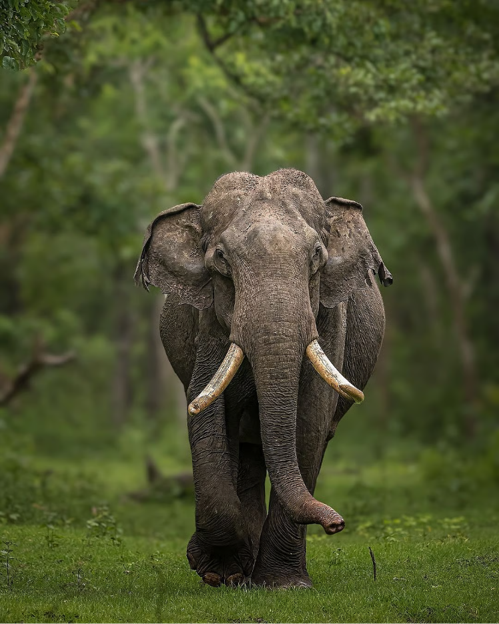
Body condition is often recorded during routine elephant health assessments. Its clinical value, however, lies less in a single score and more in what the score is doing over time.
A gradual increase, a persistent decline or a sudden change can provide a reason to look beyond nutrition alone and review the elephant’s activity, mobility, health and management.
Start with a consistent scoring method
Visual body-condition scoring is useful when it is performed systematically.
A 2024 assessment of 204 captive Asian elephants across 43 facilities in China found that more than 70% were classified as overweight or obese according to the study’s scoring system[1]. The findings should not be treated as prevalence estimates for elephants in India, because the populations, facilities and management conditions differ.
The more useful clinical lesson is that body condition can be monitored systematically across a population and over time, rather than being recorded simply as “good” or “poor” condition[1].
Using the same scoring system and, where possible, the same trained observers makes serial assessments easier to interpret.
A rising score should prompt a wider review
An increasing body-condition score should not automatically lead to a simple conclusion of overfeeding.
The clinical review should consider:
- Quantity and composition of feed;
- Access to natural forage;
- Energy-dense supplements or treats;
- Feeding frequency and pattern;
- Daily activity;
- Opportunities for walking and foraging;
- Age and physiological status;
- Recent changes in management.
Research in zoo-housed elephants has linked management factors, particularly walking and feeding practices, with metabolic measures and body condition[2]. The study also found an association between body condition and the glucose-to-insulin ratio, while metabolic measures differed between Asian and African elephants[2].
These findings do not establish a universal metabolic threshold for Asian elephants in India. They do, however, support looking at activity and feeding practices alongside body condition rather than treating the score as an isolated nutritional measure.
Body condition and mobility belong in the same assessment
An elephant with increasing body condition and declining activity warrants closer attention than either finding alone.
Foot and musculoskeletal health should form part of that review. Research in captive African and Asian elephants found associations between housing and demographic factors and foot and musculoskeletal health, including factors related to substrate and housing conditions[3].
This should not be simplified to “higher body condition causes foot disease”. The evidence does not establish that relationship.
Instead, a change in body condition accompanied by reduced movement, altered gait or recurrent foot problems should prompt a combined nutritional, locomotor and management assessment.
A lower score needs the same level of attention
Weight or body-condition loss should not automatically be interpreted as successful dietary management.
Unintended decline may warrant assessment of:
- Food intake and access to forage;
- Dental function;
- Gastrointestinal signs;
- Faecal changes;
- Parasitic disease where relevant;
- Chronic illness;
- Reproductive or physiological status;
- Recent changes in activity or management.
Body condition can also vary naturally with season. In free-ranging Asian elephants in southern India, body-condition scores changed seasonally, with lower scores associated with higher faecal glucocorticoid metabolite concentrations[3].
Because that study involved free-ranging elephants rather than captive elephants, its findings should not be used to establish clinical cut-offs for managed elephants. It does, however, reinforce the importance of interpreting body condition in relation to time of year and the individual’s circumstances, rather than assuming that every change represents disease.
Do not rely on the score alone
Visual body-condition scoring is practical, but different scoring systems do not necessarily measure exactly the same thing.
Research comparing four body-condition scoring systems with measured body composition in zoo-housed Asian elephants found that some scoring systems were associated with relative fat mass, while performance varied between systems[4].
This makes consistency particularly important.
If a facility changes its scoring system midway through a monitoring programme, apparent changes in body condition may partly reflect the assessment method rather than a true physiological change.
Where reliable body-weight measurements are available, they can provide an additional longitudinal measure. However, weight should also be interpreted in relation to body size, age, sex and body condition rather than used as a standalone indicator.
The clinical takeaway
Body condition becomes clinically useful when the direction of change is considered alongside what else has changed.
An increasing score may prompt review of feeding and activity. A declining score may warrant assessment for inadequate intake or underlying disease. When body-condition change occurs alongside altered mobility, appetite, faecal pattern or other clinical findings, the assessment should broaden accordingly.
The most useful question is therefore not simply:
“Is this elephant overweight or underconditioned?”
It is:
“Has this elephant changed—and what else has changed with it?”
References:
- Tang Y, Jia T, Zhou F, Wang L, Chen Z, Zhang L. Obesity Prevalence and Associated Factors in Captive Asian Elephants (Elephas maximus) in China: A Body Condition Assessment Study. Animals (Basel). 2024;14(24):3571. Published 2024 Dec 11. https://doi.org/10.3390/ani14243571
- Morfeld KA, Brown JL. Metabolic health assessment of zoo elephants: Management factors predicting leptin levels and the glucose-to-insulin ratio and their associations with health parameters. PLoS One. 2017;12(11):e0188701. Published 2017 Nov 29. https://doi.org/10.1371/journal.pone.0188701
- Pokharel SS, Seshagiri PB, Sukumar R. Assessment of season-dependent body condition scores in relation to faecal glucocorticoid metabolites in free-ranging Asian elephants. Conserv Physiol. 2017;5(1):cox039. Published 2017 Jun 27. https://doi.org/10.1093/conphys/cox039
- Miller MA, Hogan JN, Meehan CL. Housing and demographic risk factors impacting foot and musculoskeletal health in African elephants [Loxodonta africana] and Asian elephants [Elephas maximus] in North American zoos. PLoS One. 2016 Jul 14;11(7):e0155223. https://doi.org/10.1371/journal.pone.0155223
Related Contents
Article
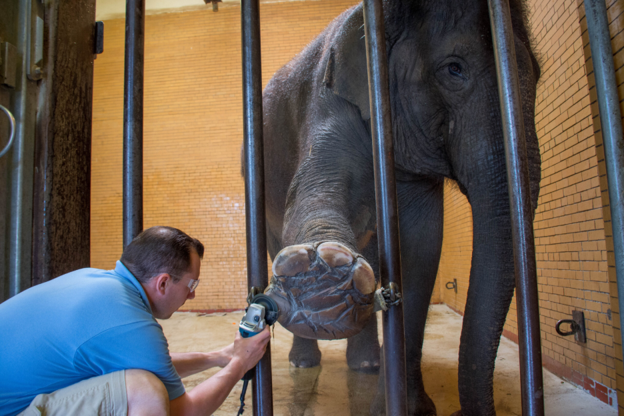
Elephant Foot Health: Detecting Problems Before Lameness
Foot problems in elephants do not necessarily begin with obvious lameness. By the time an elephant i...
Article
When an Elephant’s Behaviour Changes: Recognising Clinically Relevant Patterns
A change in an elephant’s behaviour can be easy to dismiss as temperament. It can also...
Article
Is It Normal for This Elephant? Building an Individual Health Baseline
For a long-lived animal, a single health assessment provides only a snapshot. A more useful c...
Article
EEHV in Asian Elephant Calves: Recognising the Early Clinical Picture
Elephant endotheliotropic herpesvirus (EEHV) is an important cause of fatal haemorrhagic disease in...
Article
Gastrointestinal Parasites in Asian Elephants: Interpreting Faecal Findings
A positive faecal examination confirms the detection of parasite stages in the sample. It does not,...
Article
Tuberculosis in Asian Elephants: Interpreting Screening Results in Context
Tuberculosis surveillance in elephants presents a fundamental diagnostic challenge: a test result is...
Article
Pregnancy Monitoring in Asian Elephants: Interpreting Ultrasound and Hormonal Findings
Confirming pregnancy is only the beginning of reproductive monitoring in an elephant. With a...
Article
When an Elephant Stops Eating: Interpreting Changes in Appetite and Feeding Behaviour
A reduction in food intake can be one of the earliest observable changes in an elephant that is beco...