Article
Fish Mortality in Aquaculture: A Stepwise Approach to Finding the Cause
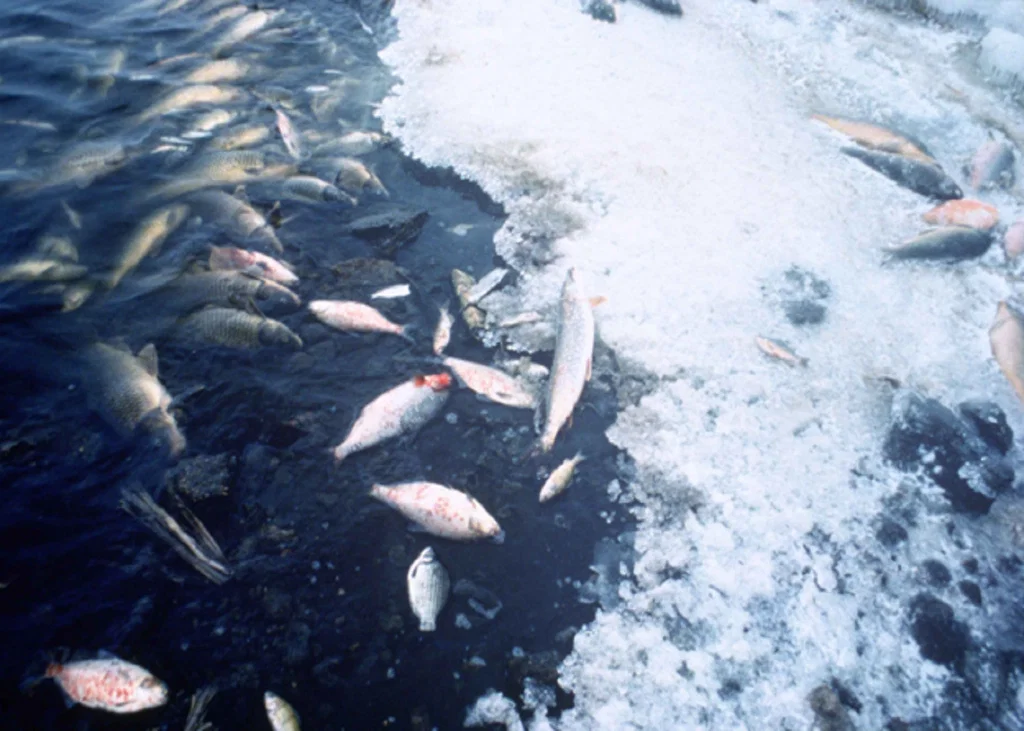
Sudden or unexplained mortality in a cultured fish population can have multiple causes, including infectious diseases, deteriorating water quality, nutritional problems, toxic exposures, handling stress and management-related factors. In many outbreaks, more than one factor may be operating simultaneously. Therefore, identifying the cause requires a systematic investigation rather than relying on a single clinical sign or laboratory finding[1],[2],[3].
Start with the pattern of mortality
The distribution and timing of mortality can provide important clues.
The first assessment should include the number and proportion of fish affected, species and life stage, onset and progression of mortality, affected ponds or tanks, and whether mortality is associated with feeding, stocking, transport, weather changes or recent management interventions. Recent introduction of fish, changes in feed, treatments, water source or stocking density should also be documented.
The pattern may help distinguish between a localised problem and a wider event. Mortality restricted to one tank or pond may suggest a local environmental or management problem, whereas simultaneous mortality across multiple units may prompt investigation of a common water source, infectious agent or broader environmental change.
However, mortality patterns alone should not be considered diagnostic. Aquatic disease investigation is complicated by the interaction between the animal, pathogen and surrounding environment[1],[2].
Examine the fish before assuming infection
Clinical examination remains an important first step in disease investigation. Behavioural changes, abnormal swimming, reduced feeding, surface gasping, abnormal coloration, excessive mucus, fin damage, skin lesions, haemorrhage, ulcers and abnormal gill appearance should be documented.
Where possible, freshly affected or moribund fish are generally more informative than severely decomposed carcasses. Gross examination can help identify which tissues require further investigation and can assist in prioritising laboratory tests[3],[4].
A useful principle is:
Do not let an obvious lesion end the investigation. Let it guide the investigation.
For example, gill abnormalities may occur in association with infectious agents, environmental stressors or poor water quality. Similarly, skin lesions may have infectious, traumatic or environmental components.
Check the water alongside the fish
Water quality should be assessed as part of the health investigation rather than treated as a separate management issue. Parameters such as dissolved oxygen, temperature, pH, salinity and nitrogenous compounds can influence fish physiology, behaviour, growth and susceptibility to disease[5].
Dissolved oxygen deserves particular attention during mortality investigations. Its concentration can fluctuate with temperature, stocking density, biological activity and other environmental conditions. Changes in oxygen availability can contribute to stress and abnormal behaviour and may occur alongside infectious disease[5].
Similarly, ammonia and nitrite should be considered where clinical signs or mortality coincide with changes in water chemistry or management practices.
The important point is that finding abnormal water-quality parameters does not automatically exclude infectious disease. Environmental stress can coexist with, predispose to or worsen an infectious process.
Investigate recent changes
A detailed history can sometimes be as informative as the initial clinical examination.
Ask:
- Were new fish recently introduced?
- Was there a recent increase in stocking density?
- Has feeding quantity, frequency or feed formulation changed?
- Was there recent transport or handling?
- Have any medications, disinfectants or other chemicals been used?
- Has the water source changed?
- Have there been recent heavy rains, temperature fluctuations or other environmental changes?
- Are neighbouring ponds or farms experiencing similar problems?
- Have fish, equipment or personnel moved between production units?
- Has a similar event occurred previously?
These questions help establish a timeline and identify potential exposure events.
Sample strategically
Laboratory diagnosis is most useful when sampling is linked to a clear clinical question. Early diagnosis and effective surveillance are important components of aquatic disease control[1],[2].
Depending on the suspected problem, investigation may involve microbiological, parasitological, histopathological, molecular or other diagnostic approaches.
The choice of test should be guided by the species, clinical presentation, epidemiological history and suspected disease process rather than by indiscriminate testing.
Importantly, detection of a pathogen does not necessarily establish that it is the cause of mortality. Recent work on high-throughput sequencing in aquaculture disease investigations highlights this distinction: pathogen nucleic acid detection needs to be interpreted alongside clinical findings and established diagnostic methods[3].
Think beyond a single cause
A mortality event may result from interacting factors.
For example:
Poor Water Quality → Physiological Stress → Impaired Resistance → Opportunistic Infection → Increased Mortality
Alternatively:
Infectious Disease → Gill Damage → Impaired Respiration → Greater Sensitivity to Low Dissolved Oxygen
This is why investigating only the pathogen—or only the water—may provide an incomplete explanation.
A useful diagnostic framework is therefore:
Host + Environment + Pathogen + Management + Timeline
Considering all five components can help distinguish a primary cause from contributing or secondary factors.
Where newer diagnostics fit
Aquatic disease diagnosis is evolving rapidly. Conventional approaches such as clinical examination, gross pathology, histopathology and microbial culture remain important, while molecular methods and other emerging technologies can provide additional diagnostic information[1],[3],[4].
High-throughput sequencing is particularly relevant to unexplained mortality events because it can support pathogen discovery and investigation when the causative agent is not initially known. However, its interpretation requires appropriate sampling, bioinformatics and clinical context, and it should complement rather than automatically replace established diagnostic approaches[3].
The objective is not simply to use the newest diagnostic technology. It is to select the right diagnostic approach for the question being investigated.
A practical approach to unexplained mortality
When mortality occurs, a structured investigation can follow this sequence:
1. Confirm the event
Establish mortality magnitude, affected species, age group and production units.
2. Establish the timeline
Identify when clinical signs and mortality began and what changed immediately beforehand.
3. Examine affected fish
Document behaviour, external lesions, gills and other relevant findings.
4. Assess the environment
Measure relevant water-quality parameters and review recent environmental changes.
5. Review management history
Check stocking, feeding, transport, treatments, biosecurity and movement of fish or equipment.
6. Develop differential diagnoses
Consider infectious, environmental, toxic, nutritional and management-related causes.
7. Collect appropriate samples
Prioritise fresh, clinically affected fish and appropriate environmental samples according to the suspected cause.
8. Integrate laboratory findings with field observations
Avoid interpreting a laboratory result independently of the clinical and epidemiological picture.
9. Identify primary and contributing factors
A mortality event may have more than one component.
10. Implement control and prevention measures
Management should address both the identified cause and the conditions that allowed the event to develop.
Take-home message
Fish mortality in aquaculture can result from infectious, environmental, nutritional, toxic or management-related causes, and multiple factors may contribute to the same mortality event. Therefore, water quality should be assessed alongside clinical examination, while freshly affected or moribund fish should be prioritised for diagnostic evaluation over decomposed carcasses. Detection of a pathogen in laboratory testing does not, by itself, establish causation and should be interpreted in conjunction with clinical, environmental and epidemiological findings. Emerging molecular and sequencing technologies can complement conventional diagnostic methods, particularly in complex or unexplained cases. Overall, a structured and systematic investigation can help shift fish-health management from reactive treatment towards early diagnosis, targeted intervention and prevention.
References:
- MacAulay S, Ellison AR, Kille P, Cable J. Moving towards improved surveillance and earlier diagnosis of aquatic pathogens: From traditional methods to emerging technologies. Reviews in Aquaculture. 2022 Sep;14(4):1813-29. https://doi.org/10.1111/raq.12674
- Siriyappagouder P, BT NK, Bagicha Singh B, Thakur K, Saheb AI, Kua BC. Aquatic animal health and epidemiology: disease surveillance, prevention and control. Frontiers in Veterinary Science. 2026 Mar 9;13:1798114. https://doi.org/10.3389/fvets.2026.1798114
- Samsing F, Arbon P, Arnold M, Barnes AC, Bass D, Becker JA, Bennett J, Caraguel C, Carson J, Costa VA, Dumond T. High‐Throughput Sequencing in Aquaculture Disease Investigations: Challenges and Opportunities for Implementation. Reviews in Aquaculture. 2026 Sep;18(4):e70193. https://doi.org/10.1111/raq.70193
- Dong HT, Chaijarasphong T, Barnes AC, Delamare‐Deboutteville J, Lee PA, Senapin S, Mohan CV, Tang KF, McGladdery SE, Bondad‐Reantaso MG. From the basics to emerging diagnostic technologies: What is on the horizon for tilapia disease diagnostics?. Reviews in Aquaculture. 2023 Feb;15:186-212. https://doi.org/10.1111/raq.12734
- Su X, Sutarlie L, Loh XJ. Sensors, biosensors, and analytical technologies for aquaculture water quality. Research. 2020 Feb 17. https://doi.org/10.34133/2020/8272705
Related Contents
Article
Elephant Foot Health: Detecting Problems Before Lameness
Foot problems in elephants do not necessarily begin with obvious lameness. By the time an elephant i...

Article
When an Elephant’s Behaviour Changes: Recognising Clinically Relevant Patterns
A change in an elephant’s behaviour can be easy to dismiss as temperament. It can also...

Article
Is It Normal for This Elephant? Building an Individual Health Baseline
For a long-lived animal, a single health assessment provides only a snapshot. A more useful c...

Article
Body Condition in Asian Elephants: When Does Change Become Clinically Relevant?
Body condition is often recorded during routine elephant health assessments. Its clinical value, how...

Article
EEHV in Asian Elephant Calves: Recognising the Early Clinical Picture
Elephant endotheliotropic herpesvirus (EEHV) is an important cause of fatal haemorrhagic disease in...

Article
Gastrointestinal Parasites in Asian Elephants: Interpreting Faecal Findings
A positive faecal examination confirms the detection of parasite stages in the sample. It does not,...
Article
Tuberculosis in Asian Elephants: Interpreting Screening Results in Context
Tuberculosis surveillance in elephants presents a fundamental diagnostic challenge: a test result is...

Article
Pregnancy Monitoring in Asian Elephants: Interpreting Ultrasound and Hormonal Findings
Confirming pregnancy is only the beginning of reproductive monitoring in an elephant. With a...