Article
Cooling Practices in Canine Heat-Related Illness: Evidence, Practice Gaps, and Clinical Implications
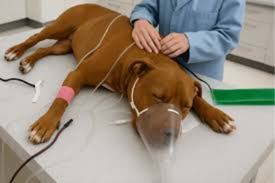
Heat-related illness (HRI) in dogs is a rapidly progressing emergency where timely cooling is critical for survival. Early intervention and appropriate temperature reduction are consistently highlighted as key determinants of outcome. However, real-world practice often shows variation in how cooling is initiated and executed, indicating a gap between evidence-based recommendations and field implementation.
Importance of Early Cooling
Rapid cooling is strongly associated with improved survival in heat-related emergencies. Clinical evidence in human and veterinary contexts demonstrates that faster reduction in core temperature improves outcomes and reduces mortality risk1,2. This supports the principle that cooling should begin as early as possible, ideally even before arrival at a veterinary facility when safe to do so.
Effectiveness of Cooling Approaches
Different cooling strategies vary in effectiveness depending on speed, practicality, and safety. Evidence suggests that active cooling methods significantly influence patient outcomes, particularly when implemented early in the course of heat illness1.
Evaporative and conductive cooling methods are commonly used due to ease of application, while more aggressive interventions are typically reserved for severe cases under controlled conditions. The key clinical priority remains rapid, controlled temperature reduction while avoiding complications such as hypothermia.
Clinical Risk Factors and Disease Burden
Population-level data indicate that heat-related illness in dogs is influenced by environmental exposure, activity level, and individual susceptibility. Epidemiological findings highlight that HRI cases are not limited to extreme environmental conditions alone, but also occur during physical exertion1,3. This reinforces the importance of preventive strategies and early recognition across a wide range of situations.
Role of Veterinary Clinical Data
Large-scale veterinary clinical databases have enabled improved understanding of disease patterns and outcomes in companion animals. Such systems provide valuable insights into real-world disease presentation and management, helping identify gaps between recommended and actual clinical practice4.
However, reliance on routine clinical records also introduces limitations, including variability in documentation and missing clinical details, which can affect interpretation of treatment patterns.
Climate Change and Increasing Risk
Environmental factors play an increasingly important role in heat-related illness risk. Rising global temperatures and more frequent extreme weather events are expected to increase both the incidence and severity of heat-related conditions in animals and humans5. This places additional importance on preventive education and rapid response strategies in veterinary care.
Clinical Implications
Current evidence supports the following key principles in managing canine HRI:
- Early recognition and immediate cooling improve outcomes1
- Delays in intervention increase risk of complications
- Environmental and exertional factors both contribute to disease occurrence2
- Climate trends are expected to increase future case burden4
These findings highlight the need for improved awareness among both caregivers and veterinary professionals regarding early intervention strategies.
Conclusion
Heat-related illness in dogs requires immediate and effective cooling intervention to improve survival outcomes. Evidence from open-access research supports the critical importance of early temperature reduction and highlights growing environmental risks that may increase disease incidence in the future. Strengthening early recognition, improving public awareness, and ensuring timely cooling remain essential priorities in veterinary emergency care.
References
1. Hall EJ, Carter AJ, Bradbury J, Beard S, Gilbert S, Barfield D, O’Neill DG. Cooling methods used to manage heat-related illness in dogs presented to primary care veterinary practices during 2016–2018 in the UK. Veterinary Sciences. 2023 Jul 15;10(7):465. https://doi.org/10.3390/vetsci10070465
2. Kanda, J.; Nakahara, S.; Nakamura, S.; Miyake, Y.; Shimizu, K.; Yokobori, S.; Yaguchi, A.; Sakamoto, T. Association between Active Cooling and Lower Mortality among Patients with Heat Stroke and Heat Exhaustion. PLoS ONE 2021, 16, e0259441.
3. Royal Veterinary College. VetCompass Programme Overview. Available online: https://www.rvc.ac.uk/vetcompass/about
4. Hall, E.J.; Carter, A.J.; O’Neill, D.G. Incidence and Risk Factors for Heat-Related Illness (Heatstroke) in UK Dogs under Primary Veterinary Care. Scientific Reports 2020, 10, 9128. https://doi.org/10.1038/s41598-020-66015-8
5. Dee, S.G.; Nabizadeh, E.; Nittrouer, C.L.; et al. Increasing Health Risks During Outdoor Sports Due to Climate Change. GeoHealth 2022, 6, e2022GH000595. https://www.researchgate.net/publication/362111659
Related Contents
.jpg)
Video
Transjugular Removal of Canine Heartworms: A Clinical and Surgical Overview
Transjugular removal of canine heartworms is a specialized intervention used in selected dogs with s...

Article
Feline Pregnancy Endocrinology: Hormonal Changes and Placental Function
Pregnancy in cats involves a distinctive endocrine pattern in which ovarian and placental hormones w...

Article
Hormonal Control of Pregnancy Termination in Cats
Pregnancy maintenance in cats depends strongly on coordinated hormonal support, particularly progest...

Article
Feline Embryo Implantation and Early Placental Development
Pregnancy establishment in cats involves a sequence of precisely timed events between fertilization,...

Article
Ultrasonographic Monitoring of Pregnancy in Cats: A Gestational Timeline
Ultrasonography provides a practical way to follow the progression of feline pregnancy by identifyin...

Article
Feline Mismating: Pregnancy Diagnosis and Clinical Management
Mismating or unplanned mating is a common clinical problem in sexually mature queen cats because of...

Article
Medical Termination of Pregnancy in Queens: Drugs, Timing and Treatment Protocols
Medical termination of pregnancy (MTP) in queen cats should be approached according to the timing of...

Article
Safety and Aftercare Following Pregnancy Termination in Queen Cats
Pregnancy termination in queen cats requires more than selecting an appropriate abortifacient. Once...