Article
Recognition of Heat Stress in Dairy Cattle: Clinical Signs Relevant for Field Veterinarians
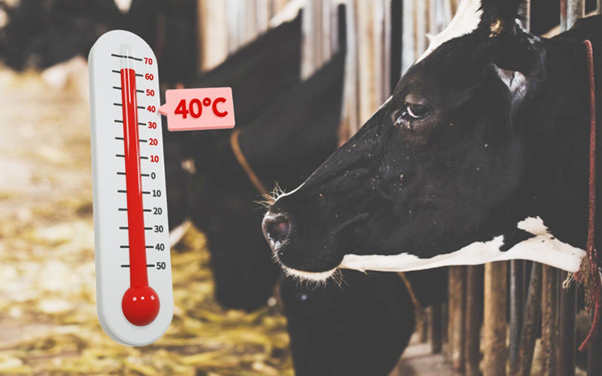
Heat stress in dairy cattle is frequently under-recognized in its early stages, despite having significant implications for production, welfare, and metabolic stability. It induces systemic physiological and cellular responses that can be identified through careful clinical observation (Scerri et al., 2023).
Clinical signs in field conditions1,2
Veterinarians should focus on the following observable indicators:
- Increased respiratory rate and persistent panting
- Open-mouth breathing in advanced cases
- Reduced feed intake and altered feeding patterns
- Decreased rumination activity
- Increased standing time and reduced lying behavior
- Excessive salivation and signs of dehydration
- Decline in milk yield as an early production indicator
These signs reflect activation of thermoregulatory mechanisms and cellular stress pathways, including heat shock protein responses.
Subclinical phase importance
Before overt clinical signs appear, cattle may already experience1,3:
- Oxidative stress at the cellular level
- Mitochondrial inefficiency affecting energy production
- Early metabolic dysregulation
These processes begin before visible physiological changes, making early detection critical.
Clinical implication
Diagnosis should rely not only on environmental temperature but also on behavioral and respiratory assessment.
References
- Scerri TM, Lomax S, Clark CE. Bovine heat stress management: current amelioration approaches and the case for a novel mitogenomic strategy. Frontiers in Animal Science. 2023 Aug 25;4:1169743. https://doi.org/10.3389/fanim.2023.1169743
- Galán E, Llonch P, Villagrá A, Levit H, Pinto S, del Prado A (2018) A systematic review of non-productivity-related animal-based indicators of heat stress resilience in dairy cattle. PLoS ONE 13(11): e0206520. https://doi.org/10.1371/journal.pone.0206520
- Sigdel A, Abdollahi-Arpanahi R, Aguilar I, Peñagaricano F. Whole genome mapping reveals novel genes and pathways involved in milk production under heat stress in US Holstein cows. Frontiers in genetics. 2019 Oct 4;10:928. https://doi.org/10.3389/fgene.2019.00928
Related Contents
.jpg)
Video
Transjugular Removal of Canine Heartworms: A Clinical and Surgical Overview
Transjugular removal of canine heartworms is a specialized intervention used in selected dogs with s...

Article
Feline Pregnancy Endocrinology: Hormonal Changes and Placental Function
Pregnancy in cats involves a distinctive endocrine pattern in which ovarian and placental hormones w...

Article
Hormonal Control of Pregnancy Termination in Cats
Pregnancy maintenance in cats depends strongly on coordinated hormonal support, particularly progest...

Article
Feline Embryo Implantation and Early Placental Development
Pregnancy establishment in cats involves a sequence of precisely timed events between fertilization,...

Article
Ultrasonographic Monitoring of Pregnancy in Cats: A Gestational Timeline
Ultrasonography provides a practical way to follow the progression of feline pregnancy by identifyin...

Article
Feline Mismating: Pregnancy Diagnosis and Clinical Management
Mismating or unplanned mating is a common clinical problem in sexually mature queen cats because of...

Article
Medical Termination of Pregnancy in Queens: Drugs, Timing and Treatment Protocols
Medical termination of pregnancy (MTP) in queen cats should be approached according to the timing of...

Article
Safety and Aftercare Following Pregnancy Termination in Queen Cats
Pregnancy termination in queen cats requires more than selecting an appropriate abortifacient. Once...