
Article
Feline Dystocia: Diagnosis, Intervention and Caesarean Section
Dystocia is a reproductive emergency that can threaten both the queen and her kittens. Although its incidence among pedigree breeding cats is typically less than 10%, the frequency varies considerably between breeds, suggesting a genetic component1,2. Prompt recognition of abnormal labour and appropriate assessment of the queen and fetuses are essential for deciding whether medical intervention or caesarean section is required.
Recognising Abnormal Parturition
Normal feline gestation averages approximately 65 days, with most parturitions occurring between 61 and 70 days2,3. Stage 1 involves uterine contractions and cervical dilation, while stage 2 involves productive uterine and abdominal contractions with fetal expulsion. Stage 3 involves expulsion of the fetal membranes and often occurs concurrently with stage 2.
Veterinary intervention is indicated when labour fails to begin despite the queen passing the expected due date, particularly in suspected primary uterine inertia. Other indications include prominent discoloured discharge before delivery of the first kitten, strong abdominal contractions without delivery of a kitten within 30 minutes, weak contractions lasting more than 4 hours without delivery, signs of maternal distress, or prominent bloody discharge at any point during parturition.
Determining the Cause2,4
Uterine inertia is the most common cause of feline dystocia and accounts for approximately two-thirds of cases. Complete primary uterine inertia occurs when stage 2 labour does not begin after the expected due date, whereas partial primary inertia occurs when stage 2 begins but contractions remain too weak to deliver one or more fetuses.
Fetal malpresentation is the second most common cause, followed by fetal malformations, fetal death, a narrow birth canal, and excessive fetal size. Both small and large litter sizes have also been associated with dystocia.
A thorough assessment should include evaluation of the queen’s general condition and vaginal examination for the presence of fetuses. Uterine torsion, although rare, is an important differential, particularly when dystocia is accompanied by poor maternal condition. Supportive treatment and early surgical intervention are required in such cases, with definitive diagnosis often established only during surgery.
Assessing Fetal Viability2
Radiography can provide information about the number of fetuses, while ultrasonography allows assessment of fetal stress and viability.
Fetal heart rate is particularly useful during decision-making:
- >180 bpm: considered normal
- 150–170 bpm: moderate to severe fetal stress
- <150 bpm: emergency
A transient reduction in fetal heart rate may occur during a uterine contraction. Therefore, a low heart rate should be monitored for 30–60 seconds or reassessed after several minutes before concluding that persistent fetal distress is present.
Medical Treatment or Caesarean Section?2
If there is no obstructive cause, and the queen and fetuses are in good condition, ecbolic treatment may be considered. Oxytocin can be administered intramuscularly, with an initial recommended dose of 0.1 IU/kg and up to 0.5–2 IU per cat. Administration may be repeated after 30 minutes, but repeated treatment beyond this should be avoided because of the increased risk of uterine hyperstimulation and placental detachment.
Calcium gluconate may also be administered slowly with cardiac monitoring. However, medical treatment is generally less successful in queens than in bitches, with reported success of approximately 30% of cases.
Caesarean section should be considered when medical treatment is inappropriate or unsuccessful, particularly when fetal or maternal compromise is present. If there are no signs of impending parturition, caesarean section is recommended 71 days after mating to avoid fetal mortality.
Caesarean Anaesthesia and Future Breeding2
During caesarean section, the objective is to minimise fetal exposure to perioperative drugs. Premedication with opioids is generally unnecessary; if required, short-acting opioids are preferred because neonatal effects can be reversed with naloxone. Alfaxalone has been recommended for induction, with propofol considered an acceptable alternative. Isoflurane is recommended for maintenance.
A previous caesarean section does not itself prevent a queen from delivering vaginally in a subsequent pregnancy. However, future breeding decisions should consider the underlying cause of dystocia. Queens with primary uterine inertia, particularly where related cats have experienced the same problem, should generally not be selected for further breeding. Dystocia caused by fetal malpresentation is more likely to have a random cause, allowing future breeding to be considered in a valuable queen. A period of approximately 6 months before mating again can be recommended, with longer intervals depending on the queen’s condition.
Conclusion
Feline dystocia requires prompt assessment of the queen and fetuses to determine whether medical treatment or caesarean section is appropriate. Identifying the underlying cause, monitoring fetal viability and considering the queen’s future breeding potential are essential for safe reproductive management.
References
- Holst BS, Axnér E, Öhlund M, Möller L, Egenvall A. Dystocia in the cat evaluated using an insurance database. Journal of feline medicine and surgery. 2017 Jan;19(1):42-7.
- Holst BS. Feline breeding and pregnancy management: what is normal and when to intervene. Journal of feline medicine and surgery. 2022 Mar;24(3):221-31. https://journals.sagepub.com/doi/pdf/10.1177/1098612X221079708
- Sparkes AH, Rogers K, Henley WE, Gunn-Moore DA, May JM, Gruffydd-Jones TJ, Bessant C. A questionnaire-based study of gestation, parturition and neonatal mortality in pedigree breeding cats in the UK. Journal of feline medicine and surgery. 2006 Jun;8(3):145-57. https://journals.sagepub.com/doi/pdf/10.1016/j.jfms.2005.10.003
- Ström Holst B, Frössling J. The Swedish breeding cat: population description, infectious diseases and reproductive performance evaluated by a questionnaire. Journal of Feline Medicine and Surgery. 2009 Oct;11(10):793-802. https://journals.sagepub.com/doi/pdf/10.1016/j.jfms.2009.01.008
Related Contents
Article
Recognising Major Bacterial Diseases in Poultry: Clinical Signs and Transmission Clues
Respiratory signs in a poultry flock do not always point to the same bacterial disease. Nasal discha...
Article
Newcastle Disease and Marek’s Disease: Distinguishing Respiratory, Neurological and Paralytic Presentations
A chicken with respiratory distress may have Newcastle disease, but the clinical picture can change...
Article
Poultry Parasitic Diseases: Recognising the Impact of Coccidia, Helminths and Ectoparasites
Parasitic infections can affect poultry productivity even when clinical signs are not immediately ob...
Article
Managing Poultry Health Through Housing, Ventilation, Lighting and Nutrition
A poultry house is more than a shelter. Its temperature, airflow, lighting, feed availability and wa...
Article
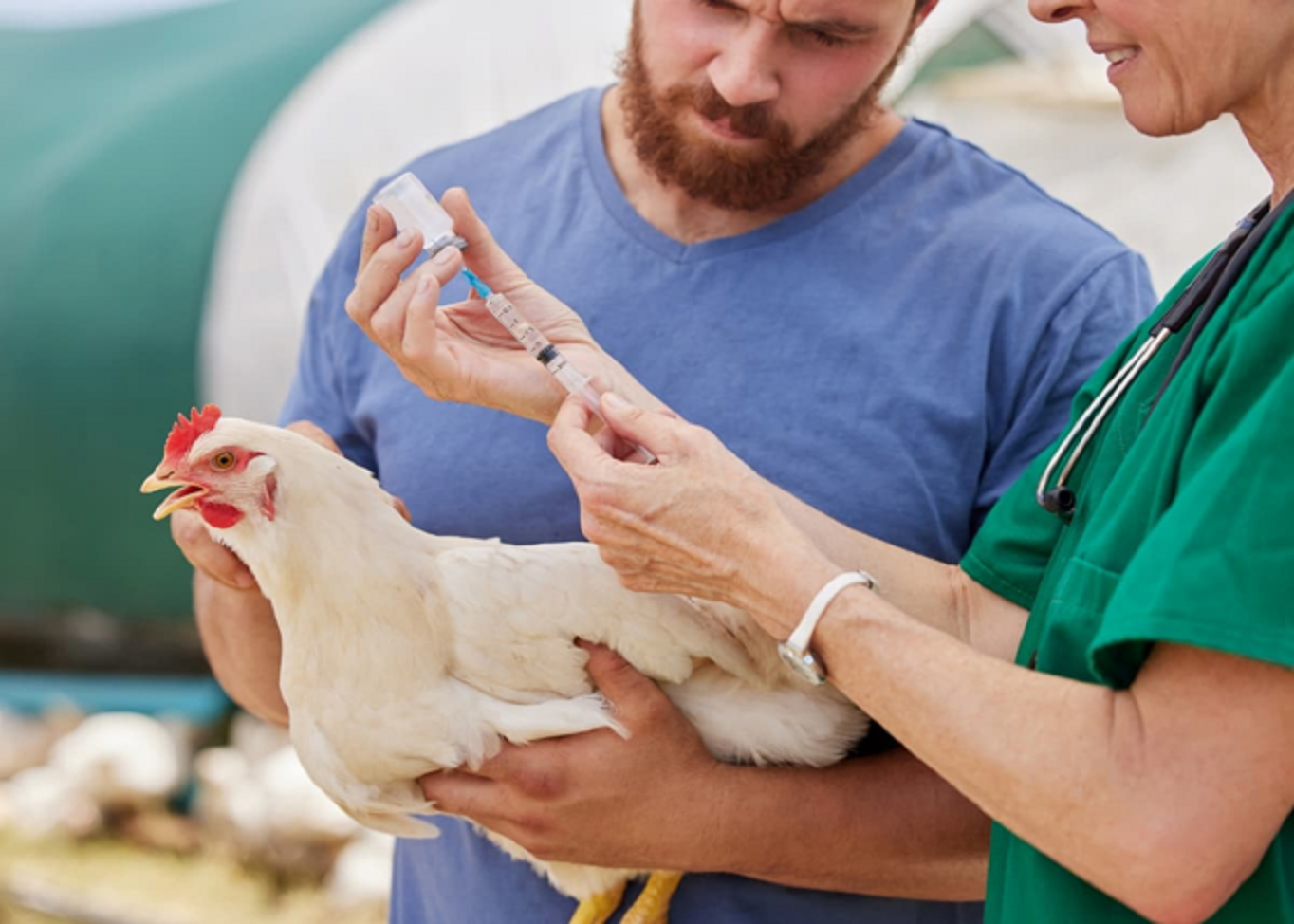
Poultry Farm Biosecurity and Vaccination: Preventing Disease Introduction and Spread
Disease prevention on a poultry farm depends on more than responding to clinical cases. Farm layout,...

Article
Post-Weaning Diarrhoea in Piglets: Recognising Age-Related Enteric Pathogens and Clinical Presentations
The days following weaning represent an important period for monitoring enteric health in piglets. D...
Article
Respiratory and Systemic Diseases in Pigs: Recognising Clinical Patterns Across Production Stages
Respiratory illness in pigs may present as coughing and laboured breathing, while systemic infection...
Article
Swine Herd Biosecurity: Managing Disease Risks Through Animal Movement, Personnel and Farm Operations
A swine herd can face disease exposure through several routine farm activities. Introducing replacem...