Article
Swine Herd Biosecurity: Managing Disease Risks Through Animal Movement, Personnel and Farm Operations
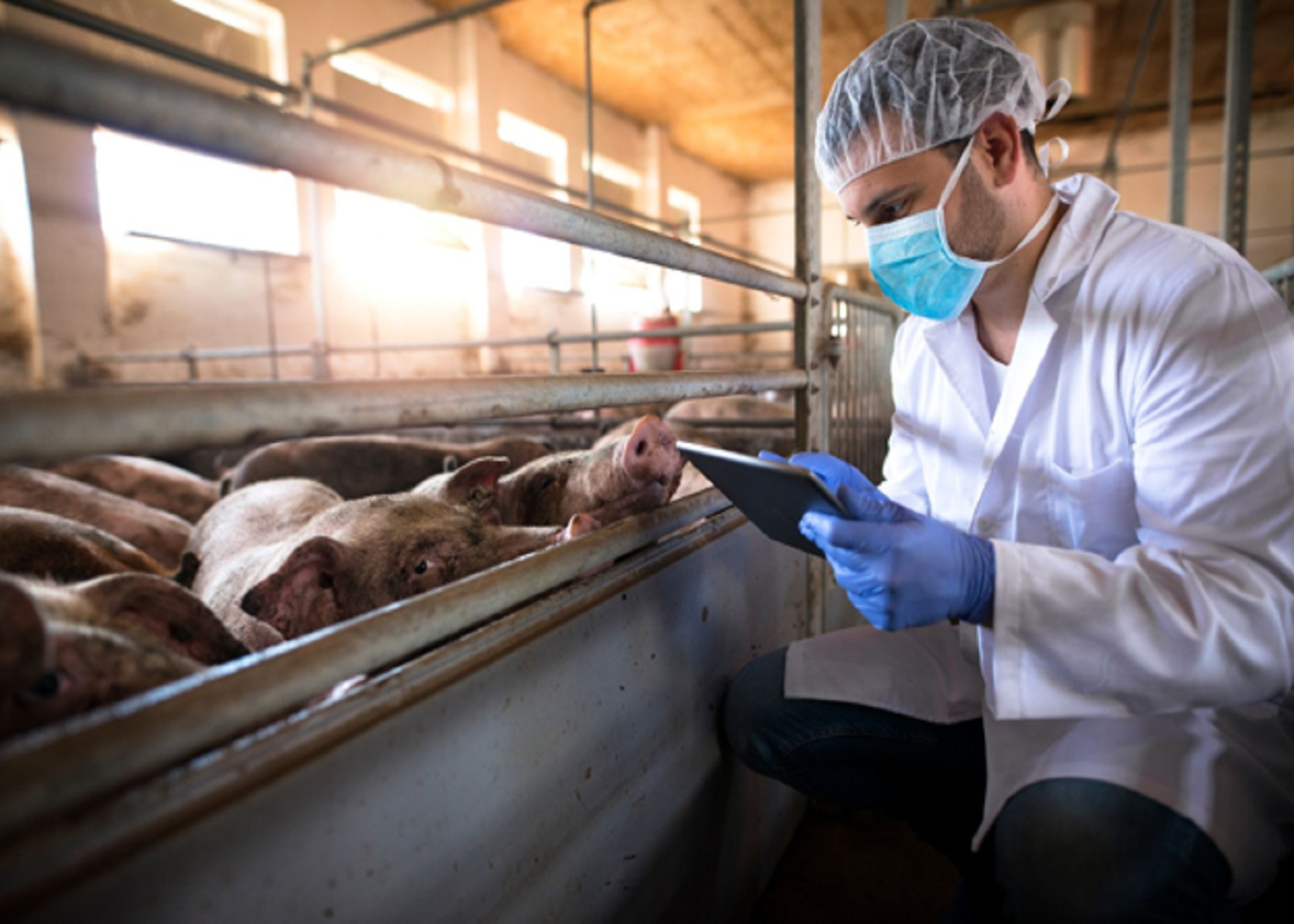
A swine herd can face disease exposure through several routine farm activities. Introducing replacement animals, receiving semen, transporting pigs, delivering feed and allowing personnel or vehicles to enter the premises can all create opportunities for pathogen introduction. Effective biosecurity therefore requires attention to both external risks and the movement of infection within the herd.
External and Internal Biosecurity
Biosecurity combines practices designed to reduce disease introduction and transmission. External biosecurity aims to prevent transmissible pathogens from entering the herd, while internal biosecurity focuses on limiting their spread, particularly from older to younger animals. Key practices include isolating new pigs, quarantine, disinfecting instruments, and maintaining good hygiene[1].
Regular personnel training is also important for maintaining consistent biosecurity standards across farms and production systems[2].
Replacement Animals: A Major Introduction Risk[3]
Introducing new breeding animals is identified as one of the biggest biosecurity risks.
Replacement gilts should undergo at least 30 days of quarantine on the farm. Testing during this isolation period helps establish their disease status before they are introduced into the herd. An acclimatisation period is also described for introducing new arrivals to older sows during isolation.
Contact with older cull sows, unwell animals or contaminated farm materials may expose susceptible gilts to farm-specific disease strains that existing immunisation programmes may not prevent.
Semen and Transport: Risks Beyond Live Animal Entry[3]
Semen can carry diseases transmitted through reproductive fluids. Boar studs therefore require stringent biosecurity because infection can spread rapidly to large numbers of animals. Farms receiving semen from multiple sources may face greater introduction risks than integrated sow farms using a single boar-stud source. Packaging and shipping materials can also act as potential transmission routes.
Animal transport presents another important risk. Vehicles returning from other premises may introduce contamination, while trailers used to transport pigs are identified as a major potential route for disease spread. Disinfection procedures, movement restrictions and communication between farms are important considerations.
Personnel, Vehicles and Farm Access[3]
People, animals and supplies moving to and from farms can contribute to disease transmission. Practical access-control measures include:
- Parking personnel vehicles at the farm boundary.
- Positioning feed bins near the boundary so delivery trucks can remain outside.
- Locating utility meters to allow meter readers to maintain distance from animals.
- Using disinfected instruments and maintaining personnel hygiene.
Rodents and birds also require attention because they can act as disease hosts or carriers.
Feed, Water and Farm Environment[3]
Feed brought onto farms can introduce disease agents. Delivery vehicles may also carry pathogens from one premises to another. The source of feed commodities and the hygiene of the delivery process therefore deserve attention. Supplying qualified feed is identified as a way to support productive, disease-free farms.
Farm ventilation, airflow, and temperature management also contribute to disease prevention. Air filtration at intake vents provides an additional barrier against airborne pathogens, while positive-pressure ventilation helps drive air out of barns.
Clinical takeaway: Swine biosecurity is not a single intervention. Quarantine, controlled animal and vehicle movement, semen-source management, personnel hygiene, feed-supply precautions and environmental controls must work together to reduce disease introduction and transmission.
References:
- Laanen M, Persoons D, Ribbens S, de Jong E, Callens B, Strubbe M, Maes D, Dewulf J. Relationship between biosecurity and production/antimicrobial treatment characteristics in pig herds. The veterinary journal. 2013 Nov 1;198(2):508-12. https://www.academia.edu/download/75733099/j.tvjl.2013.08.02920211205-26894-c3hska.pdf
- Burkard C, Lillico SG, Reid E, Jackson B, Mileham AJ, Ait-Ali T, Whitelaw CB, Archibald AL. Precision engineering for PRRSV resistance in pigs: Macrophages from genome edited pigs lacking CD163 SRCR5 domain are fully resistant to both PRRSV genotypes while maintaining biological function. PLoS pathogens. 2017 Feb 23;13(2):e1006206. https://journals.plos.org/plospathogens/article/file?id=10.1371/journal.ppat.1006206&type=printable
- Serbessa TA, Geleta YG, Terfa IO. Review on diseases and health management of poultry and swine. International Journal of Avian & Wildlife Biology. 2023 Apr;7(1):27-38. https://www.researchgate.net/profile/Tagesu-Abdisa/publication/371044181
Related Contents
Article
Recognising Major Bacterial Diseases in Poultry: Clinical Signs and Transmission Clues
Respiratory signs in a poultry flock do not always point to the same bacterial disease. Nasal discha...
Article
Newcastle Disease and Marek’s Disease: Distinguishing Respiratory, Neurological and Paralytic Presentations
A chicken with respiratory distress may have Newcastle disease, but the clinical picture can change...
Article
Poultry Parasitic Diseases: Recognising the Impact of Coccidia, Helminths and Ectoparasites
Parasitic infections can affect poultry productivity even when clinical signs are not immediately ob...
Article
Managing Poultry Health Through Housing, Ventilation, Lighting and Nutrition
A poultry house is more than a shelter. Its temperature, airflow, lighting, feed availability and wa...
Article
Poultry Farm Biosecurity and Vaccination: Preventing Disease Introduction and Spread
Disease prevention on a poultry farm depends on more than responding to clinical cases. Farm layout,...
Article
Post-Weaning Diarrhoea in Piglets: Recognising Age-Related Enteric Pathogens and Clinical Presentations
The days following weaning represent an important period for monitoring enteric health in piglets. D...
Article
Respiratory and Systemic Diseases in Pigs: Recognising Clinical Patterns Across Production Stages
Respiratory illness in pigs may present as coughing and laboured breathing, while systemic infection...
Article
Traumatic Reticuloperitonitis vs Traumatic Pericarditis in Cattle and Buffaloes: Recognising the Clinical Differences
A cow presenting with reduced milk production, tachycardia and inappetence may initially raise suspi...