Article
Zoonotic Diseases Without Borders: Why One Health Collaboration Starts with Veterinarians
Zoonotic diseases, those that are transmitted between animals and humans, represent some of the greatest challenges to global health in the 21st century. Estimates suggest that up to 60% of all infectious diseases and about 75% of emerging infectious diseases originate in animals, making zoonoses a critical concern for public health, animal health, and environmental stability alike. This undeniable overlap of risks highlights the importance of One Health, an approach that integrates human, animal, and environmental health to prevent, detect, and respond to zoonotic threats1, 2.
Why Zoonotic Diseases Cross Borders
Zoonotic pathogens do not respect geopolitical boundaries. They emerge and spread through complex interactions involving wildlife, livestock, domestic animals, humans, and environmental changes. Factors such as urbanization, deforestation, climate change, and increased global travel and trade facilitate the movement of pathogens across regions and species barriers. As a result, outbreaks can rapidly escalate from local animal populations to global human health crises1.
Nature and Diversity of Zoonotic Diseases
- Zoonoses vary in transmission modes: direct contact with infected animals, indirect contact through contaminated environments, or via vectors such as ticks and mosquitoes3.
- Common agents include bacteria, viruses, and parasites, all of which require vigilant surveillance and preventive strategies3.
- Wildlife and domestic animals act as reservoirs, and interactions at shared ecosystems can amplify the risk of spillover3.
Veterinarians: The Cornerstone of One Health Collaboration
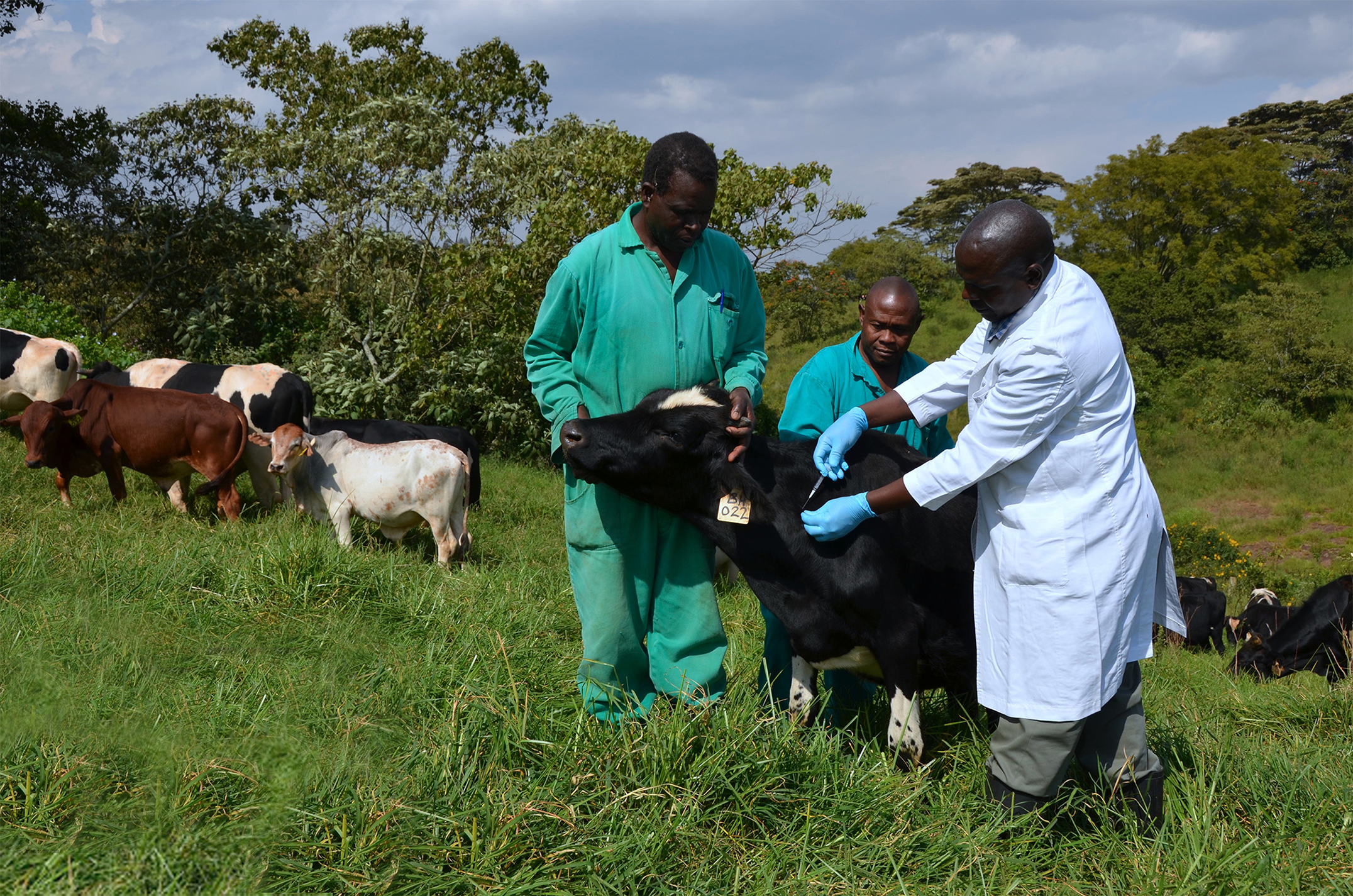
Veterinarians are more than clinicians; they are researchers, policy advisors, and educators at the intersection of animal, human, and environmental health. Their expertise makes them indispensable in controlling zoonotic diseases, guiding public health strategies, and safeguarding ecosystems.
Key Roles in Zoonotic Research and Risk Mapping
- Pathogen detection & characterization
- Isolate and identify pathogens in livestock, pets, and wildlife.
- Map disease hotspots and high-risk animal populations to prevent spillovers3.
- Understanding transmission dynamics
- Study interactions between hosts, vectors, and the environment.
- Provide data for early warning systems and predictive modeling of outbreaks.
- Prioritizing zoonotic risks at national and regional levels4
- Collaborate with medical, environmental, and policy experts.
- Inform national One Health strategies to tackle high-priority zoonotic pathogens.
Driving Policy, Prevention, and Community Awareness
- Policy support and preventive programs
- Integrate animal health data with human health systems.
- Guide vaccination campaigns, vector control programs, and community-based interventions to reduce zoonotic risk3.
- Education and outreach
- Train farmers, pet owners, and at-risk populations on zoonotic transmission.
- Highlight risks from raw food, vector exposure, and wildlife contact.
- Promote community engagement and preventive behaviors to reduce outbreaks.
Ecosystem Health and One Health Integration
- Environmental stewardship
- Collaborate with ecologists and conservation scientists.
- Monitor the impact of habitat fragmentation, biodiversity loss, and ecosystem changes on disease dynamics.
- Proactive ecosystem-based interventions
- Reduce pathogen spillover by maintaining balanced wildlife-livestock-human interactions.
- Integrate ecosystem management with human and animal health strategies.
Pro Tip: Veterinarians are the bridge between animals, humans, and the environment. Their involvement in research, policy, and community engagement ensures that One Health strategies are scientifically grounded, proactive, and locally relevant.
Conclusion
Zoonotic diseases truly have no borders, and the threats they pose span species, ecosystems, and nations. The One Health approach provides a unifying framework to confront these threats effectively, and veterinarians are central to its success. Through surveillance, preventive practice, interdisciplinary collaboration, and risk communication, veterinarians help bridge the gap between animal and human health. Strengthening these collaborative networks is essential if we are to reduce the global burden of zoonotic diseases and build resilient health systems for the future.
Reference
- Shaheen MN. The concept of one health applied to the problem of zoonotic diseases. Reviews in medical virology. 2022 Jul;32(4):e2326.
- Rodriguez J. One Health ethics and the ethics of zoonoses: A silent call for global action. Veterinary Sciences. 2024 Aug 27;11(9):394.
- Elsohaby I, Villa L. Zoonotic diseases: Understanding the risks and mitigating the threats. BMC veterinary research. 2023 Oct 3;19(1):186.
- Tiwari S, Roy I, Daptardar M, Singh R, Mishra A, Kedia R, Bhat A, Manocha H, Dwivedi M, Dwivedi A, Shukla G, Shewale A, Nale T, Mishra D, Sharma RP, Garcia D, Gokhale RH, Desai M, Singh S. Transforming One Health in India: National Multisectoral Mixed Method Study on Prioritization of Zoonotic Diseases. JMIR Public Health Surveill. 2025 Dec 22;11:77850. doi: 10.2196/77850.
Related Contents
.jpg)
Video
Transjugular Removal of Canine Heartworms: A Clinical and Surgical Overview
Transjugular removal of canine heartworms is a specialized intervention used in selected dogs with s...

Article
Feline Pregnancy Endocrinology: Hormonal Changes and Placental Function
Pregnancy in cats involves a distinctive endocrine pattern in which ovarian and placental hormones w...

Article
Hormonal Control of Pregnancy Termination in Cats
Pregnancy maintenance in cats depends strongly on coordinated hormonal support, particularly progest...

Article
Feline Embryo Implantation and Early Placental Development
Pregnancy establishment in cats involves a sequence of precisely timed events between fertilization,...

Article
Ultrasonographic Monitoring of Pregnancy in Cats: A Gestational Timeline
Ultrasonography provides a practical way to follow the progression of feline pregnancy by identifyin...

Article
Feline Mismating: Pregnancy Diagnosis and Clinical Management
Mismating or unplanned mating is a common clinical problem in sexually mature queen cats because of...

Article
Medical Termination of Pregnancy in Queens: Drugs, Timing and Treatment Protocols
Medical termination of pregnancy (MTP) in queen cats should be approached according to the timing of...

Article
Safety and Aftercare Following Pregnancy Termination in Queen Cats
Pregnancy termination in queen cats requires more than selecting an appropriate abortifacient. Once...