Article
Reptiles as Silent Reservoirs of Salmonella: What Every Veterinarian Should Know
Salmonella continues to be a major global zoonotic pathogen, responsible for millions of gastroenteritis cases annually1. While foodborne transmission remains the dominant route, veterinarians must increasingly recognize reptiles as significant reservoirs contributing to human infections. Reptile-associated salmonellosis accounts for approximately 3–7% of human cases and disproportionately affects children, the elderly, and immunocompromised individuals1,2.
Reptiles harbor Salmonella as part of their normal intestinal microbiota, often without clinical signs. Shedding through feces enables both direct and indirect transmission, particularly in environments where hygiene practices are suboptimal.
Prevalence Patterns Across Reptile Species
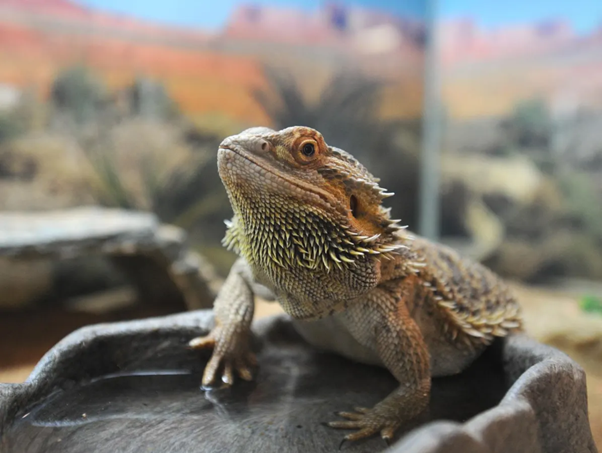
A large meta-analysis covering over 23,000 reptiles reported an overall Salmonella prevalence of 30.4%. However, this prevalence is not uniform across taxa. Snakes demonstrated the highest carriage rates at 63.1%, followed by lizards at 33.6%, while turtles and crocodiles showed significantly lower prevalence at around 10–11%1.
For veterinarians, this variation is clinically relevant. Snakes and lizards, commonly kept as pets, pose a higher zoonotic risk. The high prevalence in snakes may be linked to their carnivorous diet and exposure to contaminated prey, while environmental contamination in enclosures also plays a role1,3,4.
Clinical Implications in Veterinary Practice
Although reptiles rarely exhibit clinical disease, Salmonella carriage should not be dismissed as benign. Asymptomatic shedding can lead to environmental contamination, increasing the risk for handlers and owners. This is particularly important in households with vulnerable individuals.
Veterinarians should incorporate routine client education into consultations. Advising on proper hygiene, including handwashing after handling reptiles and avoiding cross-contamination with food preparation areas, is essential. Additionally, clinicians should discourage reptile ownership in high-risk households, especially those with young children1.
Detection Challenges and Diagnostic Considerations
One of the key insights from the study is the variability in detection methods. Culture-based techniques using pre-enrichment and selective enrichment steps significantly improved Salmonella detection rates (36.7%) compared to methods omitting pre-enrichment (21.8%)1.
From a practical standpoint, veterinarians submitting samples for diagnostic testing should ensure laboratories follow standardized protocols. Failure to include pre-enrichment may lead to false-negative results, underestimating infection risk.
Conclusion: From Awareness to Preventive Action
Reptiles should no longer be viewed as low-risk exotic pets but as clinically relevant reservoirs of zoonotic pathogens. The high prevalence of Salmonella, particularly in snakes and lizards, highlights the need for a proactive veterinary approach. Beyond diagnosis, the role of the veterinarian extends to client education, risk assessment, and preventive guidance. By emphasizing hygiene practices, appropriate pet selection, and accurate diagnostic methods, veterinarians can significantly reduce the burden of reptile-associated salmonellosis while safeguarding both animal and human health.
References
- Muslin C, Salas-Brito P, Coello D, Morales-Jadán D, Viteri-Dávila C, Coral-Almeida M. Salmonella prevalence and serovar distribution in reptiles: a systematic review and meta-analysis. Gut Pathogens. 2025 Jul 9;17(1):52. https://link.springer.com/content/pdf/10.1186/s13099-025-00699-z.pdf
- Meletiadis A, Biolatti C, Mugetti D, Zaccaria T, Cipriani R, Pitti M, Decastelli L, Cimino F, Dondo A, Maurella C, Bozzetta E. Surveys on exposure to reptile-associated salmonellosis (RAS) in the piedmont region—Italy. Animals. 2022 Apr 1;12(7):906. https://www.mdpi.com/2076-2615/12/7/906
- Dec M, Zając M, Puchalski A, Szczepaniak K, Urban-Chmiel R. Pet reptiles in Poland as a potential source of transmission of Salmonella. Pathogens. 2022 Sep 29;11(10):1125. https://www.mdpi.com/2076-0817/11/10/1125
- Ramos CP, Santana JA, Morcatti Coura F, Xavier RG, Leal CA, Oliveira Junior CA, Heinemann MB, Lage AP, Lobato FC, Silva RO. Identification and characterization of Escherichia coli, Salmonella spp., Clostridium perfringens, and C. difficile isolates from reptiles in Brazil. BioMed research international. 2019;2019(1):9530732. https://onlinelibrary.wiley.com/doi/pdf/10.1155/2019/9530732
Related Contents
.jpg)
Video
Transjugular Removal of Canine Heartworms: A Clinical and Surgical Overview
Transjugular removal of canine heartworms is a specialized intervention used in selected dogs with s...

Article
Feline Pregnancy Endocrinology: Hormonal Changes and Placental Function
Pregnancy in cats involves a distinctive endocrine pattern in which ovarian and placental hormones w...

Article
Hormonal Control of Pregnancy Termination in Cats
Pregnancy maintenance in cats depends strongly on coordinated hormonal support, particularly progest...

Article
Feline Embryo Implantation and Early Placental Development
Pregnancy establishment in cats involves a sequence of precisely timed events between fertilization,...

Article
Ultrasonographic Monitoring of Pregnancy in Cats: A Gestational Timeline
Ultrasonography provides a practical way to follow the progression of feline pregnancy by identifyin...

Article
Feline Mismating: Pregnancy Diagnosis and Clinical Management
Mismating or unplanned mating is a common clinical problem in sexually mature queen cats because of...

Article
Medical Termination of Pregnancy in Queens: Drugs, Timing and Treatment Protocols
Medical termination of pregnancy (MTP) in queen cats should be approached according to the timing of...

Article
Safety and Aftercare Following Pregnancy Termination in Queen Cats
Pregnancy termination in queen cats requires more than selecting an appropriate abortifacient. Once...