Article
Equine Glandular Gastric Disease: Why Treatment Is More Challenging
While ESGD is primarily an acid-related disorder, EGGD is a more complex disease involving impaired mucosal defence and inflammation.
A Different Disease Process
Research suggests that glandular lesions are more closely associated with inflammation and disruption of mucosal protection than with direct acid injury 1,2.
This difference explains why EGGD often responds less predictably to traditional acid-suppressive therapies.
Why Omeprazole Alone Is Often Not Enough
Although omeprazole remains a central component of treatment, its effectiveness is lower in EGGD compared with ESGD. Treatment durations of at least eight weeks are often recommended2.
The Role of Sucralfate
Sucralfate forms a protective barrier over damaged mucosa and promotes bicarbonate and mucus secretion. Studies have demonstrated improved healing when sucralfate is combined with omeprazole compared with omeprazole alone1.
Misoprostol: An Emerging Option
Misoprostol enhances mucosal protection and has shown superior healing outcomes compared with omeprazole–sucralfate combinations in some studies3.
However, it should be avoided in pregnant and lactating mares because of its uterotonic effects1.
Is Stress the Missing Piece?
Increasing evidence suggests that stress plays a significant role in EGGD development. Horses with severe glandular disease appear more stress-sensitive than unaffected controls4.
This highlights the importance of environmental and behavioural management alongside medical treatment.
Conclusion
EGGD remains one of the more challenging conditions in equine gastroenterology. Successful management requires a multifaceted approach that combines acid suppression, mucosal protection, stress reduction, and long-term monitoring to achieve optimal outcomes.
References
- van den Boom R. Equine gastric ulcer syndrome in adult horses. The Veterinary Journal. 2022 May 1;283:105830. https://doi.org/10.1016/j.tvjl.2022.105830
- Sykes BW, Hewetson M, Hepburn RJ, Luthersson N, Tamzali Y. European College of Equine Internal Medicine Consensus Statement—equine gastric ulcer syndrome in adult horses. Journal of veterinary internal medicine. 2015 Sep;29(5):1288-99. https://doi.org/10.1111/jvim.13578
- Varley G, Bowen IM, Habershon‐Butcher JL, Nicholls V, Hallowell GD. Misoprostol is superior to combined omeprazole‐sucralfate for the treatment of equine gastric glandular disease. Equine veterinary journal. 2019 Sep;51(5):575-80. https://beva.onlinelibrary.wiley.com/doi/abs/10.1111/evj.13087
- Malmkvist J, Poulsen JM, Luthersson N, Palme R, Christensen JW, Søndergaard E. Behaviour and stress responses in horses with gastric ulceration. Applied animal behaviour science. 2012 Dec 31;142(3-4):160-7. https://www.academia.edu/download/50609538/Behaviour_and_stress_responses_in_horses20161129-31300-10u28a5.pdf
Related Contents
Upcoming Event
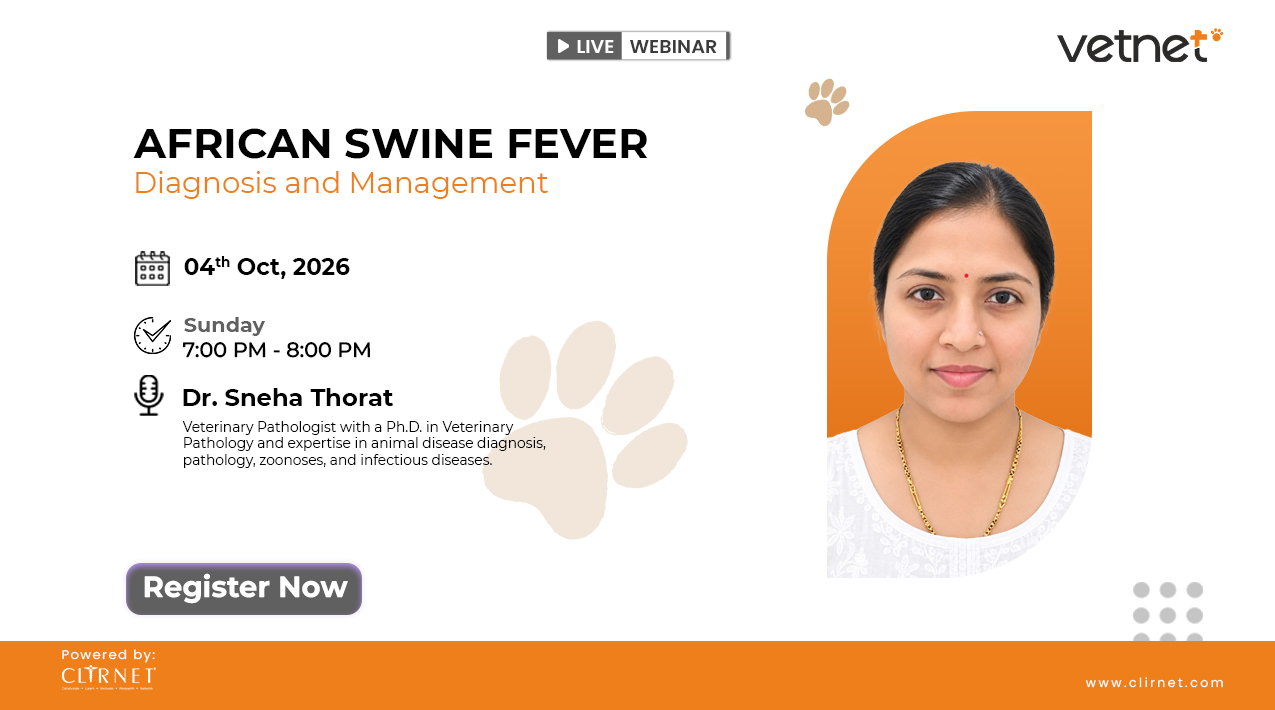
African Swine Fever: Diagnosis and Management
African swine fever can cause severe disease and significant losses in affected pig populations.&nbs...
.jpg)
Video
Transjugular Removal of Canine Heartworms: A Clinical and Surgical Overview
Transjugular removal of canine heartworms is a specialized intervention used in selected dogs with s...

Article
Feline Pregnancy Endocrinology: Hormonal Changes and Placental Function
Pregnancy in cats involves a distinctive endocrine pattern in which ovarian and placental hormones w...

Article
Hormonal Control of Pregnancy Termination in Cats
Pregnancy maintenance in cats depends strongly on coordinated hormonal support, particularly progest...

Article
Feline Embryo Implantation and Early Placental Development
Pregnancy establishment in cats involves a sequence of precisely timed events between fertilization,...

Article
Ultrasonographic Monitoring of Pregnancy in Cats: A Gestational Timeline
Ultrasonography provides a practical way to follow the progression of feline pregnancy by identifyin...

Article
Feline Mismating: Pregnancy Diagnosis and Clinical Management
Mismating or unplanned mating is a common clinical problem in sexually mature queen cats because of...

Article
Medical Termination of Pregnancy in Queens: Drugs, Timing and Treatment Protocols
Medical termination of pregnancy (MTP) in queen cats should be approached according to the timing of...