Article
Preventing Endometritis in Sows: Farrowing, Insemination and Herd Management
Preventing endometritis in sows begins with controlling the conditions that allow uterine contamination to persist. Although the disorder is often bacterial-induced, management factors have a major influence on uterine health. Farrowing management, insemination hygiene, housing, nutrition and effective uterine involution should therefore be considered together rather than as isolated preventive measures.
Start with Farrowing Management
The peripartum period is a critical window for preventing puerperal endometritis. Prolonged farrowing, obstetrical intervention, retained placentas, and fever after farrowing are associated with increased vaginal discharge, intrauterine fluid, and impaired uterine involution1,2,3.
Farrowing duration deserves particular attention. A prolonged farrowing process, defined in the provided content as more than 300 minutes from the first to the last born piglet, is associated with an increased risk of uterine problems. Improving crude fibre in the diet and maintaining adequate water intake may help reduce obstipation and, consequently, the prevalence of prolonged farrowing1.
Body condition should also be optimized. Adequate body condition, together with sufficient rooting material to permit nest-building behaviour, is recommended as part of farrowing management. Obstetrical intervention should be limited to situations where it is indicated because intervention is associated with increased risk of fever, greater vaginal discharge, and endometritis after parturition1.
Make Insemination Hygiene Non-Negotiable
Nonpuerperal endometritis is often associated with improper artificial insemination management1. The insemination process provides a direct opportunity for contaminants to enter the reproductive tract, making hygiene an important practical control point.
Key measures include:
- Maintain appropriate hygiene standards within the insemination area.
- Store insemination equipment cleanly.
- Dry-clean the vulva before catheter insertion.
- Part the vulval lips during insertion of the catheter to minimize contamination.
- Consider pathogenic contamination of semen when investigating endometritis at herd level.
These measures are particularly relevant when a herd develops a recurring vulvar discharge syndrome1. Contaminated semen associated with either artificial insemination or natural breeding should also be considered and ruled out in affected herds1,4.
Timing matters as well. Uterine resistance to infection is highest around oestrus, when oestrogen concentrations are high and progesterone is low. Insemination after ovulation, when progesterone is increasing, may favour endometritis because uterine immune activity is reduced1.
Manage the Herd Environment
Prevention extends beyond the reproductive unit. Proper housing hygiene, adequate air quality, and airflow should be established, particularly in problem herds. Mycotoxin contamination in feed and rooting material should also be considered because of its potential uteropathogenic effects1.
The broader objective is to reduce environmental and management-related challenges that may compromise uterine health. In hyperprolific sows, the metabolic challenge begins during late gestation because of the high energetic demands associated with large litters and continues during early lactation. This may contribute to impaired immune function and increased prevalence of endometritis5,6.
Support Uterine Involution
Uterine clearance is an important component of resistance to infection. Inadequate myometrial contractility can contribute to endometritis, while interventions that support uterine involution may have preventive value.
Oxytocin administered after farrowing has been reported to prevent endometritis in crated sows, although a similar effect could not be established in free-farrowing sows1. This highlights the importance of considering the housing and management system when evaluating preventive approaches.
Practical Clinical Insights
When endometritis is a recurring herd problem, prevention should be approached as a systematic management assessment. Review the farrowing process for prolonged labour, obstetrical intervention and retained placentas, then assess insemination hygiene, semen handling, feeding, water intake, housing hygiene and air quality. Attention should also be given to factors that may influence uterine involution and immune function. Rather than depending on a single preventive intervention, identifying and correcting the management factors contributing to uterine contamination and impaired recovery can help reduce the herd-level burden of endometritis.
References
- Pascottini OB, Aurich C, England G, Grahofer A. General and comparative aspects of endometritis in domestic species: A review. Reproduction in domestic animals. 2023 Sep;58:49-71. https://onlinelibrary.wiley.com/doi/pdfdirect/10.1111/rda.14390
- Grahofer A, Mäder T, Nathues H. Evaluation of different point-of-care tests to characterize the vaginal discharge of sows after parturition and parameters’ correlation with subsequent reproductive performance. Porcine health management. 2021 May 20;7(1):38. https://link.springer.com/content/pdf/10.1186/s40813-021-00217-y.pdf
- Trachsel C, Küker S, Nathues H, Grahofer A. Influence of different sow traits on the expulsion and characteristics of the placenta in a free farrowing system. Theriogenology. 2021 Feb 1;161:74-82. https://www.sciencedirect.com/science/article/pii/S0093691X20306282
- Arnold M, Richard O, Gurtner C, Nathues H, Grahofer A. A case report: Actinobaculum suis infection associated with formation of pyogranuloma, epididymitis and azoospermia in a boar. BMC veterinary research. 2021 Jan 6;17(1):6. https://link.springer.com/content/pdf/10.1186/s12917-020-02680-1.pdf
- Oliviero C, Junnikkala S, Peltoniemi O. The challenge of large litters on the immune system of the sow and the piglets. Reproduction in Domestic Animals. 2019 Sep;54:12-21. https://helda.helsinki.fi/server/api/core/bitstreams/a18215ba-8e62-41d4-a12d-9fb072c71d83/content
- Peltoniemi O, Yun J, Björkman S, Han T. Coping with large litters: the management of neonatal piglets and sow reproduction. Journal of animal science and technology. 2021 Jan 31;63(1):1. https://pmc.ncbi.nlm.nih.gov/articles/PMC7882835/pdf/jast-63-1-1.pdf
Related Contents
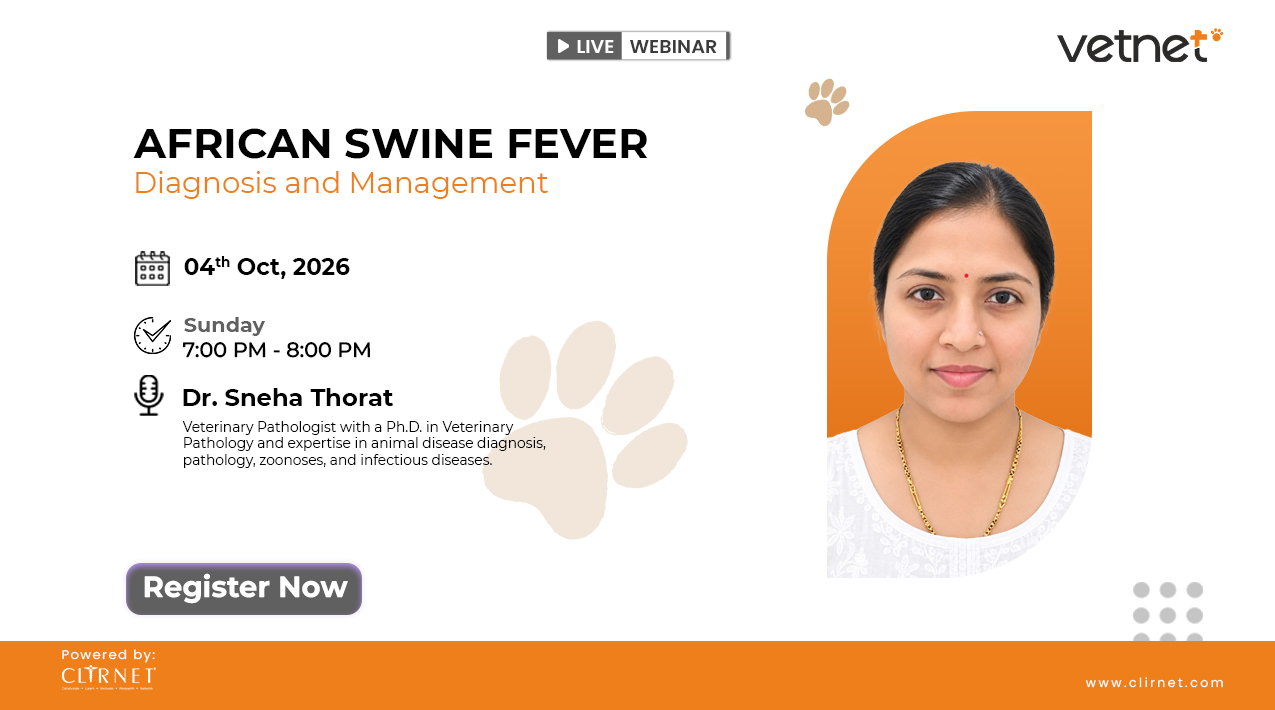
Upcoming Event
African Swine Fever: Diagnosis and Management
African swine fever can cause severe disease and significant losses in affected pig populations.&nbs...
.jpg)
Video
Transjugular Removal of Canine Heartworms: A Clinical and Surgical Overview
Transjugular removal of canine heartworms is a specialized intervention used in selected dogs with s...

Article
Feline Pregnancy Endocrinology: Hormonal Changes and Placental Function
Pregnancy in cats involves a distinctive endocrine pattern in which ovarian and placental hormones w...

Article
Hormonal Control of Pregnancy Termination in Cats
Pregnancy maintenance in cats depends strongly on coordinated hormonal support, particularly progest...

Article
Feline Embryo Implantation and Early Placental Development
Pregnancy establishment in cats involves a sequence of precisely timed events between fertilization,...

Article
Ultrasonographic Monitoring of Pregnancy in Cats: A Gestational Timeline
Ultrasonography provides a practical way to follow the progression of feline pregnancy by identifyin...

Article
Feline Mismating: Pregnancy Diagnosis and Clinical Management
Mismating or unplanned mating is a common clinical problem in sexually mature queen cats because of...

Article
Medical Termination of Pregnancy in Queens: Drugs, Timing and Treatment Protocols
Medical termination of pregnancy (MTP) in queen cats should be approached according to the timing of...