Article
FCV-Associated Acute Oral and Upper Respiratory Disease in Cats
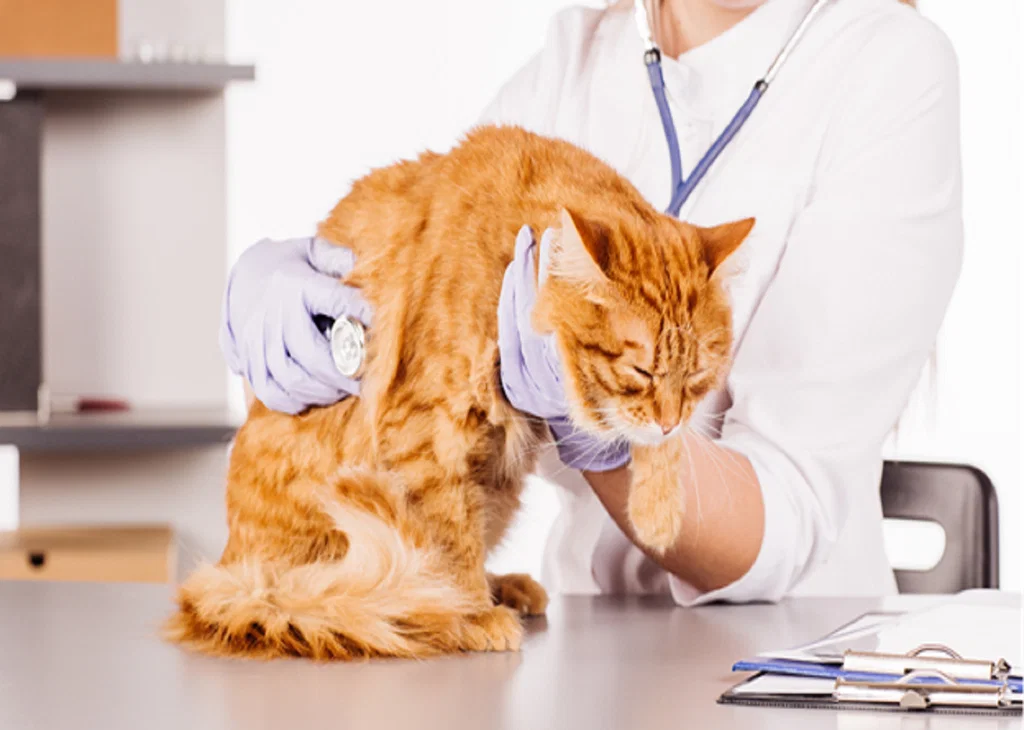
A kitten with fever, sneezing and reduced appetite may look like it has an uncomplicated upper respiratory infection. But when painful oral ulceration, particularly involving the tongue—is prominent, feline calicivirus (FCV) becomes an important consideration. The clinical picture can range from mild, self-limiting disease to severe pneumonia, making recognition of the pattern important in everyday practice.
When Oral Disease is More Prominent Than Rhinitis
Acute FCV disease is seen mainly in kittens, with an incubation period of approximately 2–10 days[1]. The typical presentation includes oral ulcerations, sneezing, and serous nasal discharge[1]. Fever is also common.
The oral component can be particularly striking. Ulcers commonly affect the tongue and palate, while anorexia and hypersalivation may develop because of oral pain. In some cats, these oral signs are more prominent than the rhinitis[2],[3].
This distinction is clinically useful: A cat does not need to have marked nasal disease for FCV to remain a strong consideration when characteristic oral lesions are present.
Most Cases Remain Self-Limiting—But Not All
For uncomplicated acute oral and upper respiratory disease, clinical signs usually resolve within a few days with symptomatic treatment[1].
The important clinical contrast is the occasional progression to lower respiratory disease. Severe cases can develop pneumonia, particularly in young kittens, with dyspnoea, coughing, fever and depression[4]. Rarely, severe pneumonia can also occur in adult cats[1].
Erosive conjunctivitis has also been reported in FCV-infected cats. Respiratory signs can be difficult to attribute to FCV alone because co-infections with feline herpesvirus (FHV), Chlamydia felis or Mycoplasma felis are common and may contribute to the respiratory presentation[1],[4].
How Should FCV Testing Be Interpreted?
RT-PCR can support the diagnosis, but a positive result should not be interpreted in isolation. Asymptomatic cats and cats recently vaccinated with modified-live FCV vaccines can shed the virus, and there is a poor correlation between viral RNA detection and clinical signs[1].
Sampling sites also matter. FCV detection by RT-PCR is significantly more likely from oropharyngeal and tongue swabs than from conjunctival swabs[5]. Real-time RT-PCR is generally preferred for diagnosis because of its higher sensitivity, while quantitative assays can additionally provide information about viral load[1].
A negative RT-PCR result does not rule out infection. Sampling time, storage, transport, and viral strain can influence detection[1]. In a cat with typical clinical signs, however, a positive RT-PCR result makes a causal relationship more likely.
Clinical Bottom Line
For acute FCV disease, oral ulceration plus relatively mild upper respiratory signs is a characteristic pattern, particularly in kittens. Most uncomplicated cases resolve with symptomatic treatment, but dyspnoea, coughing, depression and persistent fever warrant attention to possible pneumonia. Diagnostic testing is most useful when interpreted alongside the clinical presentation and with appropriate sampling rather than as an isolated positive or negative result.
References:
- Hofmann-Lehmann R, Hosie MJ, Hartmann K, Egberink H, Truyen U, Tasker S, Belák S, Boucraut-Baralon C, Frymus T, Lloret A, Marsilio F. Calicivirus infection in cats. Viruses. 2022 Apr 29;14(5):937. https://www.mdpi.com/1999-4915/14/5/937
- Berger A, Willi B, Meli ML, Boretti FS, Hartnack S, Dreyfus A, Lutz H, Hofmann-Lehmann R. Feline calicivirus and other respiratory pathogens in cats with Feline calicivirus-related symptoms and in clinically healthy cats in Switzerland. BMC veterinary research. 2015 Nov 13;11(1):282. https://link.springer.com/content/pdf/10.1186/s12917-015-0595-2.pdf
- Zheng M, Li Z, Fu X, Lv Q, Yang Y, Shi F. Prevalence of feline calicivirus and the distribution of serum neutralizing antibody against isolate strains in cats of Hangzhou, China. Journal of veterinary science. 2021 Aug 19;22(5):e73. https://pmc.ncbi.nlm.nih.gov/articles/PMC8460454/pdf/jvs-22-e73.pdf
- Gerriets W, Joy N, Huebner‐Guthardt J, Eule JC. Feline calicivirus: a neglected cause of feline ocular surface infections?. Veterinary ophthalmology. 2012 May;15(3):172-9. https://www.researchgate.net/profile/Johanna-Eule-2/publication/51767980
- Schulz C, Hartmann K, Mueller RS, Helps C, Schulz BS. Sampling sites for detection of feline herpesvirus-1, feline calicivirus and Chlamydia felis in cats with feline upper respiratory tract disease. Journal of feline medicine and surgery. 2015 Dec;17(12):1012-9. https://journals.sagepub.com/doi/pdf/10.1177/1098612X15569615
Related Contents
.jpg)
Upcoming Event
Emerging Zoonotic Diseases: Early Detection in Veterinary Practice
Unusual clinical presentations and unexpected disease clusters may signal an emerging zoonotic threa...
Article
FCV-Associated Limping Syndrome in Cats: Recognising Acute Shifting Lameness
A cat that suddenly becomes lame in one limb and then appears painful in another can present a diagn...
Article
Feline Chronic Gingivostomatitis and Its Association With FCV
A cat with severe, persistent oral inflammation may have more than gingivitis. In feline chronic gin...
Article
Virulent Systemic Feline Calicivirus: Recognising and Investigating a High-Mortality Outbreak
A cluster of cats with fever, depression and severe respiratory disease demands a different level of...
Article
FCV Transmission and Persistence in Multicat Environments
A cat may recover from the obvious signs of feline calicivirus (FCV) infection and still remain rele...
Article
Diagnosing Feline Calicivirus: Interpreting RT-PCR, Sampling and Virus Isolation
A positive feline calicivirus test does not always mean FCV is responsible for a cat’s clinica...

Article
FGF-23 in Feline CKD: An Early Signal of Phosphate Dysregulation
A cat with early chronic kidney disease (CKD) may have a normal serum phosphate concentration. Does...

Article
Albuminuria or Transferrinuria? Reading the Glomerular Signal in Feline CKD
A cat can have chronic kidney disease (CKD) with only mild proteinuria. So, when urinary protein is...