Article
Metritis in Dairy Cows: Recent Advances in Etiology, Diagnosis, and Treatment
Metritis remains one of the most significant postpartum reproductive disorders affecting dairy herds, with consequences that extend well beyond the early post-calving period. Characterized by fetid uterine discharge, with or without fever, the condition typically develops within the first 3–10 days after calving and is associated with reduced reproductive performance. On intensively managed dairy farms, approximately 5–25% of cows develop metritis1,2,3. Early recognition and appropriate management are therefore essential components of postpartum herd health programs.
Understanding the Disease Process
Traditional bacteriological approaches identified Escherichia coli, Trueperella pyogenes, Fusobacterium necrophorum, and Prevotella species as important organisms associated with metritis. More recent understanding shows that the condition is better viewed as a disruption of the normal uterine microbiota rather than infection by a single pathogen.
Healthy postpartum cows maintain a relatively diverse uterine microbiota. In cows that subsequently develop metritis, changes in microbial composition can already be detected by 2 days in milk before clinical disease becomes apparent1. The uterine microbiota becomes less diverse, while Gram-negative anaerobic bacteria become increasingly dominant, particularly Fusobacterium necrophorum, Porphyromonas levii, and Bacteroides pyogenes1,4,5,6. Interestingly, culture-independent techniques have not consistently identified E. coli as a predominant organism associated with metritis6.
This evolving understanding highlights that successful management involves more than simply identifying individual pathogens.
Diagnosis in Clinical Practice1
Metritis is primarily a clinical diagnosis. The hallmark finding is fetid vulvar discharge arising from the uterus during the first two weeks after calving, with or without pyrexia.
Because disease onset commonly occurs during the first week postpartum, routine monitoring of fresh cows is particularly valuable. Timely diagnosis allows intervention before prolonged inflammation contributes to poorer reproductive performance.
Current Approaches to Treatment
Systemic antimicrobial therapy remains the accepted treatment for metritis. Evidence indicates that treated cows achieve higher rates of clinical resolution than untreated animals1. More importantly, therapeutic benefits extend beyond short-term clinical improvement.
Cows receiving ceftiofur demonstrated improved reproductive outcomes and lower culling rates compared with untreated cows, resulting in substantially lower economic losses through improved pregnancy rates and herd retention7,8.
At the same time, antimicrobial stewardship has become increasingly important. Rather than treating every case identically, emerging evidence supports more selective therapeutic decision-making. Two practical indicators have shown promise:
- Days in milk (DIM) at diagnosis
- Serum haptoglobin (Hp) concentration
Untreated cows diagnosed after 8 DIM or those with Hp concentrations below 0.54 g/L achieved milk production and pregnancy outcomes comparable with healthy cows9. These criteria may help reduce unnecessary antimicrobial use while maintaining productive performance.
Looking Ahead: Prevention and Future Directions
Preventing metritis begins before clinical disease develops. Vaccination strategies targeting E. coli, Trueperella pyogenes, and Fusobacterium necrophorum, with or without their respective virulence proteins, have reduced metritis incidence by one-third to one-half in experimental settings1,10. Although no commercial vaccine is currently available, these findings reinforce the importance of host immunity in postpartum uterine health.
Equally important is recognizing that metritis reflects alterations in the postpartum uterine microbial ecosystem. Monitoring fresh cows closely, identifying clinical signs promptly, and applying evidence-based treatment protocols remain central to effective disease control.
Practical Clinical Insights
For practicing veterinarians, successful metritis management extends beyond treating visible disease. Routine postpartum surveillance during the first 10 days after calving enables earlier diagnosis and intervention. Incorporating selective treatment criteria such as days in milk and serum haptoglobin, where available, may support responsible antimicrobial use without compromising herd performance. As understanding of the uterine microbiota continues to evolve, management strategies are increasingly focused on preserving uterine health while optimizing reproductive efficiency and long-term productivity.
References
- LeBlanc SJ. Postpartum reproductive disease and fertility in dairy cows. animal. 2023 May 1;17:100781. https://www.sciencedirect.com/science/article/pii/S1751731123000770
- Pinedo P, Santos JE, Chebel RC, Galvão KN, Schuenemann GM, Bicalho RC, Gilbert RO, Zas SR, Seabury CM, Rosa G, Thatcher WW. Early-lactation diseases and fertility in 2 seasons of calving across US dairy herds. Journal of dairy science. 2020 Nov 1;103(11):10560-76. https://www.sciencedirect.com/science/article/pii/S0022030220306482
- Van Schyndel SJ, Dubuc J, Pascottini OB, Carrier J, Kelton DF, Duffield TF, LeBlanc SJ. The effect of pegbovigrastim on early-lactation disease, production, and reproduction in dairy cows. Journal of dairy science. 2021 Sep 1;104(9):10100-10. https://www.sciencedirect.com/science/article/pii/S0022030221006573
- Sicsic R, Goshen T, Dutta R, Kedem-Vaanunu N, Kaplan-Shabtai V, Pasternak Z, Gottlieb Y, Shpigel NY, Raz T. Microbial communities and inflammatory response in the endometrium differ between normal and metritic dairy cows at 5–10 days post-partum. Veterinary research. 2018 Aug 2;49(1):77. https://link.springer.com/content/pdf/10.1186/s13567-018-0570-6.pdf
- Jeon SJ, Galvão KN. An advanced understanding of uterine microbial ecology associated with metritis in dairy cows. Genomics & informatics. 2018 Dec 28;16(4):e21. https://pmc.ncbi.nlm.nih.gov/articles/PMC6440669/pdf/gi-2018-16-4-e21.pdf
- Galvão KN, Bicalho RC, Jeon SJ. Symposium review: The uterine microbiome associated with the development of uterine disease in dairy cows. Journal of dairy science. 2019 Dec 1;102(12):11786-97. https://www.sciencedirect.com/science/article/pii/S0022030219308689
- De Oliveira EB, Cunha F, Daetz R, Figueiredo CC, Chebel RC, Santos JE, Risco CA, Jeong KC, Machado VS, Galvão KN. Using chitosan microparticles to treat metritis in lactating dairy cows. Journal of dairy science. 2020 Aug 1;103(8):7377-91. https://www.sciencedirect.com/science/article/pii/S0022030220304306
- Silva TV, De Oliveira EB, Pérez-Báez J, Risco CA, Chebel RC, Cunha F, Daetz R, Santos JE, Lima FS, Jeong KC, Galvão KN. Economic comparison between ceftiofur-treated and nontreated dairy cows with metritis. Journal of dairy science. 2021 Aug 1;104(8):8918-30. https://www.sciencedirect.com/science/article/pii/S0022030221005579
- Machado VS, Celestino ML, Oliveira EB, Lima FS, Ballou MA, Galvão KN. The association of cow-related factors assessed at metritis diagnosis with metritis cure risk, reproductive performance, milk yield, and culling for untreated and ceftiofur-treated dairy cows. Journal of dairy science. 2020 Oct 1;103(10):9261-76. https://www.sciencedirect.com/science/article/pii/S0022030220306299
- Meira Jr EB, Ellington-Lawrence RD, Silva JC, Higgins CH, Linwood R, Rodrigues MX, Bringhenti L, Korzec H, Yang Y, Zinicola M, Bicalho RC. Recombinant protein subunit vaccine reduces puerperal metritis incidence and modulates the genital tract microbiome. Journal of Dairy Science. 2020 Aug 1;103(8):7364-76. https://www.sciencedirect.com/science/article/pii/S0022030220304161
Related Contents
Upcoming Event
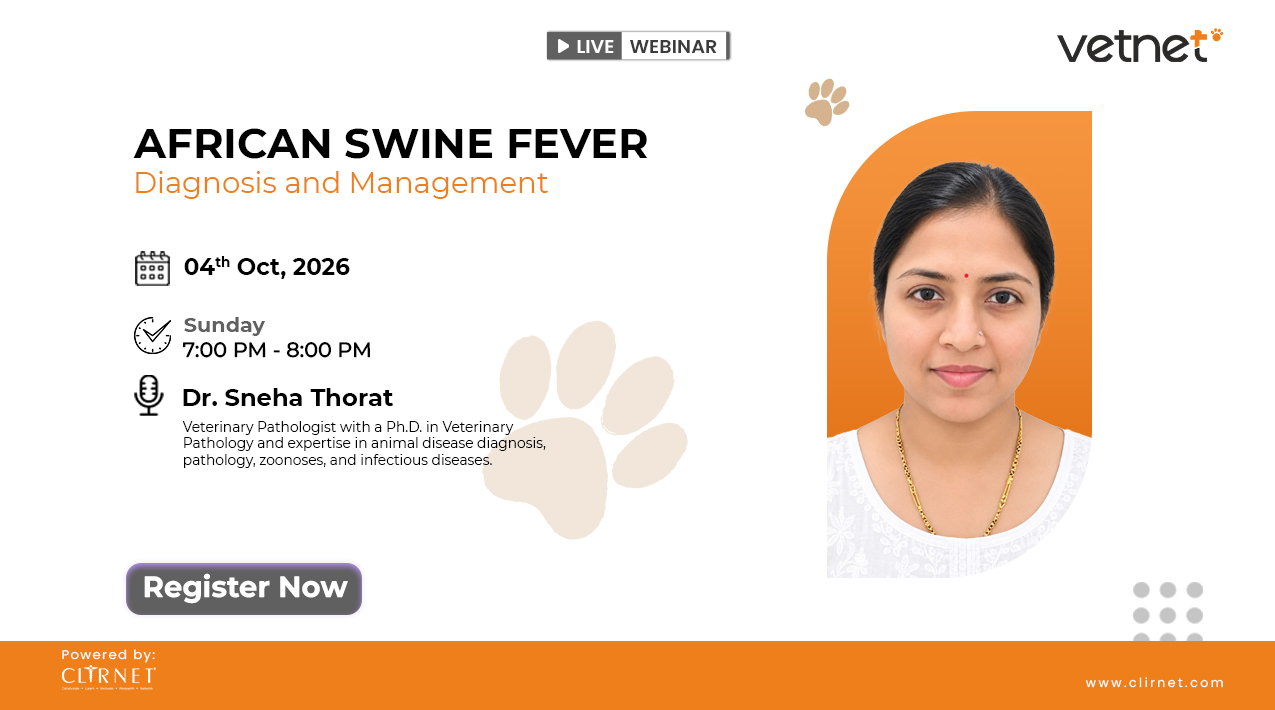
African Swine Fever: Diagnosis and Management
African swine fever can cause severe disease and significant losses in affected pig populations.&nbs...
.jpg)
Video
Transjugular Removal of Canine Heartworms: A Clinical and Surgical Overview
Transjugular removal of canine heartworms is a specialized intervention used in selected dogs with s...

Article
Feline Pregnancy Endocrinology: Hormonal Changes and Placental Function
Pregnancy in cats involves a distinctive endocrine pattern in which ovarian and placental hormones w...

Article
Hormonal Control of Pregnancy Termination in Cats
Pregnancy maintenance in cats depends strongly on coordinated hormonal support, particularly progest...

Article
Feline Embryo Implantation and Early Placental Development
Pregnancy establishment in cats involves a sequence of precisely timed events between fertilization,...

Article
Ultrasonographic Monitoring of Pregnancy in Cats: A Gestational Timeline
Ultrasonography provides a practical way to follow the progression of feline pregnancy by identifyin...

Article
Feline Mismating: Pregnancy Diagnosis and Clinical Management
Mismating or unplanned mating is a common clinical problem in sexually mature queen cats because of...

Article
Medical Termination of Pregnancy in Queens: Drugs, Timing and Treatment Protocols
Medical termination of pregnancy (MTP) in queen cats should be approached according to the timing of...