Article
Heat Stress: A Hidden Driver of Poor Broiler Flock Uniformity
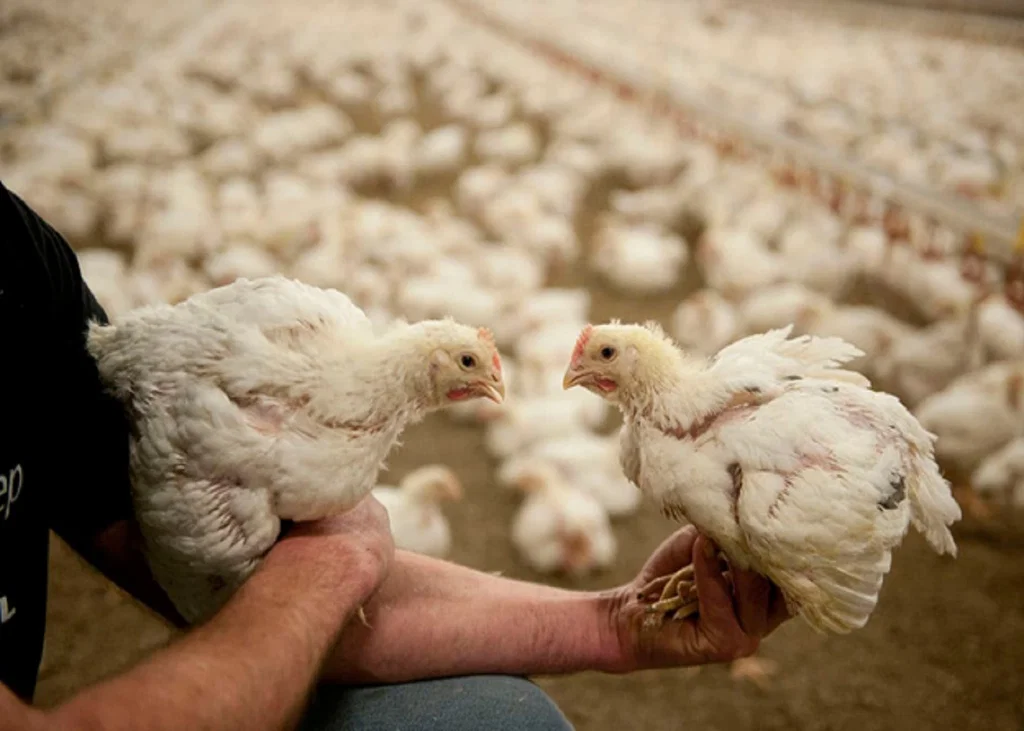
Heat stress does more than reduce feed intake and slow broiler growth. It can also widen differences in body weight within a flock. Birds may not experience the same temperature and humidity conditions within a house, and individual differences in heat tolerance can further increase variation in growth and flock uniformity.
Uneven heat exposure can create uneven growth
High environmental temperature and humidity place considerable pressure on broilers and can impair growth performance and gut health[1],[2],[3],[4]. Recent evidence has linked heat stress with marked reductions in flock uniformity[3],[4].
The problem may begin with conditions that are not identical throughout the house. Poor ventilation or inadequate airflow can produce differences in temperature and relative humidity between areas[5]. Birds occupying these areas may therefore experience different levels of heat stress.
For the veterinarian assessing a variable flock, the house average may not tell the complete story. The location of smaller birds within the house and the temperature and humidity conditions in those areas can provide important context for understanding uneven growth.
Feed intake is one important link[4]
Heat stress reduces feed intake. This creates an immediate nutritional consequence, but the effect on individual birds may not be uniform.
Birds differ in their ability to cope with heat. Differences in physiological resilience can therefore translate into differences in feed intake, nutrient availability, and subsequent growth. A reduction in intake that is more pronounced in some birds than others can progressively increase body-weight variation.
This is one reason why declining flock uniformity during hot conditions should not be viewed simply as a problem of reduced average growth. Variation in response to heat may be just as important.
Body size can influence the response
Body weight itself may also influence how birds respond to heat. Broilers with higher body weight were more vulnerable to heat stress than birds with lower or medium body weight in the work reported by Gogoi et al.[4].
This creates a potentially important cycle within the flock. Larger birds may be more vulnerable to heat stress, while heat-related reductions in feed intake and growth can affect birds differently. The resulting variation may become increasingly apparent as the flock progresses through the grower–finisher period.
Look beyond temperature alone[4]
Heat stress involves more than high temperature. Relative humidity and airflow are important components of the environmental challenge. Poor ventilation can contribute to fluctuations in both temperature and humidity within the house.
Individual physiological responses can also differ. Variations in heat shock factors and heat shock proteins have been associated with differences in responses to heat stress. Elevated corticosterone during heat stress can increase protein catabolism and alter energy metabolism, providing another potential pathway through which heat exposure may contribute to differences in body weight.
These mechanisms reinforce a practical point: Two birds exposed to the same house conditions may not necessarily experience the same consequences.
What should be checked when uniformity falls during hot weather?
A practical assessment should look at:
- Temperature and relative humidity across different areas of the house
- Adequacy and consistency of airflow
- Changes in feed intake during periods of heat
- Differences in body weight within the flock
- Whether larger birds appear particularly affected
Clinical Bottom Line
Poor flock uniformity during hot weather should prompt an assessment of both environmental variation and individual response to heat stress. Temperature and humidity, airflow, feed intake, and differences in physiological resilience can act together to widen body-weight variation. Addressing the environmental challenge therefore requires attention not only to the overall house conditions, but also to how consistently those conditions are experienced across the flock.
References:
- Khan RU, Naz S, Ullah H, Ullah Q, Laudadio V, Qudratullah, Bozzo G, Tufarelli V. Physiological dynamics in broiler chickens under heat stress and possible mitigation strategies. Animal biotechnology. 2023 Apr 3;34(2):438-47. https://www.researchgate.net/profile/Qudrat-Ullah-3/publication/354494848
- Brugaletta G, Teyssier JR, Rochell SJ, Dridi S, Sirri F. A review of heat stress in chickens. Part I: Insights into physiology and gut health. Frontiers in physiology. 2022 Aug 4;13:934381. https://www.frontiersin.org/journals/physiology/articles/10.3389/fphys.2022.934381/pdf
- Ghasemi HA, Nari N. Interactive effects of methionine source and carnitine supplementation on growth performance, immunity, antioxidant status, and HSP70 gene expression in broilers reared under heat stress conditions. Journal of Applied Poultry Research. 2023 Dec 1;32(4):100374. https://www.sciencedirect.com/science/article/pii/S1056617123000466
- Choi J, Goo D, Ko H, Lee J, Kim WK. Factors affecting flock uniformity in broiler production: individual, environmental, and management characteristics. Animals. 2026 Jan 8;16(2):185. https://www.mdpi.com/2076-2615/16/2/185
- Sumanu VO, Naidoo V, Oosthuizen MC, Chamunorwa JP. Adverse effects of heat stress during summer on broiler chickens production and antioxidant mitigating effects. International Journal of Biometeorology. 2022 Dec;66(12):2379-93. https://repository.up.ac.za/bitstreams/ff7eadf9-04a7-403a-9722-da5dae3a1941/download
Related Contents
_Resize_2.jpg)
Upcoming Event
Leptospirosis in Animals: Diagnosis and Zoonotic Prevention
Leptospirosis can cause significant illness in animals and pose a zoonotic risk to humans. Explore c...
Article
Sudden Death in Cattle: A Practical Differential Diagnosis
A cow is found dead during the morning inspection. There were no obvious warning signs the previous...
Article
Caudal Vena Cava Thrombosis in Cattle: Recognising a Fatal Complication of Liver Abscessation
A cow may appear completely healthy until sudden respiratory distress, haemoptysis or death occurs....
Article
Sudden Death in Sheep: Key Differential Diagnoses for the Veterinarian
A sheep found dead on pasture may leave little warning. One animal may have been affected by a rapid...
Article
Sudden Death in Goats: Recognising Peracute Infectious and Metabolic Causes
A goat found dead with little or no warning can leave very few clinical clues. In these cases, the p...
Article
Necrotic Enteritis in Broilers: Identifying the Farm-Level Risk Factors
A broiler flock showing wet litter, poor performance or rising mortality may have several problems o...
Article
Necrotic Enteritis in Broilers: Linking Intestinal Lesions with Laboratory Diagnosis
A broiler may arrive for postmortem examination with a distended, fragile small intestine covered by...
Article
Controlling Necrotic Enteritis Without Antibiotic Growth Promoters: What Can Feed-Based Strategies Offer?
When antibiotic growth promoters are no longer the main option for controlling necrotic enteritis (N...