Article
Caudal Vena Cava Thrombosis in Cattle: Recognising a Fatal Complication of Liver Abscessation
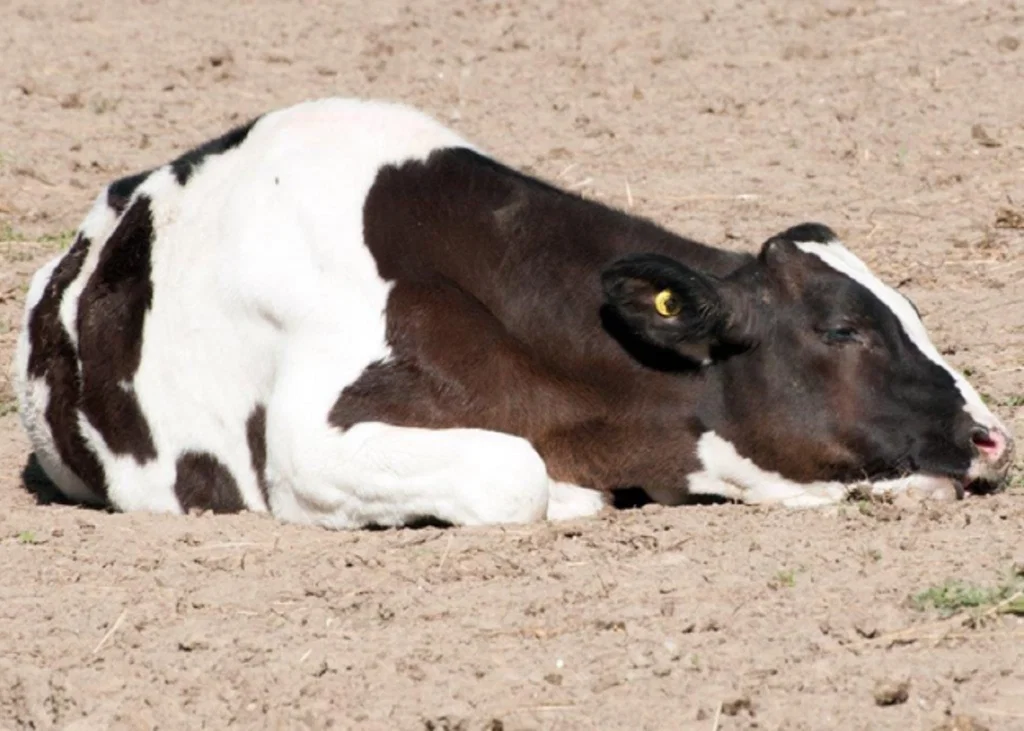
A cow may appear completely healthy until sudden respiratory distress, haemoptysis or death occurs. When that happens, the lungs may seem to be the immediate problem, but the primary lesion can be much farther back in the chain.
Caudal vena cava thrombosis (CVCT) is an important example. In cattle, liver abscessation can progress to septic thrombosis of the vena cava, followed by embolisation to the lungs and potentially fatal pulmonary damage.
Where Does the Problem Begin?
Liver abscesses can develop following bacterial dissemination from the rumen secondary to inflammation of the ruminal wall[1]. The abscess may subsequently erode into the vena cava.
The most frequent cause of vena cava thrombosis in cattle is reported to be rupture of a liver abscess. Bacteria associated with hepatic abscesses commonly include Fusobacterium necrophorum and Trueperella pyogenes[1],[2].
Once infected material enters the vena cava, a septic thrombus can develop. Portions of the thrombus may then detach and travel through the circulation as septic emboli.
Why Can Death Be So Sudden?
The lungs become the critical site of the downstream injury.
Septic emboli from the vena cava can lodge in pulmonary capillaries, producing pulmonary lesions and acute haemorrhage. Affected cattle may develop haemoptysis associated with acute pulmonary haemorrhage, followed by sudden death[1].
A large septic thrombus can also produce sufficient pulmonary infarction or contribute to septic myocarditis and heart failure[2].
This explains an important clinical contrast: The animal may have appeared apparently healthy before death, while the fatal process was already developing internally.
What Else Should Be Considered?
Liver abscessation is the most frequently described initiating process, but it is not the only possible source of infection.
CVCT has also been associated with inflammatory conditions such as[2],[3]:
- Deep digital sepsis
- Mastitis
- Metritis
- Ruptured reticuloperitonitis abscesses
Therefore, when examining a cow with suspected septic thrombosis, the search should not stop at the liver. Other potential infectious foci may provide important clues to the origin of the thrombus.
What Should Necropsy Look For?[2]
When sudden death raises suspicion of CVCT, careful postmortem examination is essential. The thrombus may substantially obstruct the vena cava, while the primary hepatic abscess and pulmonary consequences can help establish the sequence of events.
The source describes the characteristic postmortem picture as a thrombus occluding the vena cava, associated with perivascular hepatic abscessation and thrombophlebitis. Valvular endocarditis may occur as an additional sequel.
The relationship between the lesions is particularly important. Finding a liver abscess alone does not establish that it caused the death. The veterinarian needs to determine whether there is evidence of vascular involvement and septic embolisation consistent with the clinical history.
The Diagnostic Lesson
CVCT illustrates why sudden death investigations should follow the disease pathway rather than focusing only on the organ showing the most dramatic lesion.
Liver abscess → vena cava involvement → septic thrombus → pulmonary embolisation → pulmonary injury and possible haemorrhage
When a seemingly healthy cow dies suddenly, particularly with evidence of haemoptysis or pulmonary haemorrhage, this sequence deserves consideration. A thorough necropsy that connects the hepatic, vascular and pulmonary lesions can be critical to establishing the likely cause of death.
Reference:
- Motta RG, Motta IG, Martinez AC, Silva AV, Paes AC, Martins LS, Silva RC, Ribeiro MG. Unusual caudal vena cava thrombosis in a cow, secondary to Trueperella (Arcanobacterium) pyogenes infection. Pesquisa Veterinária Brasileira. 2016;36:587-90. https://www.scielo.br/j/pvb/a/q8gqrCL9vHsTwZSSG886vSB/?format=html&lang=en
- Benchohra M, Hemida H, Ali-Nehari A, Adnane M, Boumezrag A, Chikhaoui M. Sudden death syndrome in domestic ruminants: a review. Comparative Clinical Pathology. 2024 Jun;33(3):489-502. https://www.researchgate.net/profile/Mira-Chikhaoui-3/publication/379908486
- Schild C, Armendano JI, Liboreiro M, Bresky F, Morrell E, Odriozola E, Cantón G. Caudal vena cava thrombosis in a dairy cow (Bos taurus) in Argentina. Ciência Rural. 2017;47(6):e20160917. https://www.scielo.br/j/cr/a/WsjpdNwCp4Nb7rCcqb9Jnzj/?format=pdf&lang=en
Related Contents
Article
Sudden Death in Cattle: A Practical Differential Diagnosis
A cow is found dead during the morning inspection. There were no obvious warning signs the previous...
Article
Sudden Death in Sheep: Key Differential Diagnoses for the Veterinarian
A sheep found dead on pasture may leave little warning. One animal may have been affected by a rapid...
Article
Sudden Death in Goats: Recognising Peracute Infectious and Metabolic Causes
A goat found dead with little or no warning can leave very few clinical clues. In these cases, the p...
Article
Necrotic Enteritis in Broilers: Identifying the Farm-Level Risk Factors
A broiler flock showing wet litter, poor performance or rising mortality may have several problems o...
Article
Necrotic Enteritis in Broilers: Linking Intestinal Lesions with Laboratory Diagnosis
A broiler may arrive for postmortem examination with a distended, fragile small intestine covered by...
Article
Controlling Necrotic Enteritis Without Antibiotic Growth Promoters: What Can Feed-Based Strategies Offer?
When antibiotic growth promoters are no longer the main option for controlling necrotic enteritis (N...
Article
Necrotic Enteritis and Antimicrobial Resistance: Implications for Poultry and Food Safety
When a broiler flock develops necrotic enteritis (NE), antimicrobial treatment may appear to be the...
Article
Poultry Coccidiosis: Diagnosis, Lesion Scoring and Identifying the Eimeria Species Involved
A broiler flock may show poor growth, deteriorating feed efficiency or increased mortality without a...