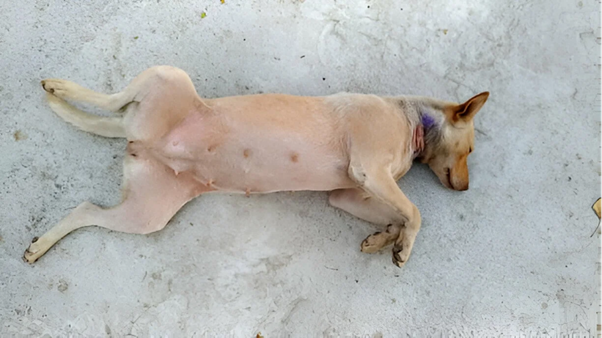
Article
Understanding Canine Vaginal Hyperplasia: Pathophysiology, Classification, and Clinical Relevance
Canine vaginal hyperplasia is a hormonally driven reproductive disorder that often presents dramatically in clinical practice. Although commonly encountered by veterinarians, its underlying mechanisms, classification, and differentiation from true prolapse remain critical for accurate diagnosis and management. This article explores the condition from a pathophysiological and clinical lens, equipping practitioners with practical insights for everyday cases.
Hormonal Pathophysiology and Disease Mechanism
Vaginal hyperplasia in dogs is primarily associated with an exaggerated estrogenic response during the proestral–estral phases of the reproductive cycle. During this period, rising estradiol levels stimulate proliferation and keratinization of the vaginal epithelium, accompanied by marked tissue edema1.
This hormonal surge causes significant thickening and swelling of the vaginal mucosa. In some cases, the increase in tissue volume becomes excessive, leading to eversion of the mucosa through the vulvar opening, a condition clinically recognized as vaginal mucosal prolapse1.
Clinical Classification: A Practical Approach
A standardized classification system aids in assessing severity and guiding treatment. According to Manothaiudom and Johnston, vaginal hyperplasia is divided into three types1:
- Type I: Mild eversion of the vaginal floor without protrusion beyond the vulvar lips
- Type II: Partial protrusion forming a tongue-shaped mass through the vulva
- Type III: Complete circumferential prolapse forming a ring-shaped mass
This classification is clinically valuable, as it directly influences therapeutic decisions and prognosis.
Epidemiology and Predisposition
Vaginal hyperplasia has been reported in bitches ranging from 7 months to 11 years of age1, although it most commonly appears between the first and third estrous cycles. Importantly, recurrence in subsequent cycles is well documented1,2.
Breed predisposition plays a notable role. Medium- and large-sized breeds, as well as brachycephalic dogs, especially Boxers, are more frequently affected1,3. While a definitive hereditary pattern remains uncertain, familial predisposition and perivulvar tissue weakness have been suggested1.
Associated Risk Factors and Special Cases
Certain clinical scenarios increase the likelihood of vaginal hyperplasia. For instance, protrusion has been observed shortly after mating, as well as following estrus induction using estradiol. Additionally, ovarian follicular cysts may contribute to persistent estrogen stimulation, leading to hyperplasia1,4.
Differentiating Vaginal Hyperplasia from True Vaginal Prolapse
A critical clinical distinction must be made between vaginal hyperplasia and true vaginal prolapse. While both conditions may appear similar externally, their underlying mechanisms differ significantly.
Vaginal hyperplasia (protrusion) occurs during proestrus/estrus and involves only the vaginal mucosa1.
True vaginal prolapse occurs around parturition, driven by hormonal shifts involving decreased progesterone and increased estrogen1.
In true prolapse, the entire vaginal wall, and sometimes adjacent structures such as the bladder or colon, may be involved1. This distinction is crucial, as it affects both prognosis and management strategies.
Clinical Complications
Although some cases remain uncomplicated, vaginal hyperplasia can lead to significant complications. The protruded tissue is prone to trauma, desiccation, and secondary infection. In severe cases, involvement of the urethral meatus may impair urination, necessitating catheterization1.
Such complications elevate the condition to an emergency, particularly when tissue viability is compromised.
Clinical Course and Recurrence1
The clinical course of vaginal hyperplasia is closely tied to hormonal fluctuations. As the estrous cycle progresses toward ovulation and diestrus, estrogen levels decline while progesterone increases, resulting in spontaneous reduction of edema and resolution of the condition.
However, recurrence remains a major concern, especially in predisposed breeds and individuals. The variability in severity across cycles—from Type I to Type III- further complicates long-term management.
Conclusion
Canine vaginal hyperplasia is a multifactorial condition driven by hormonal influences and breed predisposition. Understanding its pathophysiology, classification, and differentiation from true prolapse is essential for accurate diagnosis and effective management. For clinicians, early recognition and appropriate classification not only improve outcomes but also help prevent complications and recurrence.
References
- Bucci R, Fusi J, Robbe D, Veronesi MC, Carluccio A. Management of vaginal hyperplasia in bitches by Bühner suture. Animals. 2022 Dec 12;12(24):3505. https://doi.org/10.3390/ani12243505
- Zedda MT, Bogliolo L, Ariu F, Ledda M, Falchi L, Pinna-Parpaglia ML, Pau S. Vaginal fold prolapse in a dog with pyometra and ovarian papillary cystadenocarcinoma. Journal of the American Veterinary Medical Association. 2016 Apr 1;248(7):822-6. https://www.researchgate.net/profile/Laura-Falchi/publication/299375398
- Galal SM, Fathi M, Ismail ST, ElBelely MS, Mohamed FF. Clinical diagnosis and surgical approaches of vaginal hyperplasia in bitches. Asian Pacific Journal of Reproduction. 2018 Sep 1;7(5):220-4. https://journals.lww.com/apjr/_layouts/15/oaks.journals/downloadpdf.aspx?an=01703609-201807050-00004
- Ahuja AK, Shivkumar S, Singh AK, Dhindsa SS. Management of true vaginal prolapse in bitch. International Journal of Environment, Agriculture and Biotechnology. 2017;2(4):238837. https://www.academia.edu/download/53952885/25_Management_of_True_Vaginal_Prolapse.pdf
Related Contents
.jpg)
Video
Transjugular Removal of Canine Heartworms: A Clinical and Surgical Overview
Transjugular removal of canine heartworms is a specialized intervention used in selected dogs with s...

Article
Feline Pregnancy Endocrinology: Hormonal Changes and Placental Function
Pregnancy in cats involves a distinctive endocrine pattern in which ovarian and placental hormones w...
Article
Hormonal Control of Pregnancy Termination in Cats
Pregnancy maintenance in cats depends strongly on coordinated hormonal support, particularly progest...
Article
Feline Embryo Implantation and Early Placental Development
Pregnancy establishment in cats involves a sequence of precisely timed events between fertilization,...
Article
Ultrasonographic Monitoring of Pregnancy in Cats: A Gestational Timeline
Ultrasonography provides a practical way to follow the progression of feline pregnancy by identifyin...

Article
Feline Mismating: Pregnancy Diagnosis and Clinical Management
Mismating or unplanned mating is a common clinical problem in sexually mature queen cats because of...
Article
Medical Termination of Pregnancy in Queens: Drugs, Timing and Treatment Protocols
Medical termination of pregnancy (MTP) in queen cats should be approached according to the timing of...

Article
Safety and Aftercare Following Pregnancy Termination in Queen Cats
Pregnancy termination in queen cats requires more than selecting an appropriate abortifacient. Once...