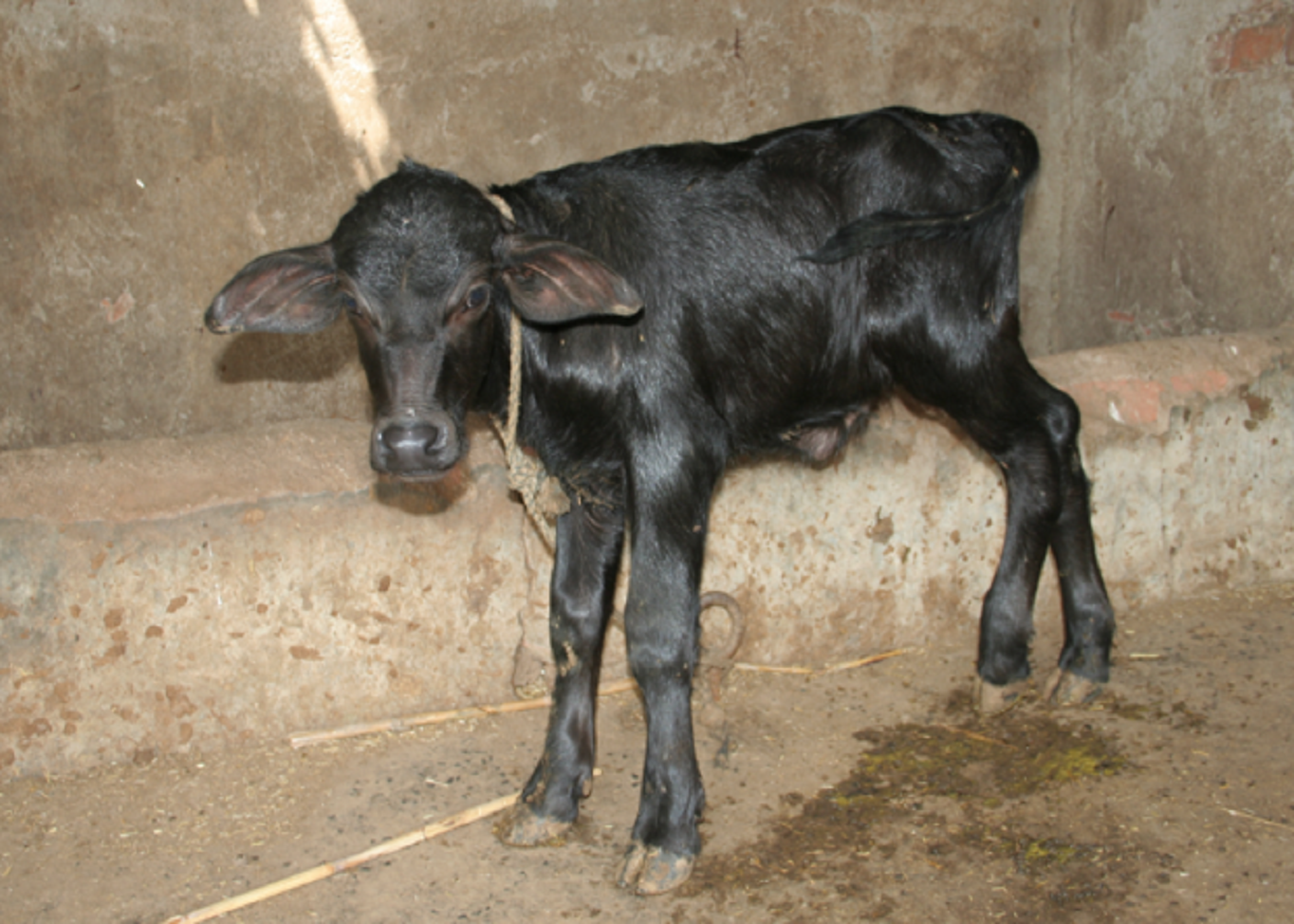
Article
Tube Cystostomy for Obstructive Urolithiasis in Buffalo Calves: Surgical Management and Recovery
Obstructive urolithiasis complicated by urinary bladder rupture requires surgical intervention to restore urinary drainage and manage damage to the bladder. Tube cystostomy provides an alternative route for urine diversion while allowing the urethra to remain patent and potentially regain normal function.
Surgical Approach and Bladder Repair[1]
A clinical investigation involving 20 non-castrated male buffalo calves aged 4–7 months with obstructive urolithiasis and ruptured urinary bladder used tube cystostomy as the surgical approach.
The animals were placed in right lateral recumbency, and a left paramedian incision was made to access the abdominal cavity. After evacuating the accumulated urine, the bladder was examined. Necrotic tissue and calculi were removed before repairing the bladder using a double-layer Cushing suture pattern.
A 20 French Foley catheter was introduced into the bladder through a separate stab incision and secured to provide urinary drainage. The surgical site was lavaged before closure.
Postoperative Catheter Management[1]
Postoperative care included antibiotic and anti-inflammatory medication, along with fluid therapy. The Foley catheter was used to divert urine while supporting recovery of urethral urination.
An intermittent catheter-blocking protocol was followed: the catheter was blocked for 30 minutes, three times daily, and then released. This allowed the bladder to fill intermittently and encouraged urination through the urethra.
The catheter was removed three days after normal urination had resumed. This approach helped maintain urinary drainage during recovery without leaving the catheter in place longer than required.
Recovery and Clinical Significance[1],[2]
Tube cystostomy has been reported as a successful surgical approach for obstructive urolithiasis in male ruminants, with success rates exceeding 95% and minimal complications.
The procedure provides temporary urinary diversion while preserving the possibility of urethral patency, urinary continence and future breeding function. In the 20-cal f clinical investigation, animals were followed for three months after treatment, with no recurrence reported during this period.
Clinical Takeaway
In buffalo calves with obstructive urolithiasis and bladder rupture, tube cystostomy can provide urinary diversion while the bladder and urethral function recover. Careful bladder repair, appropriate catheter placement and structured postoperative management are important components of the procedure.
References:
- Abd El Raouf M, Abdelazim M, Abd El-Aal AB, Salem SE. Advanced trend in dissolution of obstructive urolithiasis’s calculi in buffalo calves. Advanced Analytical Pathology. 2024 Oct 19;12(1). https://researcherslinks.com/articles/advanced-trend-in-dissolution-of-obstructive-10107
- Abdallah A, Ezzeldein S, Eisa E, Abd El Raouf M, Bayoumi Y. Obstructive urolithiasis in buffalo calves (Bubalus bubalis): Serum changes of Vitamins A and D and efficacy of surgical management using tube cystostomy. Veterinary World. 2021 Jan 18;14(1):129. https://pmc.ncbi.nlm.nih.gov/articles/PMC7896912/pdf/Vetworld-14-129.pdf
Related Contents
Article
Recognising Urinary Bladder Rupture in Buffalo Calves with Obstructive Urolithiasis
A buffalo calf presenting with abdominal distension, anorexia and repeated attempts to urinate may h...
Article
Diagnostic and Biochemical Changes in Buffalo Calves with Ruptured Urinary Bladder
A buffalo calf with urinary bladder rupture may present with abdominal distension, dehydration and d...
Article
Fasciolosis in Sheep: Recognising Clinical Presentations and Disease Progression
A sheep presenting with progressive weight loss, pale mucous membranes and submandibular oedema may...
Article
Diagnosing Fasciolosis in Sheep: Selecting Appropriate Tests at Different Infection Stages
A negative faecal examination does not necessarily rule out fasciolosis in sheep. During early infec...
Article
Flukicide Treatment and Resistance in Sheep: Assessing Drug Efficacy and Managing Treatment Failure
Repeated flukicide treatment does not necessarily translate into effective liver fluke control. Shee...
Article
Pasture Management for Fasciolosis in Sheep: Identifying High-Risk Grazing Areas and Seasonal Exposure
Wet pastures, standing water and poorly managed grazing areas can create favourable conditions for l...
Article
Fasciolosis in Sheep: How Liver Damage Affects Productivity and Reproductive Performance
A sheep flock may experience declining productivity even when only a few animals show obvious signs...

Upcoming Event
Canine Pyoderma: Antibiotic Selection and Treatment Failure
Strengthen your approach to canine pyoderma with informed antibiotic selection and appropriate diagn...