Article
Vaccination Strategies Against Lawsonia intracellularis: What Practicing Veterinarians Should Know
Vaccination has become a cornerstone of porcine proliferative enteropathy (PE) control, helping reduce the clinical and economic impact of Lawsonia intracellularis infection. While antibiotics remain important for treating affected animals, vaccination offers a proactive approach by reducing disease severity, faecal shedding, mortality, and production losses. For practicing veterinarians, selecting the appropriate vaccine, understanding the immune response it generates, and administering it at the right time are essential for achieving consistent herd-level protection1,2.
Why Vaccination Matters
PE commonly affects growing pigs, causing diarrhoea, poor weight gain, reduced feed efficiency, and, in severe cases, mortality. Vaccination helps minimise these impacts by stimulating protective immunity before pigs encounter significant infection pressure1.
Rather than replacing other disease-control measures, vaccination should be integrated with sound biosecurity, nutrition, and herd management practices to achieve the best results.
Understanding Available Vaccine Options
Commercial vaccines against L. intracellularis are available as live attenuated and inactivated formulations, each offering distinct advantages1,3,4.
Live Attenuated Vaccines
Live attenuated vaccines closely mimic natural infection without causing disease, producing a broad immune response involving both humoral and cell-mediated immunity1.
Key features include:
- Oral administration, making vaccination less stressful for pigs
- Induction of local intestinal immunity at the primary site of infection
- Long-lasting protective immunity
- Reduction in clinical disease, faecal shedding, and mortality1,5,6
Because live bacterial vaccines may be antagonised by certain antimicrobials, simultaneous administration of specific antibiotics should be avoided. These vaccines are commonly administered orally to suckling piglets at 2–3 weeks of age using an oral drench or gel applied in the farrowing area1.
Inactivated Vaccines
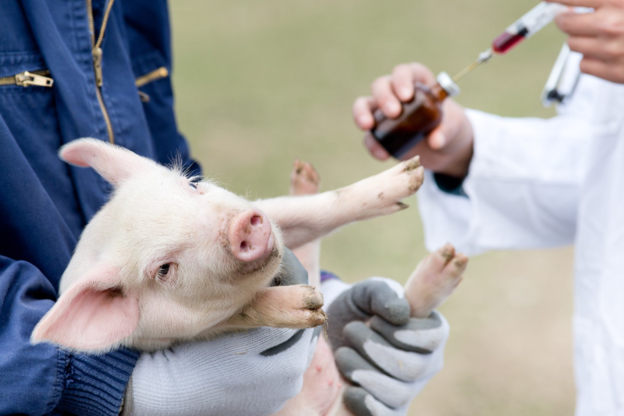
Inactivated vaccines contain killed bacteria and are generally administered by injection. Two delivery methods are available:
- Conventional intramuscular injection
- Needle-free intradermal administration1
Compared with live vaccines, inactivated vaccines primarily stimulate humoral immunity and are typically formulated with adjuvants to enhance the immune response1.
Recent findings indicate that intradermal vaccination can promote stronger local antigen presentation, reduce intestinal lesion severity, and enhance mucosal and cell-mediated immune responses. Combination vaccines incorporating L. intracellularis with pathogens such as porcine circovirus 2 and Mycoplasma hyopneumoniae may also reduce the number of injections required during routine vaccination programmes1,7.
Factors That Influence Vaccination Success
Successful vaccination depends not only on vaccine selection but also on appropriate timing and herd management.
Important considerations include1:
- The piglet immune system is not considered sufficiently developed for vaccination before 2 weeks of age.
- Maternal antibodies may reduce the effectiveness of injectable killed vaccines in young piglets.
- Certain antimicrobials administered alongside live oral vaccines may interfere with vaccine performance.
- Vaccination should be incorporated into a comprehensive herd health programme rather than used as a standalone intervention.
Understanding the Immune Response
Natural infection with L. intracellularis induces a strong immune response characterised by mucosal IgA production, delayed-type hypersensitivity (DTH), and increased interferon-gamma (IFN-γ), contributing to long-term protection against reinfection1.
Vaccination also stimulates protective immunity, although the response differs depending on vaccine type.
Compared with unvaccinated pigs, vaccination has been associated with1:
- Reduced clinical signs
- Reduced faecal shedding
- Lower mortality
- Improved average daily gain and production performance
- Reduced antimicrobial use under field conditions
In addition, oral vaccination has been associated with favourable changes in gut microbial communities, including an increase in beneficial bacteria and reduced abundance of L. intracellularis, potentially contributing to enhanced intestinal health8.
Vaccination as Part of an Integrated Control Strategy
Although vaccination substantially reduces disease burden, it may not completely prevent bacterial colonisation or transmission1. Therefore, vaccination should be viewed as one component of a broader PE prevention programme that includes effective biosecurity, nutritional management, and continuous herd monitoring.
Matching the vaccination strategy to the farm's infection dynamics, production system, and management practices allows veterinarians to maximise herd immunity while reducing the overall impact of PE.
Key Takeaway
Vaccination is one of the most effective preventive tools for controlling porcine proliferative enteropathy. Live attenuated and inactivated vaccines each offer distinct advantages, and selecting the appropriate programme requires consideration of pig age, maternal immunity, antimicrobial use, and herd management practices. When integrated with biosecurity and good husbandry, vaccination can reduce clinical disease, faecal shedding, antimicrobial use, and production losses while supporting long-term herd health.
References
- Gómez-Osorio LM, Penagos-Tabares F, Bosnjak-Neumuller J, Guedes RM, Vasiljevic M, Steiner T, McOrist S. Porcine proliferative enteropathy: overview of disease dynamics and non-antibiotic alternatives for prevention and control strategies. Frontiers in Veterinary Science. 2025 Nov 7;12:1596316. https://www.frontiersin.org/journals/veterinary-science/articles/10.3389/fvets.2025.1596316/pdf
- Jacobs AA, Harks F, Pauwels R, Cao Q, Holtslag H, Pel S, Segers RP. Efficacy of a novel intradermal Lawsonia intracellularis vaccine in pigs against experimental infection and under field conditions. Porcine Health Management. 2020 Oct 1;6(1):25. https://link.springer.com/content/pdf/10.1186/s40813-020-00164-0.pdf
- Jacobs AA, Harks F, Hazenberg L, Hoeijmakers MJ, Nell T, Pel S, Segers RP. Efficacy of a novel inactivated Lawsonia intracellularis vaccine in pigs against experimental infection and under field conditions. Vaccine. 2019 Apr 3;37(15):2149-57. https://www.sciencedirect.com/science/article/pii/S0264410X19302749
- Won G, Chi NK, Park Y. The effectiveness of commercial vaccination against Lawsonia intracellularis in mitigating the reduction in ADWG, the increased mortality and fecal shedding of the vaccinated pigs: a systematic review and meta-analysis. Veterinary Sciences. 2022 Sep 28;9(10):536. https://www.mdpi.com/2306-7381/9/10/536
- Park S, Lee JB, Kim KJ, Oh YS, Kim MO, Oh YR, Hwang MA, Lee JA, Lee SW. Efficacy of a commercial live attenuated Lawsonia intracellularis vaccine in a large scale field trial in Korea. Clinical and Experimental Vaccine Research. 2013 Jul 1;2(2):135-9. https://synapse.koreamed.org/upload/synapsedata/pdfdata/0209cevr/cevr-2-135.pdf
- Peiponen KS, Tirkkonen BT, Junnila JJ, Heinonen ML. Effect of a live attenuated vaccine against Lawsonia intracellularis in weaned and finishing pig settings in Finland. Acta Veterinaria Scandinavica. 2018 Mar 23;60(1):18. https://link.springer.com/content/pdf/10.1186/s13028-018-0374-8.pdf
- Horsington J, Witvliet M, Jacobs AA, Segers RP. Efficacy of simultaneous intradermal vaccination of swine against Porcine Circovirus 2, Porcine Reproductive and Respiratory Syndrome Virus, Mycoplasma hyopneumoniae and Lawsonia intracellularis. Animals. 2021 Jul 28;11(8):2225. https://www.mdpi.com/2076-2615/11/8/2225
- Leite FL, Winfield B, Miller EA, Weber BP, Johnson TJ, Sylvia F, Vasquez E, Vannucci F, Beckler D, Isaacson RE. Oral vaccination reduces the effects of Lawsonia intracellularis challenge on the swine small and large intestine microbiome. Frontiers in veterinary science. 2021 Jul 16;8:692521. https://www.frontiersin.org/journals/veterinary-science/articles/10.3389/fvets.2021.692521/pdf
Related Contents
.jpg)
Upcoming Event
World Animal Day
World Animal Day highlights the importance of protecting animal health and welfare through responsib...
.jpg)
Video
Transjugular Removal of Canine Heartworms: A Clinical and Surgical Overview
Transjugular removal of canine heartworms is a specialized intervention used in selected dogs with s...

Article
Feline Pregnancy Endocrinology: Hormonal Changes and Placental Function
Pregnancy in cats involves a distinctive endocrine pattern in which ovarian and placental hormones w...

Article
Hormonal Control of Pregnancy Termination in Cats
Pregnancy maintenance in cats depends strongly on coordinated hormonal support, particularly progest...

Article
Feline Embryo Implantation and Early Placental Development
Pregnancy establishment in cats involves a sequence of precisely timed events between fertilization,...

Article
Ultrasonographic Monitoring of Pregnancy in Cats: A Gestational Timeline
Ultrasonography provides a practical way to follow the progression of feline pregnancy by identifyin...

Article
Feline Mismating: Pregnancy Diagnosis and Clinical Management
Mismating or unplanned mating is a common clinical problem in sexually mature queen cats because of...

Article
Medical Termination of Pregnancy in Queens: Drugs, Timing and Treatment Protocols
Medical termination of pregnancy (MTP) in queen cats should be approached according to the timing of...