Article
Beyond Wear and Tear: Understanding How Osteoarthritis Develops in Performance Horses
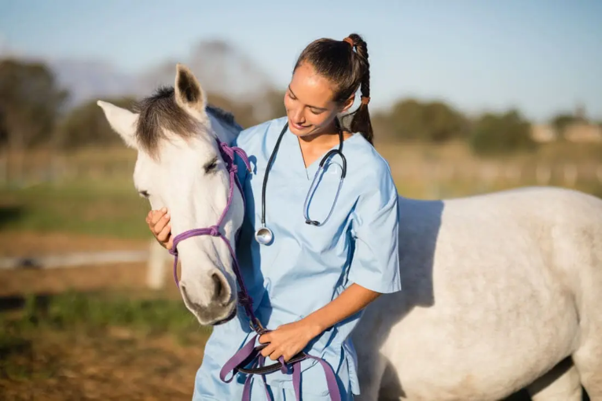
For equine athletes, peak performance and joint health exist in a delicate balance. Whether it is a show jumper landing from a fence, a reining horse performing sliding stops, or a racehorse training at high speed, repetitive mechanical stress is an unavoidable part of the job. While exercise is essential for maintaining healthy joints, excessive or repetitive loading can push tissues beyond their capacity to adapt, setting the stage for osteoarthritis (OA)1.
Osteoarthritis remains one of the leading causes of lameness and reduced athletic performance in horses, often shortening competitive careers and affecting long-term welfare1. For veterinarians, understanding how OA develops is crucial—not only for treatment but also for early intervention and prevention.
Why Some Joints Are More Vulnerable Than Others
The location of OA often reflects the specific demands of the horse's discipline.
- Show jumping horses frequently develop osteoarthritis of the metacarpophalangeal (fetlock) joint because of the significant impact forces generated during landing.
- Western performance horses commonly experience hock osteoarthritis due to repetitive sliding stops, spins, and rapid directional changes2.
These sport-specific loading patterns create chronic microtrauma that may initially go unnoticed but gradually alters joint homeostasis.
Exercise: Friend and Foe
Contrary to popular belief, exercise itself is not the enemy of joint health. Controlled loading is essential for normal joint development and maintenance.
Exercise influences joint health through three major mechanisms:
- Direct mechanical stimulation of cartilage.
- Regulation of joint tissue metabolism.
- Enhancement of circulation within joint structures1.
In fact, cartilage deprived of regular loading can weaken over time. Problems arise when training intensity, frequency, or concussion exceed the joint's ability to recover. Under these conditions, normal adaptive responses are replaced by inflammation and tissue damage.
This explains why many athletic horses may already have early joint changes long before overt lameness becomes apparent3,4.
What Happens Inside the Joint?
Modern understanding recognizes osteoarthritis as a disease of the entire joint rather than simply "wear and tear" of cartilage.
Clinical signs—including pain, heat, swelling, reduced range of motion, and lameness—reflect a complex interaction between cartilage degradation, synovial inflammation, and bone remodeling1.
Two major pathological processes drive OA:
1. Synovitis and Capsulitis
Inflammation of the synovial membrane and joint capsule occurs early in the disease process.
Research suggests that activated synovial macrophages play a major role in perpetuating inflammation within osteoarthritic joints5. These cells release inflammatory mediators such as:
- Interleukin-1β (IL-1β)
- Interleukin-6 (IL-6)
- Tumor necrosis factor-α (TNF-α)
- Nitric oxide
- Prostaglandin E2 (PGE2)
These substances accelerate cartilage breakdown and contribute to pain and joint dysfunction1.
2. Cartilage and Subchondral Bone Damage
Healthy cartilage is remarkably resilient. Its extracellular matrix is composed primarily of type II collagen and proteoglycans, which provide tensile strength and shock-absorbing properties.
When mechanical loading exceeds the cartilage's adaptive capacity, microscopic damage begins to accumulate. Chondrocytes initially respond by increasing matrix synthesis in an attempt to repair the tissue.
However, as injury progresses, the balance shifts toward degradation.
Pro-inflammatory cytokines stimulate the production of matrix metalloproteinases (MMPs) and aggrecanases (ADAMTS-1, ADAMTS-4, and ADAMTS-5), enzymes responsible for breaking down collagen and proteoglycans within the cartilage matrix1.
The result is progressive cartilage loss, reduced shock absorption, and worsening joint instability.
The Vicious Cycle of Osteoarthritis
One of the greatest challenges in OA management is the self-perpetuating nature of the disease.
Cartilage damage triggers synovial inflammation. Inflammatory mediators released from the synovium further accelerate cartilage destruction. As cartilage deteriorates, additional inflammatory signals are generated, perpetuating a cycle of degeneration1.
Over time, subchondral bone sclerosis, osteophyte formation, and reduced joint function become increasingly evident.
Why Early Detection Matters
Perhaps the most important clinical message for practitioners is that significant joint pathology may develop before obvious lameness is detected.
Performance deficits, subtle gait asymmetries, reduced willingness to work, shortened stride length, or declining competition results may represent early indicators of joint disease.
Because cartilage damage is largely irreversible, identifying horses during the preclinical or early inflammatory phase offers the best opportunity to slow disease progression and preserve athletic longevity.
Regular orthopedic examinations, objective gait analysis, diagnostic imaging, and emerging biomarkers may all play a role in detecting these changes before permanent structural damage occurs.
Practical Take-Home Messages
- Osteoarthritis is a disease of the entire joint, not just cartilage.
- Exercise is essential for joint health, but excessive loading disrupts joint homeostasis.
- Fetlock OA is particularly common in jumping horses, while hock OA frequently affects western performance horses.
- Synovitis is often an early driver of disease progression and should not be overlooked.
- Inflammatory mediators and cartilage-degrading enzymes create a self-perpetuating cycle of joint destruction.
- Many horses develop significant joint pathology before overt lameness becomes apparent.
- Early recognition and intervention remain the most effective strategies for preserving performance and long-term joint health.
For today's equine practitioner, understanding the biological events occurring before radiographic changes become visible is increasingly important. The future of OA management may lie not only in treating established disease but in identifying and intervening before irreversible cartilage damage occurs.
References
- Baccarin RY, Seidel SR, Michelacci YM, Tokawa PK, Oliveira TM. Osteoarthritis: a common disease that should be avoided in the athletic horse’s life. Animal Frontiers. 2022 Jun 1;12(3):25-36. https://doi.org/10.1093/af/vfac026
- Sousa NR, Luna SP, Pizzigatti D, Martins MT, Possebon FS, Aguiar AC. Relation between type and local of orthopedic injuries with physical activity in horses. Ciência Rural. 2016 Dec 12;47(2):20151218. https://www.scielo.br/j/cr/a/SykQZrHyzDhkC8xHbcy5TVj/?format=pdf&lang=en
- Baccarin RY, Rasera L, Machado TS, Michelacci YM. Relevance of synovial fluid chondroitin sulphate as a biomarker to monitor polo pony joints. Canadian journal of veterinary research. 2014 Jan 1;78(1):50-60. Baccarin RY, Rasera L, Machado TS, Michelacci YM. Relevance of synovial fluid chondroitin sulphate as a biomarker to monitor polo pony joints. Canadian journal of veterinary research. 2014 Jan 1;78(1):50-60. https://pmc.ncbi.nlm.nih.gov/articles/PMC3878009/pdf/cjvr_01_50.pdf
- Yamada AL, Pinheiro M, Marsiglia MF, Hagen SC, Baccarin RY, da Silva LC. Ultrasound and clinical findings in the metacarpophalangeal joint assessment of show jumping horses in training. Journal of veterinary science. 2020 Jan 7;21(3):e21. https://pmc.ncbi.nlm.nih.gov/articles/PMC7263911/pdf/jvs-21-e21.pdf
- Menarim BC, Gillis KH, Oliver A, Ngo Y, Werre SR, Barrett SH, Rodgerson DH, Dahlgren LA. Macrophage activation in the synovium of healthy and osteoarthritic equine joints. Frontiers in Veterinary Science. 2020 Nov 26;7:568756. https://www.frontiersin.org/journals/veterinary-science/articles/10.3389/fvets.2020.568756/pdf
Related Contents

Article
The Elephant is Walking Differently: Where Should the Investigation Begin?
When an elephant begins walking differently, the first challenge is not necessarily to identify the...
Article
When an Elephant’s Blood Report Says “Abnormal”: How Should It Be Interpreted?
A laboratory report can flag a value as abnormal even when an elephant appears clinically healthy. C...
.jpg)
Upcoming Event
World Animal Day
World Animal Day highlights the importance of protecting animal health and welfare through responsib...
Video
Rabies: Epitome of the One Health Paradigm
Rabies exemplifies the One Health approach, linking animal health, human health, veterinary services...
Video
One Health Webinar on Important Updates on Rabies for Veterinary Practitioners and Students
Rabies remains a major zoonotic disease requiring vigilance across veterinary practice and public he...
.jpg)
Video
Transjugular Removal of Canine Heartworms: A Clinical and Surgical Overview
Transjugular removal of canine heartworms is a specialized intervention used in selected dogs with s...

Article
Feline Pregnancy Endocrinology: Hormonal Changes and Placental Function
Pregnancy in cats involves a distinctive endocrine pattern in which ovarian and placental hormones w...

Article
Hormonal Control of Pregnancy Termination in Cats
Pregnancy maintenance in cats depends strongly on coordinated hormonal support, particularly progest...