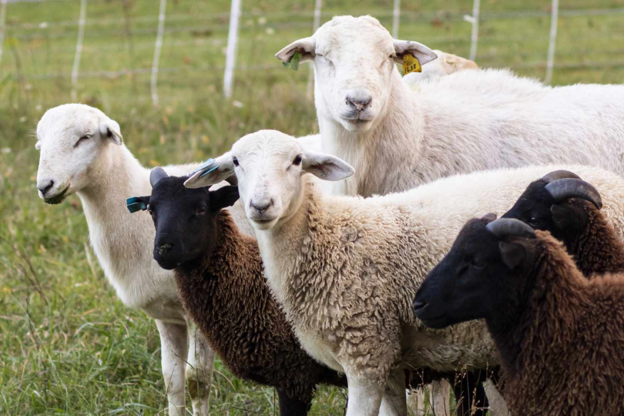
Article
Choosing an Estrus Synchronization Protocol in Sheep and Goats: A Practical Veterinary Approach
Efficient estrus synchronization can help veterinarians bring greater predictability to breeding, artificial insemination (AI), and genetic improvement programs in sheep and goats. However, protocol selection should not be based simply on which method produces the highest estrus response. Reproductive status, season, flock management, required timing precision, handling capacity, welfare considerations, and cost all influence whether a protocol is appropriate for a particular production system1,2.
Start With the Reproductive Status
The first practical consideration is whether females are actively cycling. Prostaglandin F2α and its analogues depend on a functional corpus luteum and are therefore appropriate only for females in the luteal phase. Their effectiveness is limited in anestrous or recently ovulated animals1,2,3. When cyclicity is established and precise synchronization is not essential, prostaglandin-based programs can provide a lower-cost option with reduced hormonal intervention.
Progestogen-based devices offer broader application because they can be used in both cycling and anestrous females. Intravaginal progesterone or progestogen devices temporarily mimic the luteal phase, and their removal permits the reproductive axis to resume activity and synchronized follicular development3. This makes them particularly useful when tighter control of estrus timing is required.
Consider the Breeding Season
Seasonal reproductive status can substantially alter protocol performance. During seasonal anestrus, ovarian activity and endogenous gonadotropin secretion are reduced, making additional reproductive stimulation more important. Progestogen protocols are therefore frequently combined with equine chorionic gonadotropin (eCG) at device withdrawal to support follicular maturation and ovulatory responses4,5.
Melatonin-based approaches provide another option for managing seasonality. By mimicking short-day reproductive signals, melatonin can help restore ovarian activity during seasonal anestrus. However, its response is slower and synchronization is generally less precise than with progestogen–gonadotropin protocols, so advance planning is important3.
Match Synchronization Precision to the Production Goal
Not every flock requires the same degree of reproductive control. Progesterone-device programs can provide high estrus response and fertility, with reported fertility outcomes during the breeding season commonly exceeding 60% and frequently reaching 70–90% in well-managed flocks3. Their greater control may justify the additional handling and material costs in intensive dairy systems, accelerated lambing programs, fixed-time AI, and genetic improvement operations.
By contrast, prostaglandin programs may be more appropriate for cycling animals in extensive or semi-intensive systems where lower intervention and cost are priorities. Two injections given seven to eleven days apart can improve exposure of treated females to an appropriate luteal phase, although estrus expression may be less tightly synchronized3.
Look Beyond Estrus Response3
A successful synchronization program should ultimately be judged by reproductive outcomes that matter at flock level. Conception does not always translate into equivalent lambing or kidding performance because embryonic loss, handling stress, male fertility, environmental factors, and season can influence final outcomes.
Economic assessment should also include hormone and device costs, animal handling, AI services, ultrasonographic diagnosis, and the potential benefits of concentrated lambing or kidding and improved genetic gain.
Practical Clinical Insight
Before selecting a synchronization protocol, ask four questions:
- Are the females cycling or anestrous?
- How precisely must estrus and ovulation be timed?
- What level of handling and hormonal intervention can the operation support?
- Does the expected reproductive and management benefit justify the additional cost?
There is no universally superior protocol. The most appropriate approach is the one that aligns reproductive physiology with the flock’s production objectives, management resources, welfare considerations, and economic constraints.
References
- Berean D, Ergene O, Blaga-Petrean A, Bogdan I, Ciupe S, Cenariu M, Pall E, Bogdan LM. Comparative data about estrus induction and pregnancy rate on Lacaune ewes in non-breeding season after melatonin implants and intravaginal progestagen. http://arccarticles.s3.amazonaws.com/webArticle/Final-attachment-published-B-1282.pdf
- Martinez-Ros P, Rios-Abellan A, Gonzalez-Bulnes A. Influence of progesterone-treatment length and eCG administration on appearance of estrous behavior, ovulatory success and fertility in sheep. Animals. 2018 Dec 26;9(1):9. https://www.mdpi.com/2076-2615/9/1/9
- Berean D, Bogdan LM, Ciupe S, Cimpean R. Hormonal and Non-Hormonal Estrus Synchronization in Sheep and Goats: Physiological Basis, Efficacy, and Practical Applications. Applied Biosciences. 2026 May 1;5(2):35. https://www.mdpi.com/2813-0464/5/2/35
- Berean D, Ergene O, Blaga-Petrean A, Bogdan I, Ciupe S, Cenariu M, Pall E, Bogdan LM. Comparative data about estrus induction and pregnancy rate on Lacaune ewes in non-breeding season after melatonin implants and intravaginal progestagen. http://arccarticles.s3.amazonaws.com/webArticle/Final-attachment-published-B-1282.pdf
- Saito K, Tanaka T, Endo N. Application of bovine progesterone intravaginal controlled-release formulation for estrus synchronization treatment in goats. Journal of Reproduction and Development. 2024;70(6):423-6. https://www.jstage.jst.go.jp/article/jrd/70/6/70_2024-083/_pdf
Related Contents
.jpg)
Video
Transjugular Removal of Canine Heartworms: A Clinical and Surgical Overview
Transjugular removal of canine heartworms is a specialized intervention used in selected dogs with s...

Article
Feline Pregnancy Endocrinology: Hormonal Changes and Placental Function
Pregnancy in cats involves a distinctive endocrine pattern in which ovarian and placental hormones w...

Article
Hormonal Control of Pregnancy Termination in Cats
Pregnancy maintenance in cats depends strongly on coordinated hormonal support, particularly progest...

Article
Feline Embryo Implantation and Early Placental Development
Pregnancy establishment in cats involves a sequence of precisely timed events between fertilization,...

Article
Ultrasonographic Monitoring of Pregnancy in Cats: A Gestational Timeline
Ultrasonography provides a practical way to follow the progression of feline pregnancy by identifyin...

Article
Feline Mismating: Pregnancy Diagnosis and Clinical Management
Mismating or unplanned mating is a common clinical problem in sexually mature queen cats because of...

Article
Medical Termination of Pregnancy in Queens: Drugs, Timing and Treatment Protocols
Medical termination of pregnancy (MTP) in queen cats should be approached according to the timing of...

Article
Safety and Aftercare Following Pregnancy Termination in Queen Cats
Pregnancy termination in queen cats requires more than selecting an appropriate abortifacient. Once...