Article
BHB-Based Detection of Bovine Ketosis: Interpreting Thresholds and Clinical Findings
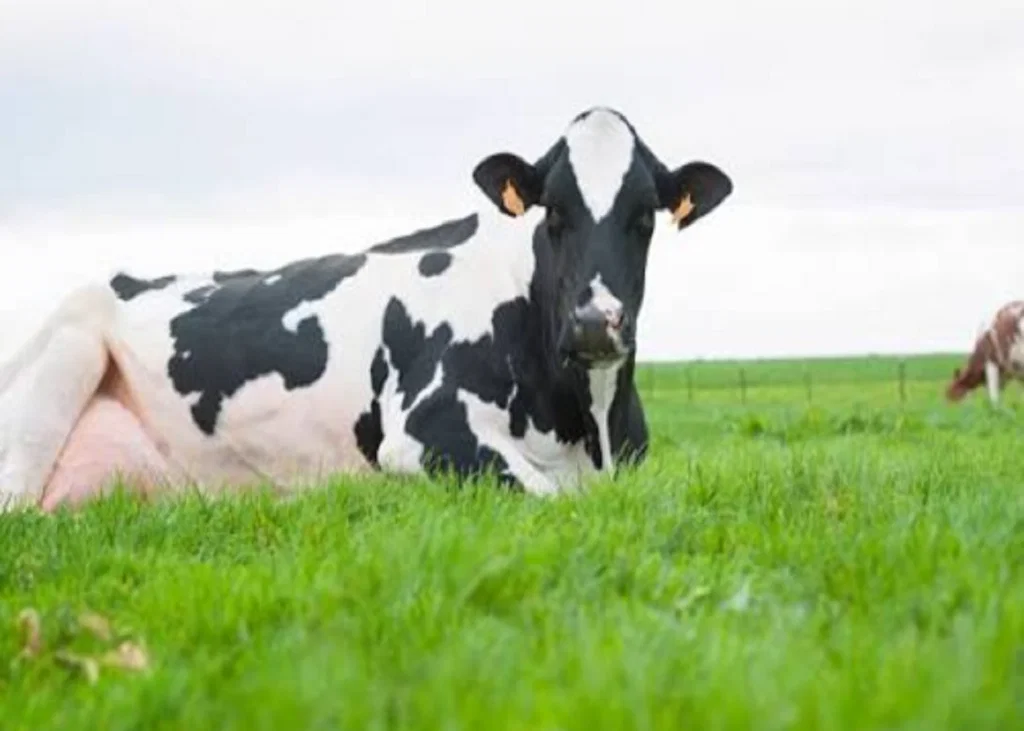
Ketosis is particularly important during early lactation, when rising milk production and reduced dry matter intake create a negative energy balance (NEB). As cows mobilize body fat to compensate, increased non-esterified fatty acids (NEFAs) reach the liver and contribute to the production of ketone bodies, including β-hydroxybutyrate (BHB), acetoacetate, and acetone[1],[2].
Among these metabolites, BHB is a key marker for identifying bovine ketosis. But the clinical value of a BHB result depends on how its concentration is interpreted alongside the cow's clinical presentation.
Where Does BHB Fit into Ketosis Detection?
Ketosis is broadly classified into subclinical ketosis (SCK) and clinical ketosis (CK) according to circulating BHB concentration and clinical manifestations. SCK is defined by a blood BHB concentration of ≥1.2 mmol/L without visible clinical signs, whereas CK is characterized by BHB ≥3 mmol/L together with clinical signs[3],[4],[5].
This distinction is clinically relevant because SCK may remain unnoticed during routine observation. It can affect a substantial proportion of dairy cows, with reported prevalence reaching up to 40%, and is associated with reduced productivity and increased susceptibility to other metabolic and infectious complications[6].
One BHB Cut-Off Does Not Fit Every Situation
Although BHB thresholds provide useful diagnostic boundaries, reported cut-offs vary between studies and monitoring protocols. Blood BHB thresholds proposed for SCK range approximately from 1.0 to 1.4 mmol/L. Some recent investigations and monitoring protocols use ≥1.0 mmol/L as a warning threshold, while values of ≥1.5 mmol/L have been considered high-risk in high-yielding Holstein–Friesian cows[6].
Why is the variation? Threshold selection can be influenced by breed, production level, days in milk (DIM), and diagnostic method[6].
Therefore, a BHB result should be interpreted according to the diagnostic threshold being applied rather than treating one numerical value as a universal boundary.
A High BHB Does Not Always Mean Severe Clinical Disease[6]
Perhaps the most important point when interpreting BHB is that BHB concentration and clinical severity do not always correlate directly. Some cows with extremely high BHB concentrations may remain clinically normal, whereas other cows with comparatively mild hyperketonemia can be severely affected.
This clinical heterogeneity indicates that ketone bodies are not necessarily the only factors determining disease manifestation. Other metabolic disturbances, inflammatory effects, and changes involving additional metabolites may contribute to whether a cow develops clinically apparent disease.
Read the Number with the Cow[6]
Clinical ketosis may present with reduced feed intake, weight loss, decreased milk yield, and characteristic sweet breath odor. These findings provide important context when interpreting an elevated BHB concentration.
Thus, BHB testing is most informative when the numerical result is considered alongside the cow's clinical status. A cow with elevated BHB but no visible abnormalities may fit a subclinical presentation, while a cow with elevated BHB accompanied by compatible clinical findings requires a different clinical interpretation.
The Practical Takeaway
BHB provides a practical biochemical marker for detecting ketosis, including cases that may not yet show obvious clinical signs. However, the BHB number should not be interpreted in isolation. The threshold used, the cow's production and stage of lactation, and the presence or absence of clinical findings all influence how the result should be understood.
For veterinarians, the most useful approach is therefore not simply asking whether BHB is elevated but asking what that BHB concentration means in the context of this particular cow.
References:
- Kabir M, Hasan MM, Tanni NS, Parvin MS, Asaduzzaman M, Ehsan MA, Islam MT. Metabolic profiling in periparturient dairy cows and its relation with metabolic diseases. BMC research notes. 2022 Jun 28;15(1):231. https://link.springer.com/content/pdf/10.1186/s13104-022-06130-z.pdf
- Khan MZ, Ma Y, Xiao J, Chen T, Ma J, Liu S, Wang Y, Khan A, Alugongo GM, Cao Z. Role of Selenium and Vitamins E and B9 in the Alleviation of Bovine Mastitis during the Periparturient Period. Antioxidants. 2022 Mar 29;11(4):657. https://www.mdpi.com/2076-3921/11/4/657
- Kang D, Lungu SE, Danso F, Dzou CF, Chen Y, Zheng X, Nie F, Lin H, Chen J, Zhou G. Animal health and nutrition: Metabolic disorders in cattle and improvement strategies. Frontiers in Veterinary Science. 2025 Mar 25;12:1470391. https://www.frontiersin.org/journals/veterinary-science/articles/10.3389/fvets.2025.1470391/pdf
- Ha S, Kang S, Jeong M, Han M, Lee J, Chung H, Park J. Characteristics of Holstein cows predisposed to ketosis during the post‐partum transition period. Veterinary medicine and science. 2023 Jan;9(1):307-14. https://onlinelibrary.wiley.com/doi/pdfdirect/10.1002/vms3.1006
- Mellado M, Dávila A, Gaytán L, Macías-Cruz U, Avendaño-Reyes L, García E. Risk factors for clinical ketosis and association with milk production and reproduction variables in dairy cows in a hot environment. Tropical Animal Health and Production. 2018 Oct;50(7):1611-6. https://www.academia.edu/download/108242990/s11250-018-1602-y20231203-1-gszsay.pdf
- Zhang Y, Wang C, Khan MZ, Ju Z, Huang J. Current Understanding of Bovine Ketosis: From Molecular Basis to Farm-Level Management. Animals. 2025 Dec 18;15(24):3644. https://www.mdpi.com/2076-2615/15/24/3644
Related Contents

Article
FGF-23 in Feline CKD: An Early Signal of Phosphate Dysregulation
A cat with early chronic kidney disease (CKD) may have a normal serum phosphate concentration. Does...

Article
Albuminuria or Transferrinuria? Reading the Glomerular Signal in Feline CKD
A cat can have chronic kidney disease (CKD) with only mild proteinuria. So, when urinary protein is...
Article
Tubular Injury Biomarkers in Feline CKD: What Can NGAL, KIM-1 and L-FABP Tell You?
When feline CKD is already suspected, identifying reduced renal function is only part of the clinica...
Article
Can Renal Fibrosis Biomarkers Reveal CKD Progression in Cats?
Chronic kidney disease in cats is not only a problem of declining renal function. Structural changes...
Article
When Creatinine May Not Tell the Full Story in Feline Acute Kidney Injury
Serum creatinine is routinely used with changes in urine output to diagnose and grade Acute Kidney I...
Article
When a Normal-Looking Udder Hides Mastitis: Recognising Subclinical Mastitis in Buffaloes
A buffalo can appear clinically normal while mastitis is already affecting the udder and milk produc...
Article
Buffalo Subclinical Mastitis: Which Risk Factors Should Vets Investigate?
When subclinical mastitis (SCM) keeps appearing in a buffalo herd, looking only at the affected anim...
Article
Diagnosing Subclinical Mastitis in Buffaloes: From SCC and CMT to Molecular Tests
Subclinical mastitis (SCM) can remain hidden because the buffalo may show no obvious udder or milk a...