Article
Preventing Streptococcosis in Tilapia: Biosecurity, Vaccination and Farm-Level Control
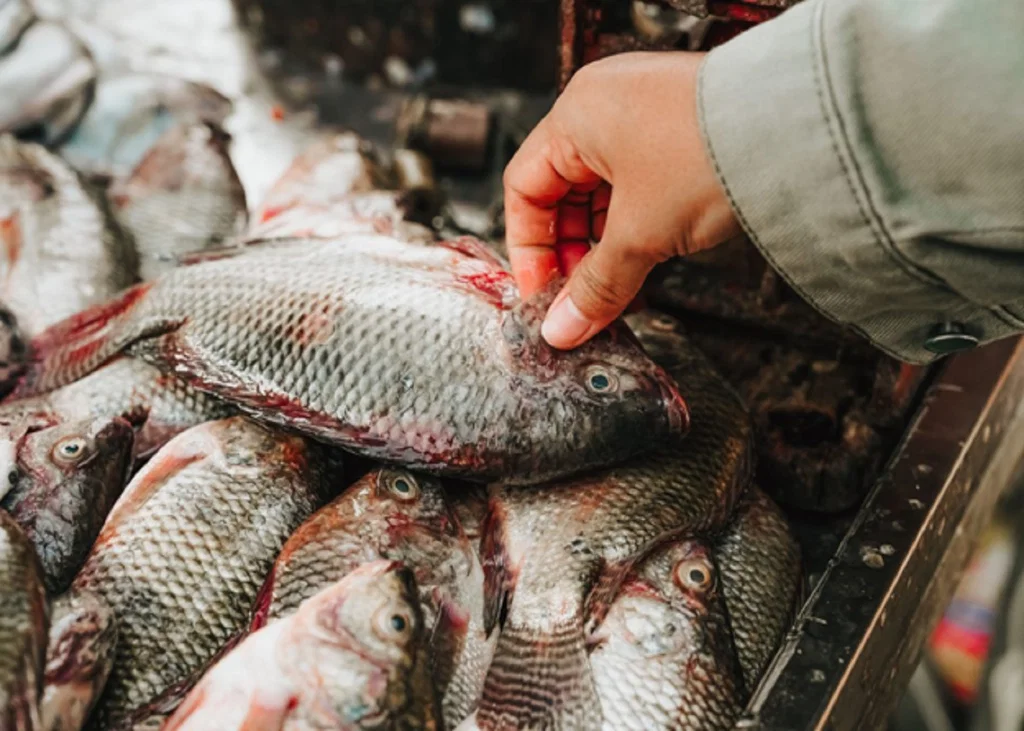
Once streptococcosis causes mortality in a tilapia farm, controlling the outbreak can become difficult. Prevention therefore needs to begin before mortality appears. Farm-level management can help reduce the conditions that allow Streptococcus agalactiae to spread and cause disease.
A practical control programme needs to combine environmental management, biosecurity, vaccination and responsible antimicrobial use rather than relying on a single intervention[1].
Start with the farm environment
Environmental and husbandry conditions can influence disease occurrence. High temperature, poor water quality, overcrowding and intensive production are associated with increased risk of streptococcosis.
Farm management should therefore focus on maintaining suitable water and environmental conditions and avoiding excessive stocking densities. Overfeeding and unnecessary handling or transport should also be avoided because these practices can contribute to conditions associated with disease occurrence[1].
The goal is not simply to react when mortality rises. Farm conditions should be managed continuously so that multiple outbreak-promoting factors do not coincide.
Do not overlook dead and moribund fish
Biosecurity also depends on routine farm hygiene.
Moribund and dead fish should be removed promptly. Tanks and production units should be cleaned, while equipment and utensils should be appropriately disinfected[1].
This is particularly relevant because transmission can occur through water, wounds, and abrasions under intensive culture conditions[1]. Cannibalism of dead or moribund fish and indirect contact through water can also contribute to transmission[1].
Vaccination can form part of the prevention strategy
Vaccination has been investigated as an approach to reducing streptococcal disease in tilapia. Experimental vaccines have included injectable killed preparations, with reported relative percentage survival ranging from 49% to 100% across different vaccine preparations[1],[2],[3],[4],[5].
Formalin-killed vaccines have also been evaluated. Commercial vaccination targeting S. agalactiae biotype II/serotype Ib has demonstrated cross-challenge protection. A bivalent vaccine targeting serotypes Ia and III was associated with higher 30-day survival and more than 80% yield increase in reported Thai farm applications[1].
These findings place vaccination among the available tools for farm-level disease control rather than treating it as a substitute for overall farm management.
Antimicrobial use needs a separate strategy[1]
Antibiotics should not become the default prevention measure.
Antibiotic use can exert selective pressure and contribute to the emergence and persistence of resistant bacteria. Routine measures that reduce unnecessary antibiotic use are therefore important components of responsible disease management.
Build prevention around multiple layers
For the practicing veterinarian, streptococcosis prevention should be approached as a farm-level programme. Key measures include maintaining the production environment, reducing overcrowding, and minimising unnecessary stressors.
Dead and moribund fish should be removed promptly. Regular cleaning and disinfection should also be maintained. Appropriate vaccination and reducing unnecessary antimicrobial exposure can further support disease control.
References:
- Abdallah ES, Metwally WG, Abdel-Rahman MA, Albano M, Mahmoud MM. Streptococcus agalactiae infection in Nile tilapia (Oreochromis niloticus): A review. Biology. 2024 Nov 11;13(11):914. https://www.mdpi.com/2079-7737/13/11/914
- Pasnik DJ, Evans JJ, Klesius PH. Duration of protective antibodies and correlation with survival in Nile tilapia Oreochromis niloticus following Streptococcus agalactiae vaccination. Diseases of aquatic organisms. 2005 Sep 5;66:129-34. https://www.researchgate.net/profile/Joyce-Evans-3/publication/7534109
- Pretto‐Giordano LG, Müller EE, Klesius P, Da Silva VG. Efficacy of an experimentally inactivated Streptococcus agalactiae vaccine in Nile tilapia (Oreochromis niloticus) reared in Brazil. Aquaculture Research. 2010 Sep;41(10):1539-44. https://www.academia.edu/download/84969541/download.pdf
- Pretto‐Giordano LG, Müller EE, Klesius P, Da Silva VG. Efficacy of an experimentally inactivated Streptococcus agalactiae vaccine in Nile tilapia (Oreochromis niloticus) reared in Brazil. Aquaculture Research. 2010 Sep;41(10):1539-44. https://www.academia.edu/download/84969541/download.pdf
- Munang’andu HM, Paul J, Evensen Ø. An overview of vaccination strategies and antigen delivery systems for Streptococcus agalactiae vaccines in Nile tilapia (Oreochromis niloticus). Vaccines. 2016 Dec 13;4(4):48. https://www.mdpi.com/2076-393X/4/4/48
Related Contents

Article
Chronic Cough in Dogs and Cats: How to Classify and Localize It
A dog has been coughing for several weeks. The owner describes it as “honking,” but the...
Article
Diagnosing the Coughing Dog or Cat: Choosing the Right Diagnostic Test
A coughing dog or cat does not automatically need every available respiratory test. The more useful...

Article
Bronchoscopy and Airway Sampling in Dogs and Cats with Chronic Cough
In dogs and cats with chronic cough, thoracic radiographs may not fully explain the airway abnormali...

Article
When Should Veterinarians Suppress Cough?
Cough suppression plays a specific role in managing respiratory diseases in dogs and cats. The aim i...

Article
Managing Persistent Cough in Dogs and Cats: From Conventional Therapy to Emerging Options
Persistent cough in dogs and cats may require more than treatment of the primary disease. When cough...
Article
Bacterial Diseases in Farmed Fish: Recognising Clinical Patterns in Practice
A fish population develops haemorrhagic lesions, lethargy and poor appetite. Another shows exophthal...
Article
Viral Diseases in Aquaculture: Recognising Clinical Patterns Before the Outbreak Escalates
A group of cultured fish begins showing dark skin, haemorrhage, anaemia and abnormal behaviour. In a...
Article
Parasitic Diseases in Farmed Fish: Recognising Gill, Skin and Systemic Involvement
A group of fingerlings is losing appetite and becoming increasingly inactive. Some fish have excessi...