Article
Prevention and Control of Paratuberculosis in Sheep and Goats: Vaccination, Biosecurity and Eradication Strategies
Paratuberculosis (PTB), or Johne's disease, remains a significant challenge in sheep and goat production because of its chronic nature, prolonged course, and ability to spread within a flock before clinical disease becomes apparent. Once infection is established, the consequences extend beyond individual animals to affect flock productivity and increase the cost of disease management. Since successful therapeutic intervention has not been documented, prevention and control remain the cornerstone of PTB management in veterinary practice1.
Why Prevention is More Effective Than Treatment
A major challenge in managing PTB is the limited response to therapeutic intervention. Mycobacterium avium subsp. paratuberculosis (MAP) has demonstrated resistance to chemotherapeutic agents in vitro, and successful treatment of clinically affected sheep and goats has not been documented1.
For practicing veterinarians, this underscores the importance of identifying infected animals early and implementing preventive measures before the disease becomes established within the flock. Once clinical cases appear, the focus should shift from treatment to reducing further transmission and protecting susceptible animals.
Vaccination as a Control Measure
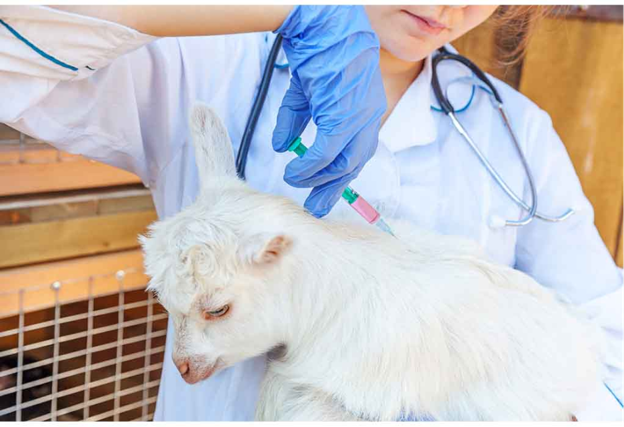
Vaccination plays an important role in controlling PTB in sheep and goats. Although it does not eliminate infection, it can reduce the occurrence of clinical disease and improve overall productivity within affected flocks2.
An additional benefit is the reduction in bacterial shedding. Lower MAP excretion decreases environmental contamination, thereby reducing opportunities for transmission to susceptible animals2.
Vaccination of young sheep and goats appears to be particularly useful in preventing the development of clinical PTB. However, vaccination should be viewed as one component of an integrated control programme rather than a standalone solution3.
Strengthening Biosecurity and Herd Management
Successful PTB control also depends on minimizing opportunities for disease transmission within the flock.
Several factors have been associated with increased disease risk, including:
- Animal trading
- Large flock size
- Keeping cattle together with sheep or goats4
Recognizing these risk factors allows veterinarians to recommend practical management strategies that reduce disease introduction and spread.
Management practices aimed at limiting fecal–oral transmission of MAP are particularly important. Maintaining a closed herd wherever feasible can further reduce the likelihood of introducing infected animals into the flock3.
Improved hygiene and sound management practices should accompany vaccination programmes to maximize disease control3.
Surveillance and Eradication Programmes
Long-term control requires ongoing surveillance rather than responding only after clinical cases become apparent.
Successful eradication and post-eradication surveillance programmes have included routine serological testing of adult animals using ELISA and agar gel immunodiffusion assays3.
Animals testing positive or considered suspect underwent fecal bacterial culture, while tissues from animals that died or were euthanized were submitted for acid-fast staining and histopathological examination3.
The continued use of surveillance enables earlier identification of infected animals and supports informed flock management decisions aimed at limiting further disease spread.
Practical Clinical Insights
For veterinarians working with sheep and goat producers, PTB control requires a proactive, flock-level approach rather than management of individual clinical cases alone. Because effective treatment has not been documented, emphasis should be placed on early identification of suspect animals, implementation of appropriate vaccination programmes, and management practices that reduce MAP transmission.
Regular surveillance, strategic laboratory testing, minimizing fecal–oral exposure, and maintaining closed herds where practical can collectively strengthen disease control efforts. The combination of vaccination, improved biosecurity, and systematic monitoring provides a practical framework for reducing the impact of PTB within affected flocks.
Continued improvement in diagnostic methods, particularly for detecting latent and subclinical infections, together with a better understanding of vaccination, remains important for future disease control. Eradication programmes should be implemented at both flock and national levels to reduce disease introduction through animal trade and strengthen long-term prevention strategies.
References
- Maroudam, V., Subramanian, B.M., Kumar, P.P. and Raj, G.D. 2015. Paratuberculosis: diagnostic methods and their constraints. J. Vet. Sci. Technol. 6, 4172. https://www.researchgate.net/profile/Dr-P-Praveen-Kumar/publication/282866303
- Juste RA, Perez V. Control of paratuberculosis in sheep and goats. Veterinary Clinics: Food Animal Practice. 2011 Mar 1;27(1):127-38. https://www.academia.edu/download/47044120/j.cvfa.2010.10.02020160705-20658-aheqtn.pdf
- Tharwat M, Ali H, Alkheraif AA. Paratuberculosis in sheep and goats: Pathogenesis, diagnostic findings, and control strategies. Open Veterinary Journal. 2025 Jan 31;15(1):1. https://pmc.ncbi.nlm.nih.gov/articles/PMC11910304/
- Schrott J, Sodoma E, Dünser M, Tichy A, Khol JL. Mycobacterium avium subsp. paratuberculosis in sheep and goats in Austria: seroprevalence, risk factors and detection from boot swab samples. Animals. 2023 Apr 30;13(9):1517. https://www.mdpi.com/2076-2615/13/9/1517
Related Contents
.jpg)
Video
Transjugular Removal of Canine Heartworms: A Clinical and Surgical Overview
Transjugular removal of canine heartworms is a specialized intervention used in selected dogs with s...

Article
Feline Pregnancy Endocrinology: Hormonal Changes and Placental Function
Pregnancy in cats involves a distinctive endocrine pattern in which ovarian and placental hormones w...

Article
Hormonal Control of Pregnancy Termination in Cats
Pregnancy maintenance in cats depends strongly on coordinated hormonal support, particularly progest...

Article
Feline Embryo Implantation and Early Placental Development
Pregnancy establishment in cats involves a sequence of precisely timed events between fertilization,...

Article
Ultrasonographic Monitoring of Pregnancy in Cats: A Gestational Timeline
Ultrasonography provides a practical way to follow the progression of feline pregnancy by identifyin...

Article
Feline Mismating: Pregnancy Diagnosis and Clinical Management
Mismating or unplanned mating is a common clinical problem in sexually mature queen cats because of...

Article
Medical Termination of Pregnancy in Queens: Drugs, Timing and Treatment Protocols
Medical termination of pregnancy (MTP) in queen cats should be approached according to the timing of...

Article
Safety and Aftercare Following Pregnancy Termination in Queen Cats
Pregnancy termination in queen cats requires more than selecting an appropriate abortifacient. Once...