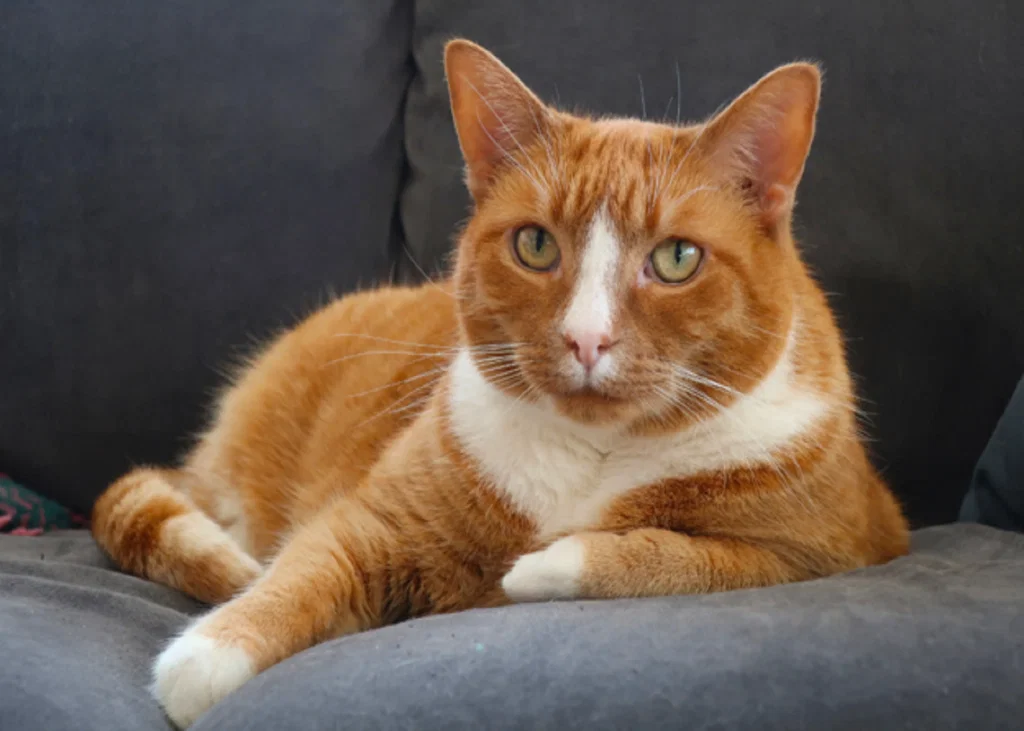
Article
Assessing Obesity in Cats: From Body Weight and BCS to Body Composition
A cat has gained 700 g since its previous visit. Is that enough to classify the patient as obese?
Not necessarily.
Body weight is useful, but it does not distinguish fat from muscle, accounts for skeletal frame size, or shows how body fat is distributed. For practical feline weight assessment, the most useful approach is to interpret weight alongside body condition and, where appropriate, more advanced measures of body composition.
Start with body weight—but do not stop there
Serial body weight measurements are simple, objective, and particularly useful for monitoring an individual cat over time[1],[2]. A consistent increase can provide an early indication that energy intake and expenditure are no longer balanced.
The limitation is that body weight alone says little about composition. Two cats with the same weight may have very different proportions of adipose tissue and lean mass. Breed, sex and skeletal frame can further affect the interpretation of weight[1].
For weight-management consultations, therefore, the trend in an individual cat may be more informative than a single number, provided other conditions affecting muscle mass, such as chronic disease or sarcopenia, are considered.
What does the BCS add?
Body condition scoring provides the practical clinical context that body weight lacks.
The assessment focuses on three readily evaluated features:
- Fat coverage over the ribs
- Definition of the waist
- Size of the abdominal fat pad
The 9-point BCS system is particularly useful in practice[1]:
|
BCS |
Clinical interpretation |
|
5/9 |
Ideal body condition |
|
6–7/9 |
Overweight |
|
8–9/9 |
Obesity |
Importantly, BCS is not simply a visual exercise. Palpation contributes to the assessment, and the 9-point system has demonstrated good reproducibility and correlation with body-fat measurements obtained by dual-energy X-ray absorptiometry (DXA)[1].
But there is an important limitation: BCS primarily reflects subcutaneous fat and does not directly assess muscle mass.
Could an obese cat therefore have significant muscle depletion that is missed by BCS alone?
Yes. Muscle-depleted obesity can result in increased fat alongside loss of muscle, potentially causing body fat to be underestimated[1],[3]. Owner perception can also differ from veterinary assessment, which may delay recognition or affect adherence to weight-management recommendations.
A BCS of 6/9 also requires context. Teng et al. reported increased survival in middle-aged cats with a BCS of 6/9 compared with those scoring 5/9[4]. This does not make 6/9 universally ideal; rather, it highlights why body condition should be interpreted within the individual clinical context.
What about feline BMI?
Feline body mass index offers a quantitative approach based on body measurements and can predict body fat percentage. Hoelmkjaer and Bjornvad reported greater accuracy than BCS for predicting body fat percentage, with a strong correlation to body weight[5].
However, clinical practicality is a limitation. Accurate measurement requires the cat to stand with its limbs perpendicular to the ground and its head upright. An anxious or uncooperative patient may make this difficult during a routine consultation.
When are advanced methods useful?
DXA can measure fat, lean soft tissue, and bone composition. It has demonstrated concordance with chemical analysis in cats and dogs, but equipment cost, specialised expertise and limitations with extreme body types restrict routine clinical use[1],[6].
Bioelectrical impedance analysis can estimate fat-free mass and other body components, but accuracy can vary with hydration, electrode placement, hair, body size, breed and feeding status[1],[7].
Ultrasonography can assess subcutaneous adiposity and muscle thickness without radiation, but it does not provide whole-body composition and has not been validated for feline evaluation[1].
CT and MRI provide detailed body-composition information but require substantial resources and, in this context, are primarily research tools because of cost, accessibility and the need for anaesthesia[8],[9].
Clinical bottom line
For everyday practice, body weight and BCS remain the practical foundation of feline obesity assessment. Weight provides an objective trend; BCS adds information about visible and palpable fat distribution.
Neither should automatically be interpreted in isolation. When body condition, weight trajectory and muscle status do not tell the same story, recognising the limitations of each measure can lead to a more clinically meaningful assessment.
References:
- Wang H, Wang W, Zhang Y, Yao J, Liu Y, Pan L, Wang R, Wang J, Xia Z, Chen L, Xiong W. From pathogenesis to prevention: an update on the management of obesity and its associated comorbidities in cats. Frontiers in Veterinary Science. 2026 Apr 7;13:1797197. https://www.frontiersin.org/journals/veterinary-science/articles/10.3389/fvets.2026.1797197/pdf
- Brooks D, Churchill J, Fein K, Linder D, Michel KE, Tudor K, Ward E, Witzel A. 2014 AAHA weight management guidelines for dogs and cats. Journal of the American Animal Hospital Association. 2014 Jan 1;50(1):1-1. https://www.vetlexicon.com/wp-content/uploads/2023/07/weight_management_guidelines.pdf
- Michel KE, Anderson W, Cupp C, Laflamme DP. Correlation of a feline muscle mass score with body composition determined by dual-energy X-ray absorptiometry. British Journal of Nutrition. 2011 Oct;106(S1):S57-9. https://www.cambridge.org/core/services/aop-cambridge-core/content/view/F7F0D96F089BD4A3E7BA88049318F700/S000711451100050Xa.pdf/correlation-of-a-feline-muscle-mass-score-with-body-composition-determined-by-dual-energy-x-ray-absorptiometry.pdf
- Teng KT, McGreevy PD, Toribio JA, Raubenheimer D, Kendall K, Dhand NK. Strong associations of nine-point body condition scoring with survival and lifespan in cats. Journal of Feline Medicine and Surgery. 2018 Dec;20(12):1110-8. https://journals.sagepub.com/doi/pdf/10.1177/1098612X17752198
- Hoelmkjaer KM, Bjornvad CR. Management of obesity in cats. Veterinary Medicine: Research and Reports. 2014 Sep 1:97-107. https://www.tandfonline.com/doi/pdf/10.2147/VMRR.S40869
- Pham DD, Lee SK, Shin C, Kim NH, Leem CH. Body weight difference between dual-energy X-ray absorptiometry and multi-frequency bioelectrical impedance analysis attenuates the equivalence of body-composition assessment: Body composition, energy expenditure and physical activity. European Journal of Clinical Nutrition. 2019 Mar;73(3):387-94. https://www.academia.edu/download/105846662/s41430-018-0164-420230920-1-s2e4ei.pdf
- Branco MG, Mateus C, Capelas ML, Pimenta N, Santos T, Mäkitie A, Ganhão-Arranhado S, Trabulo C, Ravasco P. Bioelectrical impedance analysis (BIA) for the assessment of body composition in oncology: a scoping review. Nutrients. 2023 Nov 15;15(22):4792. https://www.mdpi.com/2072-6643/15/22/4792
- Kuriyan R. Body composition techniques. The Indian journal of medical research. 2018 Nov;148(5):648. https://pmc.ncbi.nlm.nih.gov/articles/PMC6366261/pdf/IJMR-148-648.pdf
- Paris MT. Body composition analysis of computed tomography scans in clinical populations: the role of deep learning. Lifestyle genomics. 2020 Jan 13;13(1):28-31. https://karger.com/lfg/article/13/1/28/188182
Related Contents

Article
Chronic Cough in Dogs and Cats: How to Classify and Localize It
A dog has been coughing for several weeks. The owner describes it as “honking,” but the...
Article
Diagnosing the Coughing Dog or Cat: Choosing the Right Diagnostic Test
A coughing dog or cat does not automatically need every available respiratory test. The more useful...

Article
Bronchoscopy and Airway Sampling in Dogs and Cats with Chronic Cough
In dogs and cats with chronic cough, thoracic radiographs may not fully explain the airway abnormali...

Article
When Should Veterinarians Suppress Cough?
Cough suppression plays a specific role in managing respiratory diseases in dogs and cats. The aim i...

Article
Managing Persistent Cough in Dogs and Cats: From Conventional Therapy to Emerging Options
Persistent cough in dogs and cats may require more than treatment of the primary disease. When cough...

Article
Bacterial Diseases in Farmed Fish: Recognising Clinical Patterns in Practice
A fish population develops haemorrhagic lesions, lethargy and poor appetite. Another shows exophthal...
Article
Viral Diseases in Aquaculture: Recognising Clinical Patterns Before the Outbreak Escalates
A group of cultured fish begins showing dark skin, haemorrhage, anaemia and abnormal behaviour. In a...

Article
Parasitic Diseases in Farmed Fish: Recognising Gill, Skin and Systemic Involvement
A group of fingerlings is losing appetite and becoming increasingly inactive. Some fish have excessi...