Article
Food Allergy vs Feline Atopic Skin Syndrome: The Role of a Strict Elimination Diet
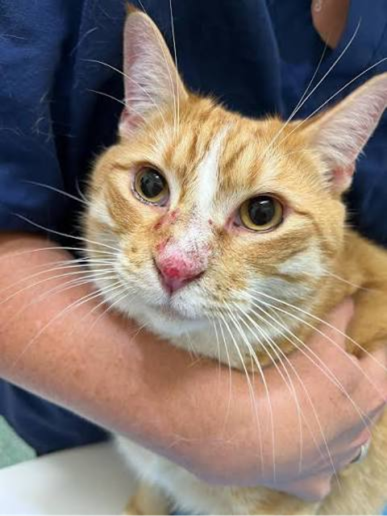
A cat with chronic pruritus, self-induced alopecia, miliary dermatitis or eosinophilic lesions may fit the clinical picture of feline atopic skin syndrome (FASS), but similar presentations can occur with food allergy. In fact, a large retrospective analysis found no clear difference in clinical appearance between cats with FASS and those with food allergy, apart from a significantly higher prevalence of seborrhoea in cats with FASS. Facial involvement appeared more consistent with food allergy, although the difference was not statistically significant1,2.
This clinical overlap is why a strict elimination diet is an essential part of the diagnostic work-up before proceeding with diagnostics for FASS.
Why Clinical Appearance Is Not Enough
FASS and food allergy can produce remarkably similar skin disease. Cats may present with the same cutaneous reaction patterns, making it difficult to distinguish the two conditions from history and dermatological examination alone1,2.
Clinical criteria have been developed to help distinguish nonflea-induced hypersensitivity dermatitis (NFHD), which commonly includes FASS, food allergy, or both, from other causes of pruritus and dermatitis. However, these criteria are not designed to differentiate FASS specifically from food allergy2.
Therefore, when other relevant differentials have been addressed and the clinical picture remains compatible with NFHD, dietary elimination becomes an important next diagnostic step.
What Makes a Food Trial Truly Diagnostic?
The key word is strict.
The recommended approach is to provide only the prescribed diet and water during the trial. The diet can be either a novel limited-ingredient diet, commercially prepared or home-cooked, or a hydrolysed diet3,4.
This means the dietary trial should be approached as a controlled diagnostic intervention rather than simply changing the cat's food and waiting for improvement. Any departure from the prescribed diet can make interpretation more difficult.
In the initial stages, anti-inflammatory medications may be permitted to control clinical signs and improve the quality of life of the cat and its owners. In some circumstances, a second diet trial may be required to confidently rule out food allergy3,4.
What Does the Available Data Tell You?2
Among 243 cats diagnosed with food allergy across reports covering 1982–2014, concurrent FASS was reported in 2.4% (24 of 243), while flea allergy dermatitis was reported in 0.002% (two of 243). Only one cat had all three conditions.
These figures should be interpreted cautiously because most of the publications selected cats with confirmed food allergy, creating potential bias in the reported proportions.
Age of onset may also be relevant when assessing the history. Among 95 cats for which age at onset was reported across 10 sources, 27% (26 of 95) developed clinical signs before 12 months of age.30–39 However, age alone should not be used to distinguish food allergy from FASS.
Interpreting the Response2
The purpose of the elimination diet is to help determine whether food allergy is contributing to the clinical picture. If clinical disease improves during the appropriate dietary trial, food allergy becomes an important consideration. Conversely, lack of improvement needs to be interpreted in the context of how strictly the trial was performed and whether an appropriate diet was selected.
A dietary trial may also reveal that food allergy and FASS are not necessarily mutually exclusive. Among 321 cats described in reports where concurrent allergic diseases were considered, food allergy was present alongside FASS in 5.9% (19 of 321), while 0.6% (two of 321) had all three disorders—FASS, food allergy and flea allergy.
Practical Clinical Takeaway
When a cat has compatible clinical signs but food allergy and FASS cannot be distinguished clinically, resist the temptation to move directly to allergen testing. A strict elimination diet should come first.
Use only the prescribed diet and water; select an appropriate novel limited-ingredient or hydrolysed diet, monitor the clinical response carefully, and consider a second trial when necessary.
For the practicing veterinarian, the most important point is simple: a convincing FASS-like clinical pattern does not rule out food allergy. The elimination diet is a key step in separating these clinically overlapping disorders.
References
- Hobi S, Linek M, Marignac G, Olivry T, Beco L, Nett C, Fontaine J, Roosje P, Bergvall K, Belova S, Koebrich S. Clinical characteristics and causes of pruritus in cats: a multicentre study on feline hypersensitivity‐associated dermatoses. Veterinary dermatology. 2011 Oct;22(5):406-13. https://www.zora.uzh.ch/server/api/core/bitstreams/e17e1a30-a25f-4b99-9ad0-78e080724b1a/content
- Santoro D, Pucheu‐Haston CM, Prost C, Mueller RS, Jackson H. Clinical signs and diagnosis of feline atopic syndrome: detailed guidelines for a correct diagnosis. Veterinary dermatology. 2021 Feb;32(1):26-e6. https://onlinelibrary.wiley.com/doi/pdfdirect/10.1111/vde.12935
- Scott DW, Miller WH, Erb HN. Feline dermatology at Cornell University: 1407 cases (1988–2003). Journal of feline medicine and surgery. 2013 Apr;15(4):307-16. https://journals.sagepub.com/doi/pdf/10.1177/1098612X12468922
- Olivry T, Mueller RS, Prélaud P. Critically appraised topic on adverse food reactions of companion animals (1): duration of elimination diets. BMC veterinary research. 2015 Aug 28;11(1):225. https://link.springer.com/content/pdf/10.1186/s12917-015-0541-3.pdf
Related Contents
.jpg)
Video
Transjugular Removal of Canine Heartworms: A Clinical and Surgical Overview
Transjugular removal of canine heartworms is a specialized intervention used in selected dogs with s...

Article
Feline Pregnancy Endocrinology: Hormonal Changes and Placental Function
Pregnancy in cats involves a distinctive endocrine pattern in which ovarian and placental hormones w...

Article
Hormonal Control of Pregnancy Termination in Cats
Pregnancy maintenance in cats depends strongly on coordinated hormonal support, particularly progest...

Article
Feline Embryo Implantation and Early Placental Development
Pregnancy establishment in cats involves a sequence of precisely timed events between fertilization,...

Article
Ultrasonographic Monitoring of Pregnancy in Cats: A Gestational Timeline
Ultrasonography provides a practical way to follow the progression of feline pregnancy by identifyin...

Article
Feline Mismating: Pregnancy Diagnosis and Clinical Management
Mismating or unplanned mating is a common clinical problem in sexually mature queen cats because of...

Article
Medical Termination of Pregnancy in Queens: Drugs, Timing and Treatment Protocols
Medical termination of pregnancy (MTP) in queen cats should be approached according to the timing of...

Article
Safety and Aftercare Following Pregnancy Termination in Queen Cats
Pregnancy termination in queen cats requires more than selecting an appropriate abortifacient. Once...