Article
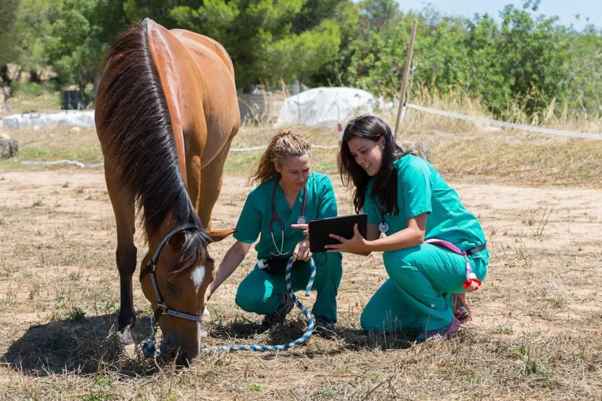
The Navicular Case That Won't Improve: What Might Be Getting Missed?
For decades, management of podotrochlear syndrome has focused largely on controlling pain, optimizing hoof balance, and addressing associated soft tissue injuries. Yet many horses continue to show persistent lameness despite meticulous farriery, medical therapy, and even surgical intervention1.
The question practitioners should increasingly ask is: Is the focus too much on the deep digital flexor tendon, navicular bursa, or supporting soft tissues and not enough on the navicular bone itself?
Looking Beyond "Navicular Disease"
Podotrochlear syndrome remains one of the most common causes of chronic forelimb lameness, particularly in Quarter Horses. Historically, diagnosis and treatment have centred around radiographic abnormalities and soft tissue injury.
Today, MRI is revealing a far more complex picture.
In addition to traditional radiographic findings such as sclerosis, enlarged synovial invaginations, flexor cortical erosions, and osseous cyst-like lesions, MRI frequently identifies increased fluid signals within the navicular bone itself2.
These "bone edema-like" changes are thought to reflect inflammation, fibrosis, necrosis, and altered fluid dynamics within the bone. More importantly, they may represent a significant source of pain1,2.
Why Some Horses Fail Conventional Therapy
Not all navicular cases are created equal.
Horses with marked medullary sclerosis and osseous cyst-like lesions often prove particularly difficult to manage and may show limited improvement despite appropriate shoeing and medical therapy3.
This may explain why some horses continue to struggle even when obvious soft tissue lesions have been addressed.
Palmar digital neurectomy can provide palliative relief, while navicular bursoscopy is valuable for managing deep digital flexor tendon pathology1,2. However, neither procedure directly addresses abnormalities occurring within the navicular bone.
For horses where bone pathology is driving pain, that distinction may be clinically important.
Is Increased Bone Pressure Part of the Problem?
One theory gaining attention is that chronic pain may be linked to increased intraosseous pressure within the navicular bone.
MRI findings of bone edema-like lesions and cyst-like changes support the idea that the navicular bone is undergoing active pathological change rather than simply showing end-stage degeneration1,2.
This concept mirrors observations in human medicine, where bone marrow edema and osteonecrosis are recognised causes of significant pain1,4.
As a result, interest has grown in procedures designed to decompress the navicular bone rather than simply manage its consequences.
A Different Treatment Target
Core osteostixis was developed to address pathology within the navicular bone itself.
The procedure aims to reduce intraosseous pressure while promoting vascularisation and bone remodelling4.
What makes this approach noteworthy is that horses with chronic podotrochlear syndrome, bone edema-like lesions, and osseous cyst-like abnormalities demonstrated meaningful improvements in lameness after decompression, despite having failed conventional management previously1.
Importantly, the improvement observed was greater than that achieved through soft tissue-focused intervention alone, suggesting the navicular bone may play a larger role in pain generation than traditionally appreciated.
The Clinical Takeaway
The next time a horse with "navicular disease" fails to respond as expected, it may be worth asking a different question.
Is the tendon truly the problem?
Or is the navicular bone itself driving the lameness?
As MRI continues to uncover the hidden pathology within the podotrochlear apparatus, the conversation around navicular disease is shifting. For selected horses, successful management may depend not only on treating the structures around the navicular bone—but also on recognising when the bone itself has become the primary source of pain.
References
- Brock, B.A., Greer, H.R., Honnas, C.M., Gilleland, B.E., Barrett, M.F., Moore, J.N. and Cohen, N.D., 2023. A randomized, self-controlled case series evaluating core osteostixis of osseous cyst-like lesions of the navicular bone to improve lameness in horses with podotrochlear syndrome. Veterinary Medicine: Research and Reports, pp.35-46. https://doi.org/10.2147/VMRR.S399835
- Barrett MF, Frisbie DD, King MR, Werpy NM, Kawcak CE. A review of how magnetic resonance imaging can aid in case management of common pathological conditions of the equine foot. Equine Veterinary Education. 2017 Dec;29(12):683-93. https://doi.org/10.1111/eve.12542
- Dyson S. Radiological interpretation of the navicular bone. Equine Veterinary Education. 2011 Feb;23(2):73-87. https://beva.onlinelibrary.wiley.com/doi/abs/10.1111/j.2042-3292.2010.00168.x
- Jenner F, Kirker‐Head C. Core decompression of the equine navicular bone: An in vitro biomechanical study. Veterinary Surgery. 2011 Feb;40(2):163-70. https://doi.org/10.1111/j.1532-950X.2010.00766.x
Related Contents

Article
The Elephant is Walking Differently: Where Should the Investigation Begin?
When an elephant begins walking differently, the first challenge is not necessarily to identify the...
Article
When an Elephant’s Blood Report Says “Abnormal”: How Should It Be Interpreted?
A laboratory report can flag a value as abnormal even when an elephant appears clinically healthy. C...
.jpg)
Upcoming Event
World Animal Day
World Animal Day highlights the importance of protecting animal health and welfare through responsib...
Video
Rabies: Epitome of the One Health Paradigm
Rabies exemplifies the One Health approach, linking animal health, human health, veterinary services...
Video
One Health Webinar on Important Updates on Rabies for Veterinary Practitioners and Students
Rabies remains a major zoonotic disease requiring vigilance across veterinary practice and public he...
.jpg)
Video
Transjugular Removal of Canine Heartworms: A Clinical and Surgical Overview
Transjugular removal of canine heartworms is a specialized intervention used in selected dogs with s...

Article
Feline Pregnancy Endocrinology: Hormonal Changes and Placental Function
Pregnancy in cats involves a distinctive endocrine pattern in which ovarian and placental hormones w...

Article
Hormonal Control of Pregnancy Termination in Cats
Pregnancy maintenance in cats depends strongly on coordinated hormonal support, particularly progest...