Article
Megaoesophagus in Dogs: Recognising the Clinical Signs Before Complications Begin
Megaoesophagus is a disorder characterised by diffuse oesophageal dilatation and reduced or absent peristalsis, leading to impaired movement of food into the stomach. The condition develops secondary to neuromuscular dysfunction affecting oesophageal motility1. In veterinary practice, megaoesophagus is more than just a “regurgitation case”; it is a clinically significant disorder that can rapidly progress to malnutrition, aspiration pneumonia, and poor quality of life if not identified early.
The disease may be congenital or acquired. Congenital megaoesophagus is commonly associated with vagal dysfunction. Acquired forms are further classified into primary idiopathic megaoesophagus and secondary megaoesophagus, which may occur alongside disorders such as myasthenia gravis, hypoadrenocorticism, dysautonomia, hypothyroidism, polymyopathies, and oesophageal neoplasia1,2.
Clinical Signs Veterinarians Should Not Ignore
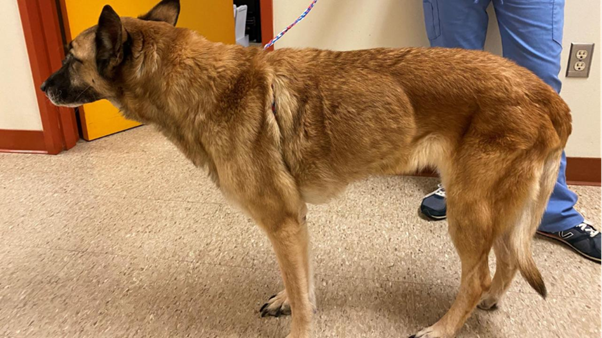
Regurgitation remains the most consistent clinical sign of megaoesophagus. In the evaluated cases, regurgitation and weight loss were present in 100% of affected dogs. However, the condition often extends beyond gastrointestinal symptoms.
Additional findings included1:
- Skin lesions such as alopecia, crusting, scaling, and rough hair coat in 50% of dogs
- Muscle wasting in 30.3% of cases
- Respiratory signs including cough and dyspnoea in 44.4% of animals
- Eye lesions such as cataracts and corneal opacity in 23.3% of dogs
For practitioners, differentiating regurgitation from vomiting is essential. Owners frequently confuse the two conditions, which can delay diagnosis. Regurgitation is typically passive, involves undigested food, and occurs without abdominal effort.
Aspiration Pneumonia: The Most Common Complication1
Aspiration pneumonia remains the most serious and frequently reported complication associated with megaoesophagus. Dogs with aspiration pneumonia may present with:
- Moist cough
- Respiratory distress
- Fever
- Exercise intolerance
- Abnormal lung sounds
Clinically, veterinarians should maintain a low threshold for thoracic imaging in regurgitating dogs, particularly when respiratory signs are present. Delayed identification of aspiration pneumonia can significantly worsen prognosis.
Diagnostic Approach in Practice
Radiography remains the cornerstone for diagnosis. Cervical and thoracic radiographs, both plain and contrast studies, are highly useful in confirming oesophageal dilatation and assessing motility disorders1.
In the study population, diagnosis was established through:
- Detailed clinical history
- Physical examination findings
- Lateral neck and thoracic radiography
- Contrast radiographic confirmation
Fluoroscopy in non-anaesthetised patients can further help evaluate oesophageal function and identify associated oesophageal diverticula.
Breed and Age Trends Worth Remembering1
The disease was most commonly observed in dogs between two to four years of age (48.5%), followed by dogs below two years (36.4%). Labrador Retrievers represented the highest proportion of affected cases at 78.8%, followed by crossbreeds, Doberman Pinschers, and Pitbulls.
Previous studies have also documented increased prevalence in breeds such as:
- German Shepherds
- Great Danes
- Irish Setters
- Newfoundlands
Interestingly, male dogs showed higher prevalence in this study, accounting for 69.7% of cases, although previous literature has reported no strong sex predilection.
Haematological Findings and Their Clinical Relevance
Haematological examination demonstrated significant leukocytosis, neutrophilia, and eosinophilia in affected dogs. These findings were likely associated with secondary aspiration pneumonia observed in nearly 44.4% of cases1.
From a practical standpoint, these inflammatory changes should prompt clinicians to investigate pulmonary involvement aggressively, especially in dogs presenting with respiratory signs alongside regurgitation.
Practical Management Considerations
Management of megaoesophagus is often supportive and requires strong owner compliance. Veterinarians should focus on reducing regurgitation episodes and preventing aspiration pneumonia.
Common practical recommendations include1:
- Feeding in an elevated position
- Offering small and frequent meals
- Adjusting food consistency based on patient response
- Monitoring respiratory signs closely
- Maintaining adequate caloric intake
Long-term prognosis varies significantly depending on the underlying cause and severity of complications.
Conclusion
Megaoesophagus remains a clinically challenging disorder requiring early recognition and systematic evaluation. While regurgitation is the hallmark sign, veterinarians should remain alert for associated respiratory, dermatological, and systemic manifestations. Careful diagnostic workup, prompt management of aspiration pneumonia, and long-term nutritional strategies can significantly improve patient outcomes and quality of life.
Reference
- Fasil PM, Geethanjali PV, Mariya AC, Johnson J, Uvais NM, Shyma VH, Dinesh PT, Deepa PM. Epidemiological and Clinco-Pathological studies on megaoesophagus in dogs. International J. Veterinary Sciences and Animal Husbandry. 2024;9:1094-7. https://www.researchgate.net/profile/Dinesh-Parathazhathayil/publication/378182638_Epidemiological_and_Clinco-Pathological_studies_on_megaoesophagus_in_dogs/links/65cc5a51790074549783d65a/Epidemiological-and-Clinco-Pathological-studies-on-megaoesophagus-in-dogs.pdf
- Arnell K, Hill S, Hart J, Richter K. Persistent regurgitation in four dogs with caudal esophageal neoplasia. Journal of the American Animal Hospital Association. 2013 Jan 1;49(1):58-63. https://doi.org/%2010.5326/JAAHA-MS-5826
Related Contents
.jpg)
Video
Transjugular Removal of Canine Heartworms: A Clinical and Surgical Overview
Transjugular removal of canine heartworms is a specialized intervention used in selected dogs with s...

Article
Feline Pregnancy Endocrinology: Hormonal Changes and Placental Function
Pregnancy in cats involves a distinctive endocrine pattern in which ovarian and placental hormones w...

Article
Hormonal Control of Pregnancy Termination in Cats
Pregnancy maintenance in cats depends strongly on coordinated hormonal support, particularly progest...

Article
Feline Embryo Implantation and Early Placental Development
Pregnancy establishment in cats involves a sequence of precisely timed events between fertilization,...

Article
Ultrasonographic Monitoring of Pregnancy in Cats: A Gestational Timeline
Ultrasonography provides a practical way to follow the progression of feline pregnancy by identifyin...

Article
Feline Mismating: Pregnancy Diagnosis and Clinical Management
Mismating or unplanned mating is a common clinical problem in sexually mature queen cats because of...

Article
Medical Termination of Pregnancy in Queens: Drugs, Timing and Treatment Protocols
Medical termination of pregnancy (MTP) in queen cats should be approached according to the timing of...

Article
Safety and Aftercare Following Pregnancy Termination in Queen Cats
Pregnancy termination in queen cats requires more than selecting an appropriate abortifacient. Once...