Article
Practical FMD Outbreak Management and Field Response
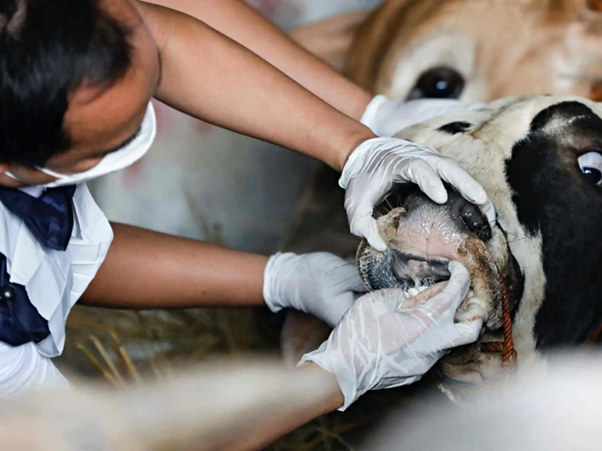
Foot-and-mouth disease (FMD) outbreaks create enormous pressure on veterinarians because the disease spreads rapidly, affects multiple animals within a short period, and demands immediate action. During a suspected outbreak, veterinarians are not only responsible for recognizing clinical signs but also for guiding producers on movement restriction, biosecurity, disease monitoring, and containment measures.
Practical preparedness at the farm level can significantly influence how effectively an outbreak is controlled.
Early Detection Changes Everything
One of the most important realities of FMD control is that delayed detection can dramatically worsen outbreak spread1,2. Animals may transmit the virus before visible lesions develop, which means that by the time obvious signs are noticed, infection may already have spread to other groups or nearby premises.
Common warning signs include:
- Sudden lameness in multiple animals
- Excessive salivation
- Oral erosions
- Reluctance to eat
- Fever
- Teat lesions
- Rapid spread of illness within the herd3
Field veterinarians should never ignore vesicular or erosive lesions affecting multiple animals simultaneously.
Immediate Actions on Suspecting FMD
The first few hours after suspicion are critical.
Practical field steps include:
- Restricting all animal movement immediately
- Preventing entry or exit of vehicles and equipment
- Isolating affected groups
- Limiting personnel movement
- Using dedicated boots and protective clothing
- Recording all recent animal and visitor movements
Rapid notification to responsible animal health authorities is essential because official outbreak response depends heavily on early intervention1.
Veterinarians should also avoid unnecessary farm-to-farm visits after handling suspected cases to minimize mechanical transmission through clothing, footwear, or equipment.
Understanding How FMD Spreads in the Field
FMD virus spreads efficiently through:
- Direct animal contact
- Aerosols
- Saliva and secretions
- Contaminated fomites
- Vehicles and equipment3
Large groups of animals increase transmission risk because infected animals shed substantial quantities of virus. Pigs are especially important aerosol generators, although densely populated cattle operations may also contribute significantly to airborne spread1.
Movement of apparently healthy but incubating animals creates one of the biggest outbreak-control challenges because animals can spread infection before clinical signs become visible1.
This is why movement restriction and quarantine remain central components of outbreak response.
Biosecurity Measures That Matter Most
Enhanced biosecurity is one of the most effective herd-level prevention tools1.
Practical biosecurity recommendations include:
Establishing a Line of Separation (LOS)
A clearly defined perimeter helps control entry of:
- People
- Vehicles
- Equipment
- Feed deliveries
Cleaning and Disinfection
FMD virus is resistant to alcohol-based disinfectants1. Effective disinfectants should have:
- pH below 6
or
- pH above 8
Cleaning organic matter before disinfection is extremely important because virus survival increases in organic material4.
Movement Logs
Maintaining detailed records of:
- Animal movement
- Personnel entry
- Vehicle access
- Equipment sharing
can help trace infection sources during outbreak investigations1.
Active Observation
Daily surveillance for:
- Lameness
- Salivation
- Oral lesions
- Foot lesions
- Reduced feed intake
Allows earlier identification of suspect animals.
Environmental Survival: A Hidden Risk
FMD virus survival depends heavily on environmental conditions.
The virus survives longer in:
- Cool temperatures
- High humidity
- Organic material4
Infected carcasses may remain infectious for extended periods under favorable conditions1. This makes disposal procedures and environmental decontamination extremely important during outbreaks.
Shared tools, trailers, footwear, and contaminated surfaces can all contribute to indirect transmission if disinfection protocols are inadequate.
The Veterinarian’s Role During Large Outbreaks
During large-scale outbreaks, veterinarians often become the primary source of guidance for producers struggling with operational disruption.
Key responsibilities include:
- Educating farm workers
- Supervising biosecurity
- Monitoring herd health
- Supporting animal welfare
- Assisting surveillance efforts
- Advising on movement restriction compliance
In extensive outbreaks, depopulation resources may become overwhelmed1,5,6, making disease containment and practical biosecurity even more important.
Conclusion
Successful FMD outbreak management depends on rapid recognition, strict movement control, practical biosecurity, and continuous surveillance. Practicing veterinarians play a central role in every stage of response, from early suspicion to herd monitoring and outbreak containment.
Even small delays in diagnosis or movement restriction can allow rapid disease dissemination. For this reason, veterinarians must approach every vesicular disease event with urgency, strong biosecurity discipline, and a structured response plan that protects both herd health and farm continuity.
References
- Arzt J, Sanderson MW, Stenfeldt C. Foot-and-mouth disease. Veterinary Clinics of North America: Food Animal Practice. 2024 Jul 1;40(2):191-203. https://www.sciencedirect.com/science/article/am/pii/S0749072024000033
- Smith MR, Sanderson MW. Modeled impacts of rapid and accurate cattle tracing in a Foot-and-Mouth Disease outbreak in the US. Preventive Veterinary Medicine. 2023 Jun 1;215:105911. https://www.sciencedirect.com/science/article/am/pii/S0167587723000752
- Stenfeldt C, Hartwig EJ, Smoliga GR, Palinski R, Silva EB, Bertram MR, Fish IH, Pauszek SJ, Arzt J. Contact challenge of cattle with foot-and-mouth disease virus validates the role of the nasopharyngeal epithelium as the site of primary and persistent infection. Msphere. 2018 Dec 26;3(6):10-128. https://journals.asm.org/doi/pdf/10.1128/msphere.00493-18
- Mielke SR, Garabed R. Environmental persistence of foot‐and‐mouth disease virus applied to endemic regions. Transboundary and Emerging Diseases. 2020 Mar;67(2):543-54. https://onlinelibrary.wiley.com/doi/am-pdf/10.1111/tbed.13383
- Walz E, Evanson J, Sampedro F, VanderWaal K, Goldsmith T. Planning “Plan B”: the case of moving cattle from an infected feedlot premises during a hypothetical widespread FMD outbreak in the United States. Frontiers in Veterinary Science. 2020 Jan 9;6:484. https://www.frontiersin.org/journals/veterinary-science/articles/10.3389/fvets.2019.00484/pdf
- Walz E, Middleton J, Sampedro F, VanderWaal K, Malladi S, Goldsmith T. Modeling the transmission of foot and mouth disease to inform transportation of infected carcasses to a disposal site during an outbreak event. Frontiers in veterinary science. 2020 Jan 14;6:501. https://www.frontiersin.org/journals/veterinary-science/articles/10.3389/fvets.2019.00501/pdf
Related Contents
.jpg)
Upcoming Event
World Animal Day
World Animal Day highlights the importance of protecting animal health and welfare through responsib...
.jpg)
Video
Transjugular Removal of Canine Heartworms: A Clinical and Surgical Overview
Transjugular removal of canine heartworms is a specialized intervention used in selected dogs with s...

Article
Feline Pregnancy Endocrinology: Hormonal Changes and Placental Function
Pregnancy in cats involves a distinctive endocrine pattern in which ovarian and placental hormones w...

Article
Hormonal Control of Pregnancy Termination in Cats
Pregnancy maintenance in cats depends strongly on coordinated hormonal support, particularly progest...

Article
Feline Embryo Implantation and Early Placental Development
Pregnancy establishment in cats involves a sequence of precisely timed events between fertilization,...

Article
Ultrasonographic Monitoring of Pregnancy in Cats: A Gestational Timeline
Ultrasonography provides a practical way to follow the progression of feline pregnancy by identifyin...

Article
Feline Mismating: Pregnancy Diagnosis and Clinical Management
Mismating or unplanned mating is a common clinical problem in sexually mature queen cats because of...

Article
Medical Termination of Pregnancy in Queens: Drugs, Timing and Treatment Protocols
Medical termination of pregnancy (MTP) in queen cats should be approached according to the timing of...