
Article
Molecular Diagnosis of Feline Toxoplasmosis: PCR, qPCR and Nested PCR
Molecular diagnosis provides veterinarians with a direct approach to detecting Toxoplasma gondii DNA in biological samples. Unlike serological methods, which identify the host antibody response, PCR-based techniques can detect parasite-specific genetic material in blood, tissues, feces, and other samples. This makes molecular testing particularly useful when serological findings are inconclusive or when detection of the parasite itself is required.
PCR: Detecting Parasite DNA
Polymerase chain reaction (PCR) amplifies specific T. gondii DNA sequences in vitro. For feline diagnosis, DNA can be extracted from blood, tissues, or other biological samples, followed by amplification using primers directed against conserved parasite targets such as the B1 gene and REP-529 repeat element1.
The amplified products can then be identified using gel electrophoresis or fluorescent detection. By targeting parasite-specific sequences, PCR provides high sensitivity and specificity and can help reduce false-positive results associated with nonspecific detection2.
PCR is particularly valuable during the initial phase of infection, when antibody concentrations in feline serum may remain low or below the detection threshold. In such situations, detection of T. gondii DNA in tissue samples may provide more reliable diagnostic information3.
Why Target Selection Matters
The choice of genetic target directly influences molecular detection. The B1 gene and REP-529 repeat element are important targets because they are present in multiple copies and therefore provide useful amplification targets for detecting parasite DNA1.
Other targets have also been incorporated into advanced PCR approaches. These include SAG1, SAG2, SAG3, BAG1, GRA6, GRA7, ROP5, ROP18, MAG1, ITS-1, and 18S rDNA. Different combinations of targets have been investigated using conventional PCR, quantitative PCR (qPCR), and nested PCR.
Multicopy targets such as B1 and REP-529 can be particularly valuable when the amount of parasite DNA in a sample is low.
qPCR: Detection with Quantification
Real-time quantitative PCR, or qPCR, extends conventional PCR by allowing amplification to be monitored during the reaction. It is commonly used when improved sensitivity and quantification are required4,5,6.
qPCR has demonstrated advantages over traditional serological approaches such as the modified agglutination test (MAT), particularly for postmortem tissue analysis7. Another important diagnostic advantage is its ability to distinguish T. gondii from closely related organisms such as Hammondia hammondi. This distinction is important because H. hammondi does not form tissue cysts, and accurate differentiation supports reliable diagnosis and epidemiological assessment.
Recombinant protein-associated targets, including SAG1, MAG1, and BAG1, have further expanded the application of qPCR-based detection1,8,9.
Nested PCR for Low Parasite Loads
Nested PCR uses two successive rounds of amplification and can provide a significant sensitivity advantage over conventional PCR. This makes it useful when clinical samples contain very low pathogen loads.
A range of T. gondii-specific targets has been used with nested PCR, including B1, SAG1, SAG2, SAG3, GRA6, GRA7, ROP18, MAG1, and ITS-11,5,10.
However, greater sensitivity comes with practical limitations. Nested PCR involves a more complex workflow, requires additional time, and can increase overall testing costs. Conventional and advanced PCR methods also require specialized instruments and trained personnel, which can restrict their routine use in field settings.
Key Takeaways
- PCR detects T. gondii DNA directly and can complement antibody-based diagnosis.
- B1 and REP-529 are important molecular targets, particularly because of their repeated sequences.
- qPCR provides sensitive detection with the added ability to quantify amplification.
- qPCR can help differentiate T. gondii from Hammondia hammondi in relevant samples.
- Nested PCR can be advantageous when pathogen loads are very low, but its workflow is more complex.
- Sample selection and appropriate target choice remain important when interpreting molecular results.
- Despite newer diagnostic technologies, PCR remains an important tool for confirming T. gondii infection and characterizing parasite strains with high precision.
References
- Zhao D, Liao Y, Liu H, Wang J, Liang R, Zhou R, Ding J, Zhang S, Tang X. Comprehensive diagnostic approaches to feline toxoplasmosis: Bridging traditional methods and emerging technologies. Virulence. 2025 Dec 31;16(1):2563766. https://www.tandfonline.com/doi/pdf/10.1080/21505594.2025.2563766
- Sroka J, Karamon J, Dutkiewicz J, Wójcik-Fatla A, Cencek T. Optimization of flotation, DNA extraction and PCR methods for detection of Toxoplasma gondii oocysts in cat faeces. Annals of Agricultural and Environmental Medicine. 2018;25(4). https://agro.icm.edu.pl/agro/element/bwmeta1.element.agro-41b94a2f-9c84-414b-bf9d-5d15bb762395/c/Optimization_of.pdf
- Lappin MR. Update on the diagnosis and management of Toxoplasma gondii infection in cats. Topics in companion animal medicine. 2010 Aug 1;25(3):136. https://actualidadveterinaria.wordpress.com/wp-content/uploads/2011/08/update-on-the-diagnosis-and-management-of-toxoplasma-gondii-infection-in-cats.pdf
- Belaz S, Gangneux JP, Dupretz P, Guiguen C, Robert-Gangneux F. A 10-year retrospective comparison of two target sequences, REP-529 and B1, for Toxoplasma gondii detection by quantitative PCR. Journal of Clinical Microbiology. 2015 Apr;53(4):1294-300. https://journals.asm.org/doi/pdf/10.1128/jcm.02900-14
- Zamora-Vélez A, Triviño J, Cuadrado-Ríos S, Lora-Suarez F, Gómez-Marín JE. Detection and genotypes of Toxoplasma gondii DNA in feces of domestic cats in Colombia. Parasite. 2020 Apr 17;27:25. https://pmc.ncbi.nlm.nih.gov/articles/PMC7164795/pdf/parasite-27-25.pdf
- Sroka J, Wójcik-Fatla A, Bilska-Zając E, Karamon J, Zdybel JM, Piotrowska W, Dąbrowska J, Samorek-Pieróg M, Korpysa-Dzirba W, Cencek T. Molecular confirmation of the systemic toxoplasmosis in cat. Annals of Agricultural and Environmental Medicine. 2023 Dec 22;30(4):640-4. https://www.aaem.pl/pdf-176075-97441?filename=Molecular-confirmation-of.pdf
- Adriaanse K, Firestone SM, Lynch M, Rendall AR, Sutherland DR, Hufschmid J, Traub R. Comparison of the modified agglutination test and real-time PCR for detection of Toxoplasma gondii exposure in feral cats from Phillip Island, Australia, and risk factors associated with infection. International Journal for Parasitology: Parasites and Wildlife. 2020 Aug 1;12:126-33. https://www.sciencedirect.com/science/article/pii/S2213224420300493
- Khanaliha K, Bokharaei-Salim F, Hedayatfar A, Esteghamati A, Alemzadeh SA, Asgari Q, Garshasbi S, Salemi B. Comparison of real-time PCR and nested PCR for toxoplasmosis diagnosis in toxoplasmic retinochoroiditis patients. BMC Infectious Diseases. 2021 Nov 23;21(1):1180. https://link.springer.com/content/pdf/10.1186/s12879-021-06873-3.pdf
- Selseleh M, Modarressi MH, Mohebali M, Shojaee S, Eshragian MR, Selseleh M, Azizi E, Keshavarz H. Real-time RT-PCR on SAG1 and BAG1 gene expression during stage conversion in immunosuppressed mice infected with Toxoplasma gondii Tehran strain. The Korean Journal of Parasitology. 2012 Aug 13;50(3):199. https://pmc.ncbi.nlm.nih.gov/articles/PMC3428564/pdf/kjp-50-199.pdf
- Costa ME, Oliveira CB, Andrade JM, Medeiros TA, Neto VF, Lanza DC. An alternative nested-PCR assay for the detection of Toxoplasma gondii strains based on GRA7 gene sequences. Acta tropica. 2016 Jul 1;159:120-4. https://www.sciencedirect.com/science/article/pii/S0001706X16301425
Related Contents

Article
Fasciolosis in Sheep: Recognising Clinical Presentations and Disease Progression
A sheep presenting with progressive weight loss, pale mucous membranes and submandibular oedema may...

Article
Diagnosing Fasciolosis in Sheep: Selecting Appropriate Tests at Different Infection Stages
A negative faecal examination does not necessarily rule out fasciolosis in sheep. During early infec...

Article
Flukicide Treatment and Resistance in Sheep: Assessing Drug Efficacy and Managing Treatment Failure
Repeated flukicide treatment does not necessarily translate into effective liver fluke control. Shee...

Article
Pasture Management for Fasciolosis in Sheep: Identifying High-Risk Grazing Areas and Seasonal Exposure
Wet pastures, standing water and poorly managed grazing areas can create favourable conditions for l...

Article
Fasciolosis in Sheep: How Liver Damage Affects Productivity and Reproductive Performance
A sheep flock may experience declining productivity even when only a few animals show obvious signs...
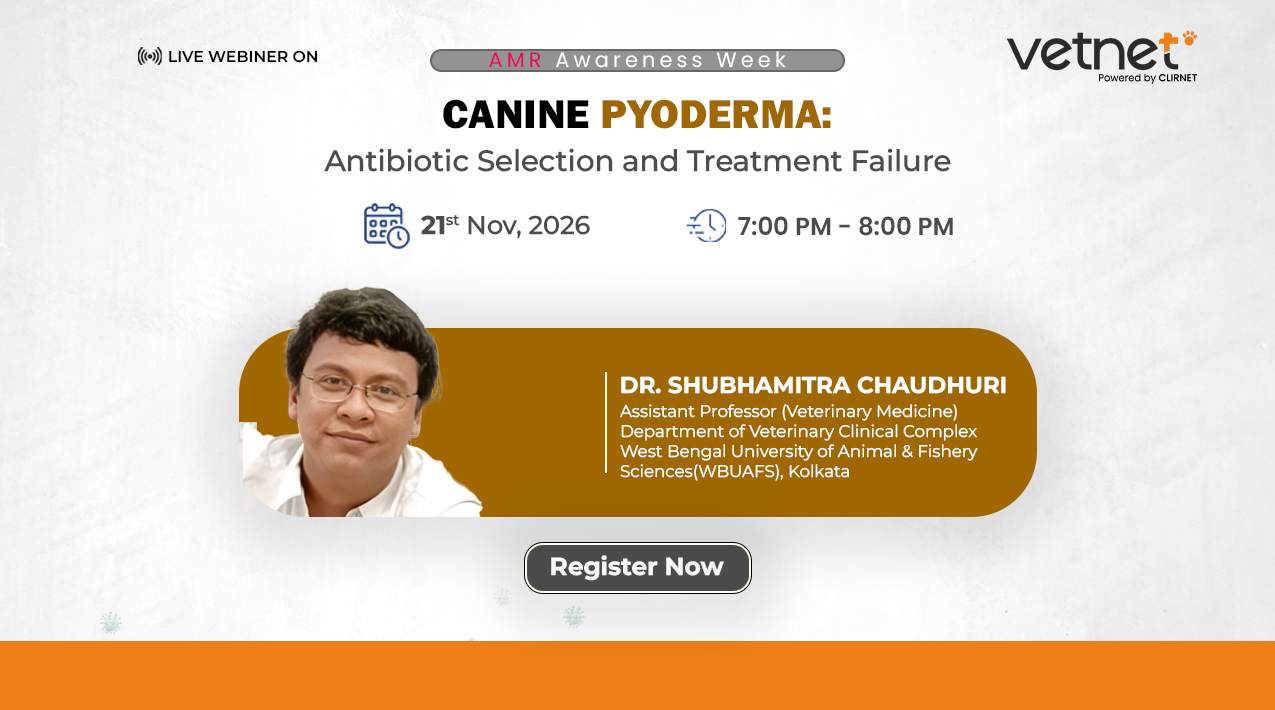
Upcoming Event
Canine Pyoderma: Antibiotic Selection and Treatment Failure
Strengthen your approach to canine pyoderma with informed antibiotic selection and appropriate diagn...
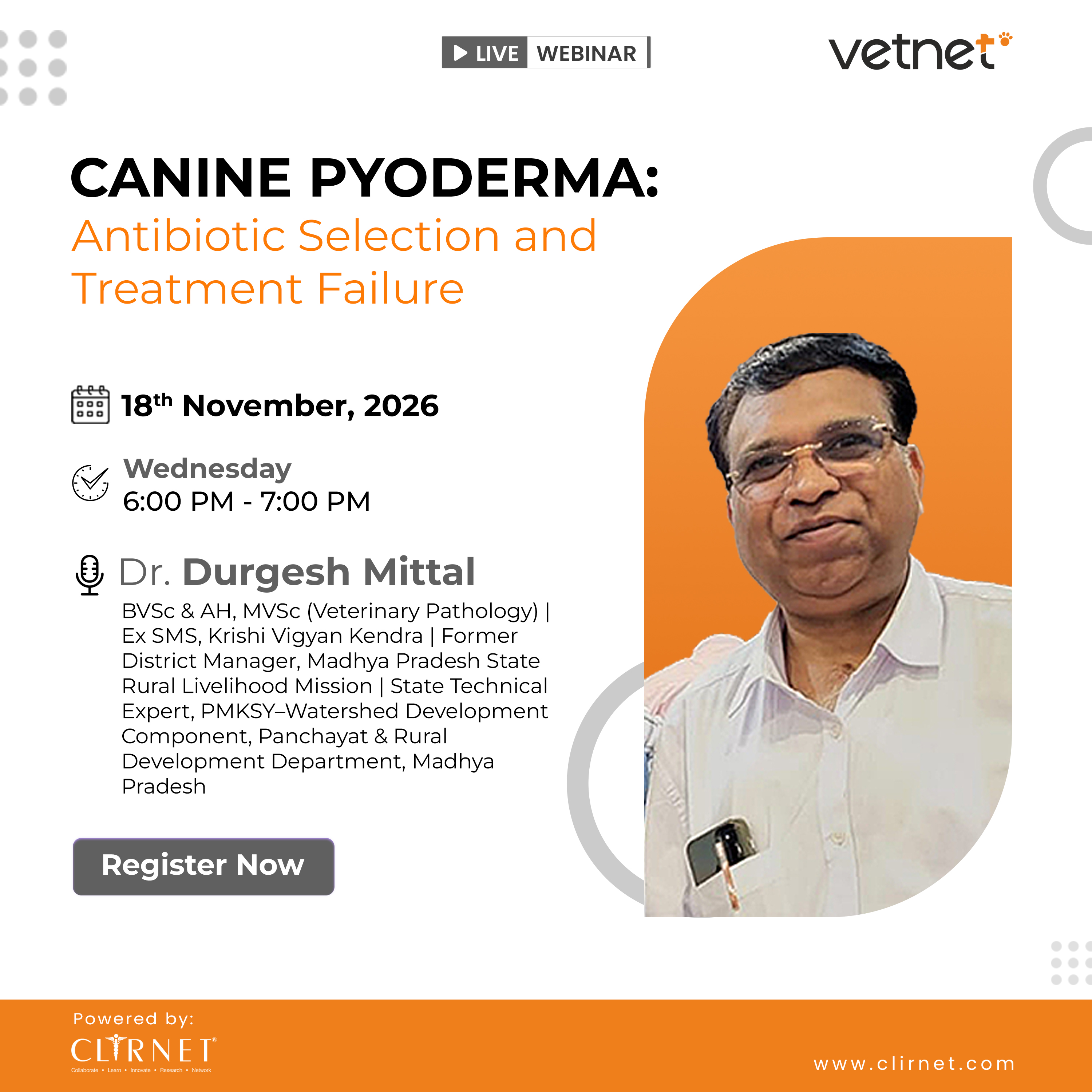
Upcoming Event
Canine Pyoderma: Antibiotic Selection and Treatment Failure
Explore antibiotic selection, treatment challenges and approaches to managing canine pyoderma cases...

Video
Emerging Zoonotic Diseases: Early Detection in Veterinary Practice
Recognising an emerging zoonotic disease early can help limit its spread among animals and reduce ri...