Article
Could Small Colon Obstruction Be Triggering Large Colon Displacement?
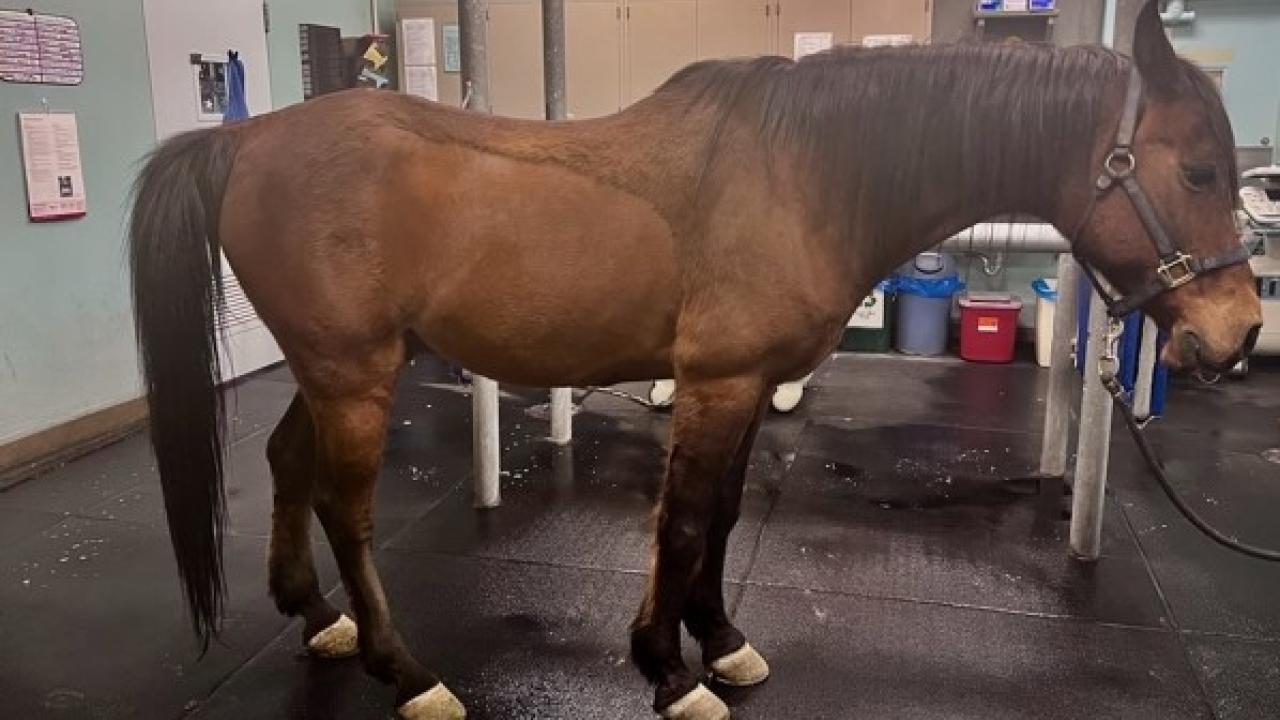
Large colon displacements such as right dorsal displacement (RDD) and large colon volvulus (LCV) are well-recognised causes of surgical colic in horses. However, emerging evidence suggests that these conditions may sometimes be secondary to a less obvious problem—small colon focal impaction (SCF).
Recent clinical observations are prompting veterinarians to reconsider whether some large colon displacements are the primary disease process or merely a consequence of distal intestinal obstruction1,2.
How a Small Colon Lesion Can Affect the Entire Gut
Obstruction within the small colon prevents normal passage of ingesta and may lead to the accumulation of gas, fluid, and feed material in more proximal sections of the gastrointestinal tract1,2,3.
This altered gastrointestinal environment can:
- Distend the large colon
- Disrupt normal motility patterns
- Alter intestinal microbiota
- Increase the risk of large colon displacement1,4,5
These factors have long been recognised as contributors to large colon displacement, making SCF a plausible initiating event in selected cases.
A Surgical Surprise
In several reported cases, horses were initially diagnosed with large colon disease based on clinical examination, ultrasonography, and rectal palpation findings.
Medical treatment was directed toward suspected large colon displacement, but worsening colic signs ultimately necessitated exploratory surgery.
During laparotomy, clinicians confirmed the presence of RDD or LCV—but also discovered focal small colon impactions that had not been identified preoperatively1,6.
These findings raised an important question: Was the large colon displacement the primary problem, or had the small colon obstruction triggered the displacement?
Why the Relationship Matters
If SCF contributes to the development of RDD or LCV, treatment strategies and surgical decision-making may need to evolve.
A horse presenting with apparent large colon displacement may actually have a distal obstruction driving ongoing gastrointestinal dysfunction. Failure to recognise this could increase the risk of persistent disease or recurrence after surgery1.
This possibility highlights the importance of conducting a thorough intraoperative examination of the entire gastrointestinal tract, including the small colon.
Surgical Management Considerations
In reported cases, surgeons performed pelvic flexure enterotomy to evacuate accumulated ingesta from the large colon before identifying the focal small colon obstruction.
This approach may offer additional benefits because large-colon decompression can reduce the likelihood of recurrent impaction during the immediate postoperative period, particularly when inflammation and oedema affect the small colon wall2.
Clinicians should also be mindful that aggressive enteral fluid administration, while commonly used to manage impactions, has been implicated as a potential contributor to worsening large-colon distension and, in some situations, large colon volvulus1.
A Reminder for Equine Surgeons
Current recommendations suggest that whenever celiotomy is performed for small colon impaction, the position of the large colon should be carefully assessed1,2.
Likewise, horses undergoing surgery for RDD or LCV may benefit from systematic evaluation of the small colon to identify hidden obstructive lesions that could be contributing to the disease process.
Key Clinical Takeaway
Small colon focal impaction may represent an under-recognised factor in the development of large colon displacement. While further research is needed to establish a definitive causal relationship, current findings underscore the importance of evaluating the entire gastrointestinal tract during exploratory laparotomy and considering distal obstruction as a potential driver of large-colon pathology.
References
- Scilimati N, Cerullo A, Nannarone S, Gialletti R, Giusto G, Bertoletti A. Small Colon Faecalith with Large Colon Displacement in Ten Cases (2015–2023): A Detailed Case Description and Literature Review. Animals. 2024 Jan 15;14(2):262. https://www.mdpi.com/2076-2615/14/2/262
- Hanson RR, Schumacher J. Diagnosis, management and prognosis of large colon impactions. Equine Veterinary Education. 2021 Feb;33(2):90-101. https://doi.org/10.1111/eve.13120
- Rhoads WS, Barton MH, Parks AH. Small colon impactions in horses: 84 cases (1986-1996). InAAEP Proceedings 1997 (Vol. 43, pp. 248-249). https://www.ivis.org/sites/default/files/library/aaep/1997/Rhoads.pdf
- Suthers JM, Pinchbeck GL, Proudman CJ, Archer DC. Risk factors for large colon volvulus in the UK. Equine veterinary journal. 2013 Sep;45(5):558-63. https://doi.org/10.1111/evj.12039
- Salem SE, Maddox TW, Antczak P, Ketley JM, Williams NJ, Archer DC. Acute changes in the colonic microbiota are associated with large intestinal forms of surgical colic. BMC veterinary research. 2019 Dec 21;15(1):468. https://link.springer.com/content/pdf/10.1186/s12917-019-2205-1.pdf
- Giusto G, Cerullo A, Gandini M. Gastric and large colon impactions combined with aggressive enteral fluid therapy may predispose to large colon volvulus: 4 cases. Journal of equine veterinary science. 2021 Jul 1;102:103617. https://iris.unito.it/bitstream/2318/1832466/4/JEVS%202021-large%20colon%20volvolus-post%20print.pdf
Related Contents
Upcoming Event
African Swine Fever: Diagnosis and Management
African swine fever can cause severe disease and significant losses in affected pig populations.&nbs...
.jpg)
Video
Transjugular Removal of Canine Heartworms: A Clinical and Surgical Overview
Transjugular removal of canine heartworms is a specialized intervention used in selected dogs with s...

Article
Feline Pregnancy Endocrinology: Hormonal Changes and Placental Function
Pregnancy in cats involves a distinctive endocrine pattern in which ovarian and placental hormones w...

Article
Hormonal Control of Pregnancy Termination in Cats
Pregnancy maintenance in cats depends strongly on coordinated hormonal support, particularly progest...

Article
Feline Embryo Implantation and Early Placental Development
Pregnancy establishment in cats involves a sequence of precisely timed events between fertilization,...

Article
Ultrasonographic Monitoring of Pregnancy in Cats: A Gestational Timeline
Ultrasonography provides a practical way to follow the progression of feline pregnancy by identifyin...

Article
Feline Mismating: Pregnancy Diagnosis and Clinical Management
Mismating or unplanned mating is a common clinical problem in sexually mature queen cats because of...

Article
Medical Termination of Pregnancy in Queens: Drugs, Timing and Treatment Protocols
Medical termination of pregnancy (MTP) in queen cats should be approached according to the timing of...